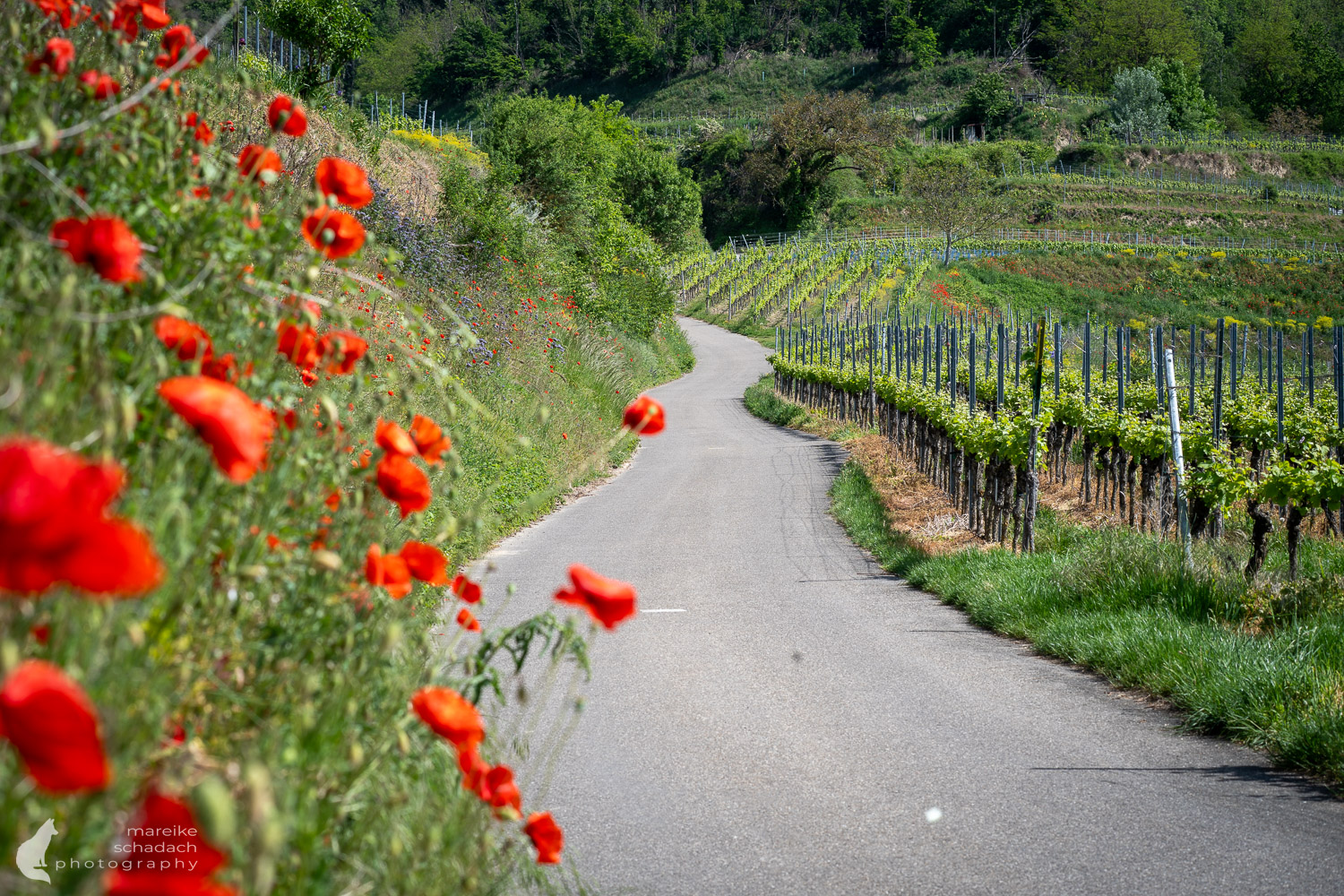
Germany. The Kaiserstuhl Trail is one of Germany’s most beautiful hiking trails, winding its way for about 22 kilometers through one of Baden-Württemberg’s most fascinating landscapes. The route runs from Endingen to Ihringen over the ridge of the extinct Kaiserstuhl volcano and offers an extraordinary variety of natural and cultural landscapes. Vineyards, shady deciduous forests, loess ravines, and impressive panoramic views characterize the trail. The geological history of the Kaiserstuhl is still visible today in striking basalt cliffs, loess walls, and distinctive ridges. Mediterranean-style vegetation, rare animal species, and the unique geology make this tour truly special. The route can be hiked in about six to seven hours.
Unassigned, unpaid advertising. The article contains affiliate links.
The Kaiserstuhl Trail at a Glance
- Distance: 21.7 km
- Ascent: 590 m
- Descent: 610 m
- Start / End: Ihringen and Endingen
- For those who don’t want to hike the entire route: There are options to descend to the train stations in Bahlingen or Vogtsburg, as well as the bus stop in Bickensohl
- The appropriate hiking map is available from KOMPASS: Hiking Map 883 Kaiserstuhl, Tuniberg, Kenzingen, Emmendingen, Breisach am Rhein 1:25,000 (affiliate link as an Amazon partner)

The Kaiserstuhl Trail has been certified by the German Hiking Association as a “Quality Trail: Wanderbares Deutschland” and took second place in the “Germany’s Most Beautiful Hiking Trail 2019” competition—and rightly so, as it uniquely combines the joy of hiking, the experience of nature, and scenic diversity.
It all began with Volcanoes
The Kaiserstuhl owes its distinctive shape and fertile soils to its volcanic origins, which date back some 16 to 19 million years. During this period, the region was geologically active; magma rose from the depths and formed a complex volcanic area in the middle of what is now the Upper Rhine Plain. The remnants of this volcanic activity still shape the landscape today: basalt and tuff rock permeate the subsoil, and in many places, geological outcrops are visible, bearing witness to the region’s fiery past. The volcanic rock is overlaid by fertile loess that was deposited during the Ice Age and today creates ideal conditions for viticulture. Its volcanic origin not only makes the Kaiserstuhl geologically unique but also explains the region’s exceptional soil fertility and biodiversity.
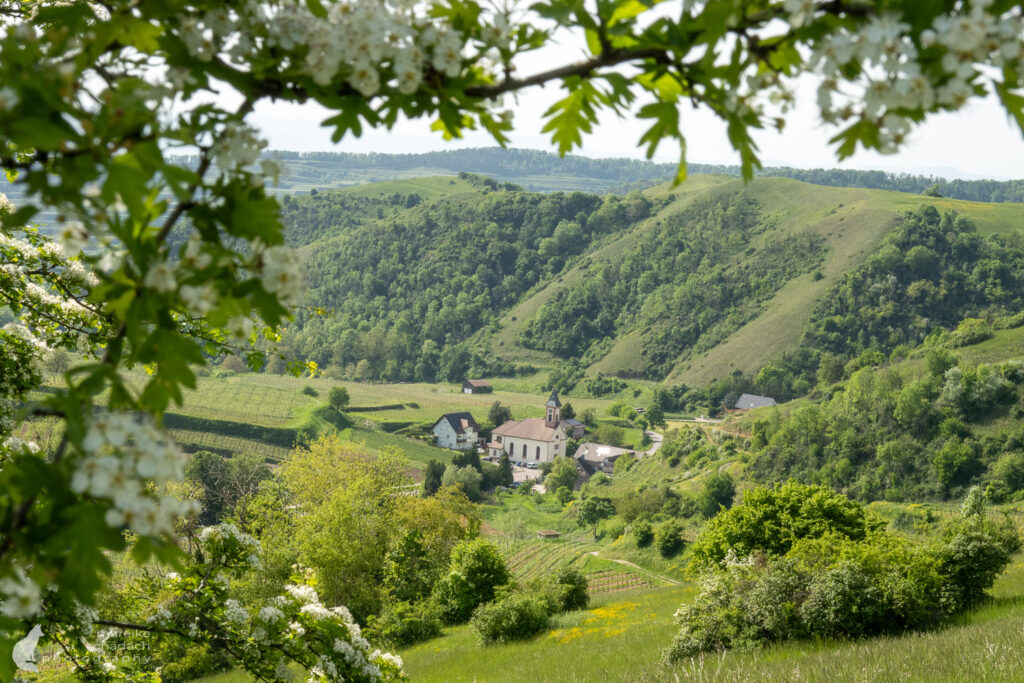
Highlights along the Kaiserstuhl Trail
The Kaiserstuhl Trail never gets boring. The landscape is varied, and even in the final kilometers, you’ll still discover new things that will leave you in awe. The varied terrain, scenic overlooks, colorful plants, and brightly colored bee-eaters and green lizards seem to follow one after another. Here’s what I liked best about the Kaiserstuhl Trail:
Endingen Old Town
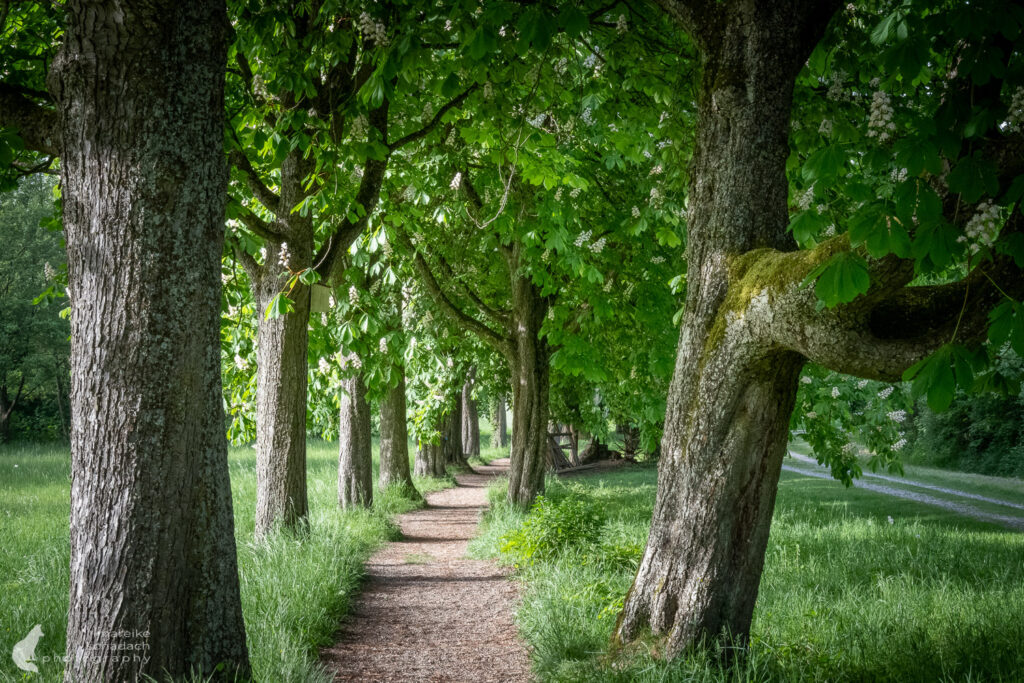
The Kaiserstuhl Trail begins or ends in the historic old town of Endingen, with its charming half-timbered houses and cobblestone alleys. From there, the trail leads to the Erleweiher, a small natural swimming lake on the outskirts of town. A short while later, you walk through a chestnut tree-lined avenue, whose trees—over 70 years old—constitute a living natural monument. A first cultural highlight follows with the Katharinenkapelle, a striking building from 1862 offering views of the surrounding area. The trail continues to the Bahlinger Eck, where it crosses the Hudenwälder—a relic of traditional forest management.
Badberg Nature Reserve
The Badberg Nature Reserve is one of the ecological gems of the Kaiserstuhl region and serves as a prime example of the region’s unique flora and fauna. Rare dry grassland plants, orchids, and heat-loving herbs—found in only a few places in Germany today—thrive on the sun-exposed, largely treeless slopes. The area is also a hotspot for insect diversity, including numerous species of butterflies and wild bees, and offers an ideal habitat for reptiles such as the sand lizard and the green lizard. I spotted many kestrels and red kites flying over the meadows. It’s definitely worth taking a short break here.
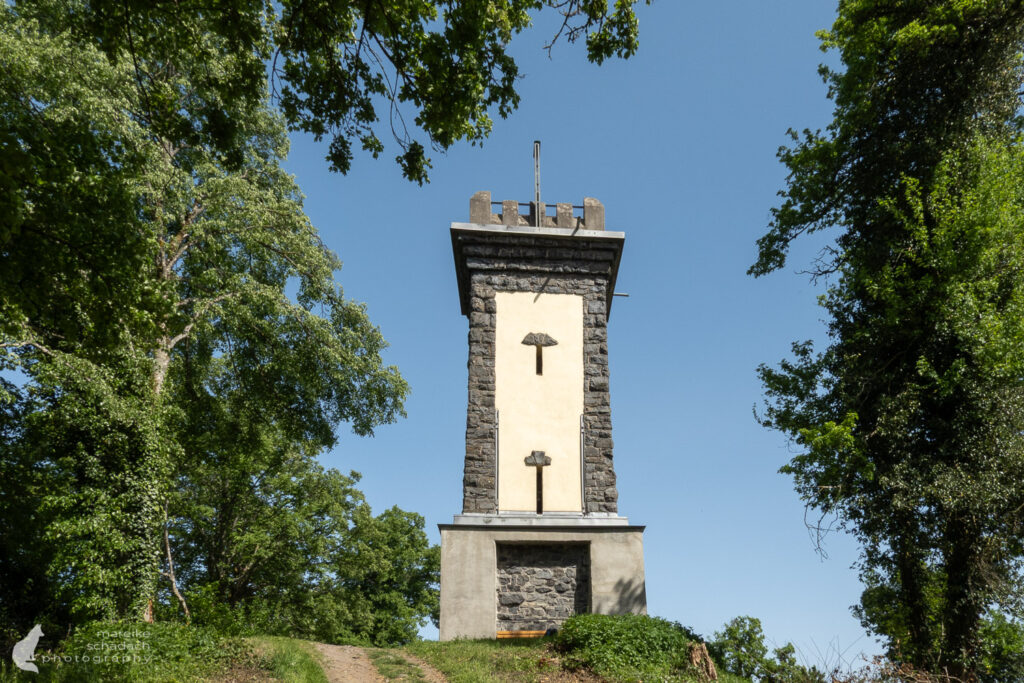
Eichelspitz Tower
The Eichelspitz Tower is a striking lookout point on the Eichelspitz, the second-highest peak in the Kaiserstuhl at 520 meters, offering panoramic views from the Black Forest across the Rhine Valley to the Vosges Mountains. The tower itself is a modern steel-and-wood structure.
Totenkopf with the Neunlindenturm
The Neunlindenturm is one of the most beautiful vantage points in the Kaiserstuhl and sits atop the highest peak of the low mountain range, the Totenkopf (556 m). The tower is located in the middle of the forest and offers a surprising, sweeping panoramic view of the entire Kaiserstuhl, the Rhine Valley, the Black Forest, and, on a clear day, as far as the Vosges Mountains. The viewpoint owes its name to a historic planting of nine linden trees, some of which still stand today.
Sunken paths, especially around Bickensohl
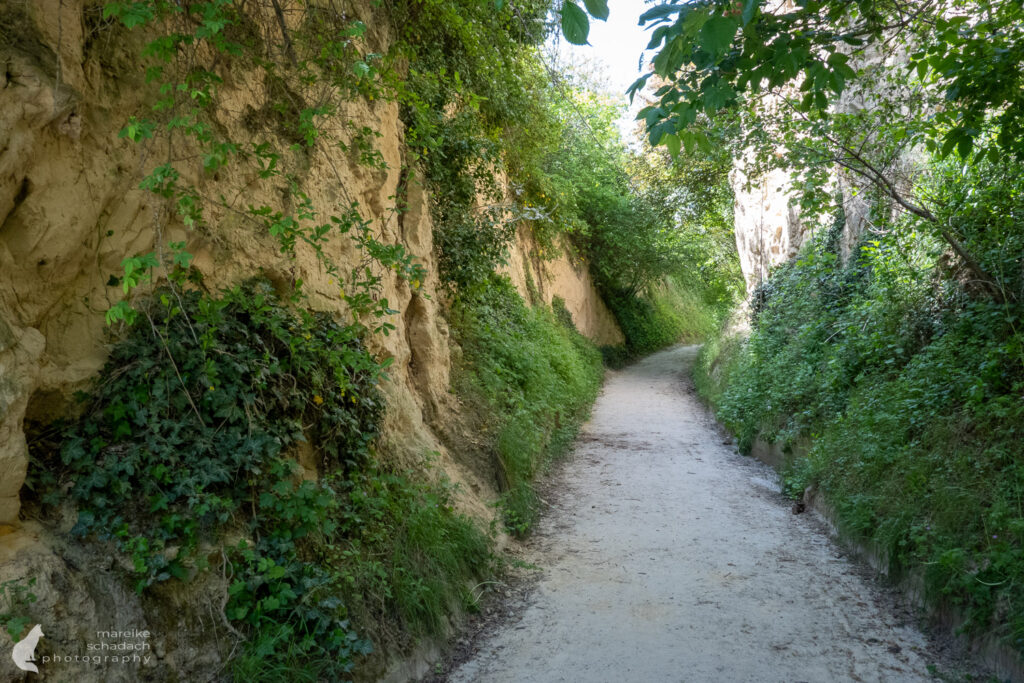
The Kaiserstuhl sunken paths are impressive testaments to a centuries-old cultural landscape. Over many generations, people and animals, wagons and carts have trodden and driven along these paths in the soft loess soil. Rainwater further eroded the ground, forming deep paths lined with steep walls. These unique earth formations once served as access routes to the vineyards. Today, only a few of these traditional sunken paths remain, but they are all the more significant: as cultural monuments, important recreational areas, and above all as valuable habitats for rare species. Wild bees and other heat-loving insects, in particular, find ideal conditions in the open, sun-drenched loess walls.
Vineyards and terraced Landscapes
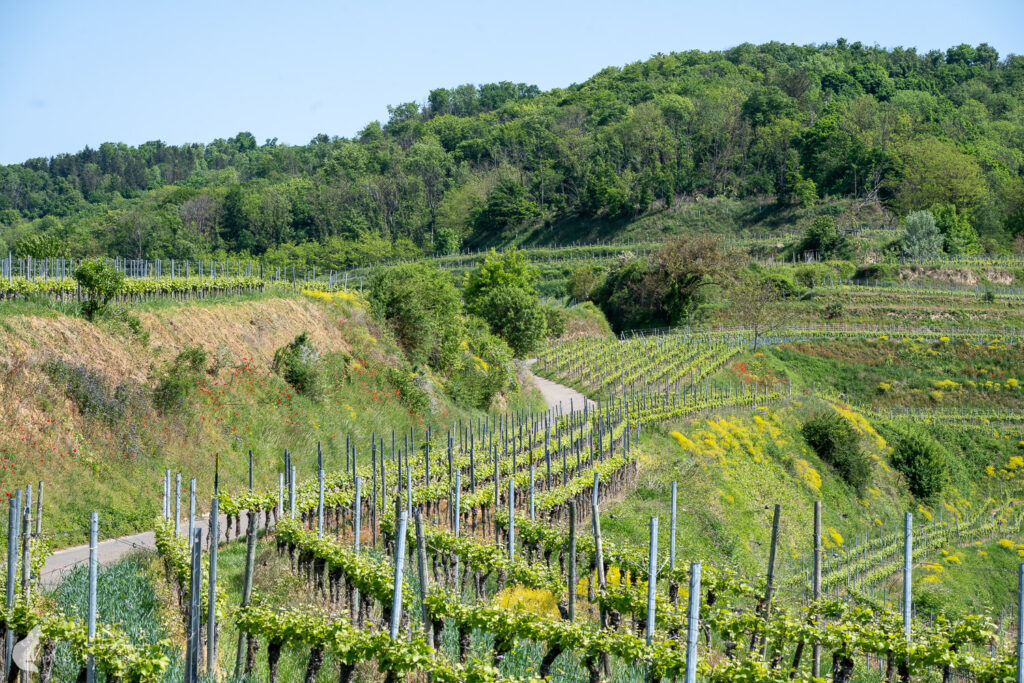
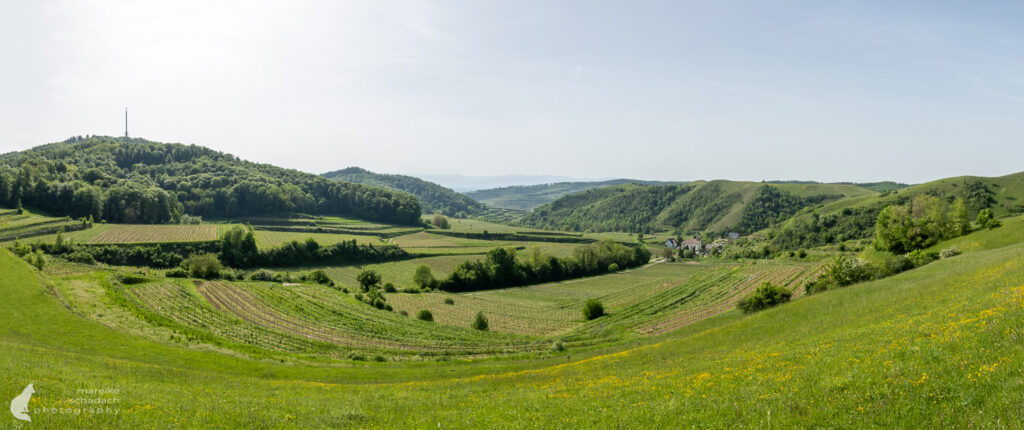
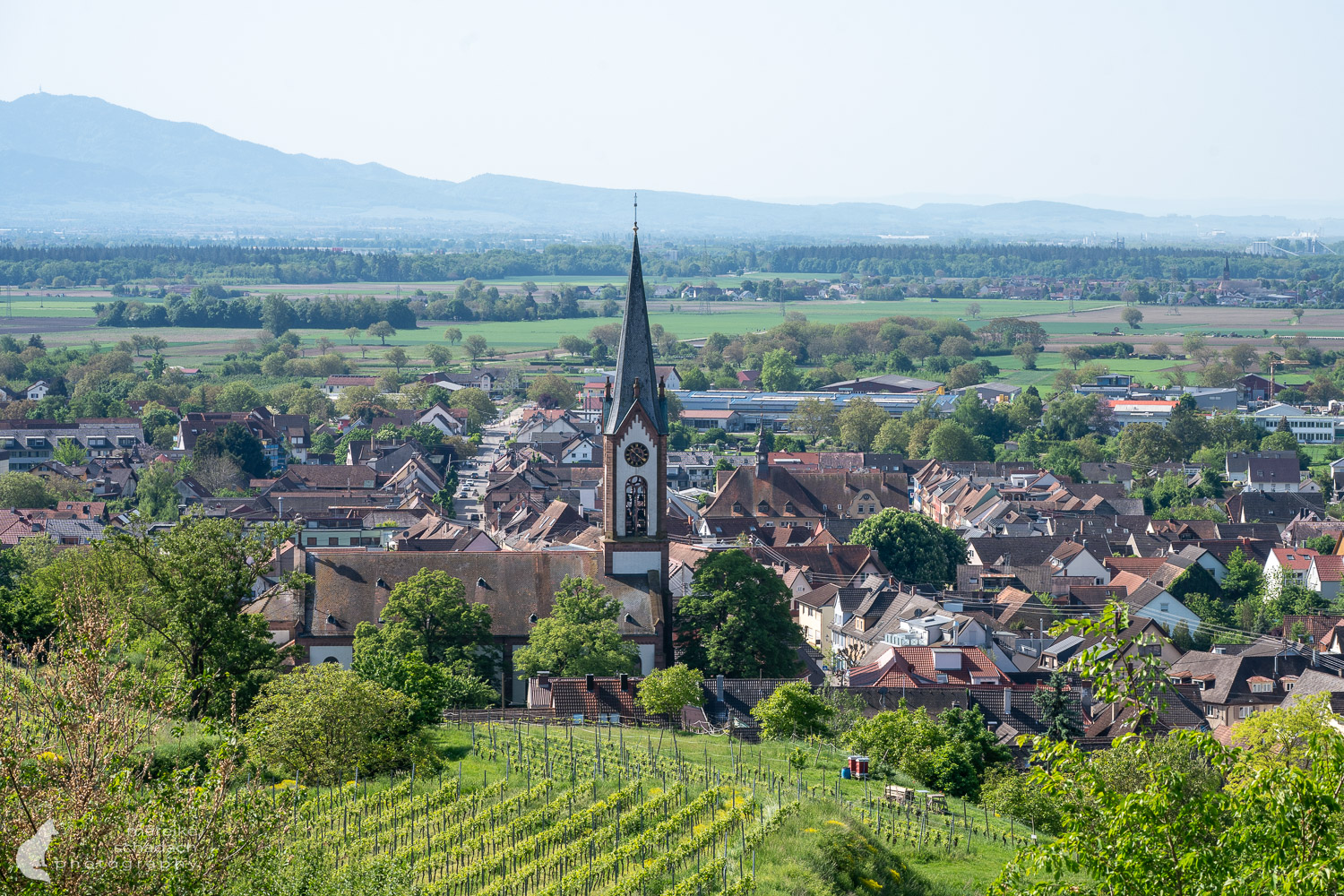
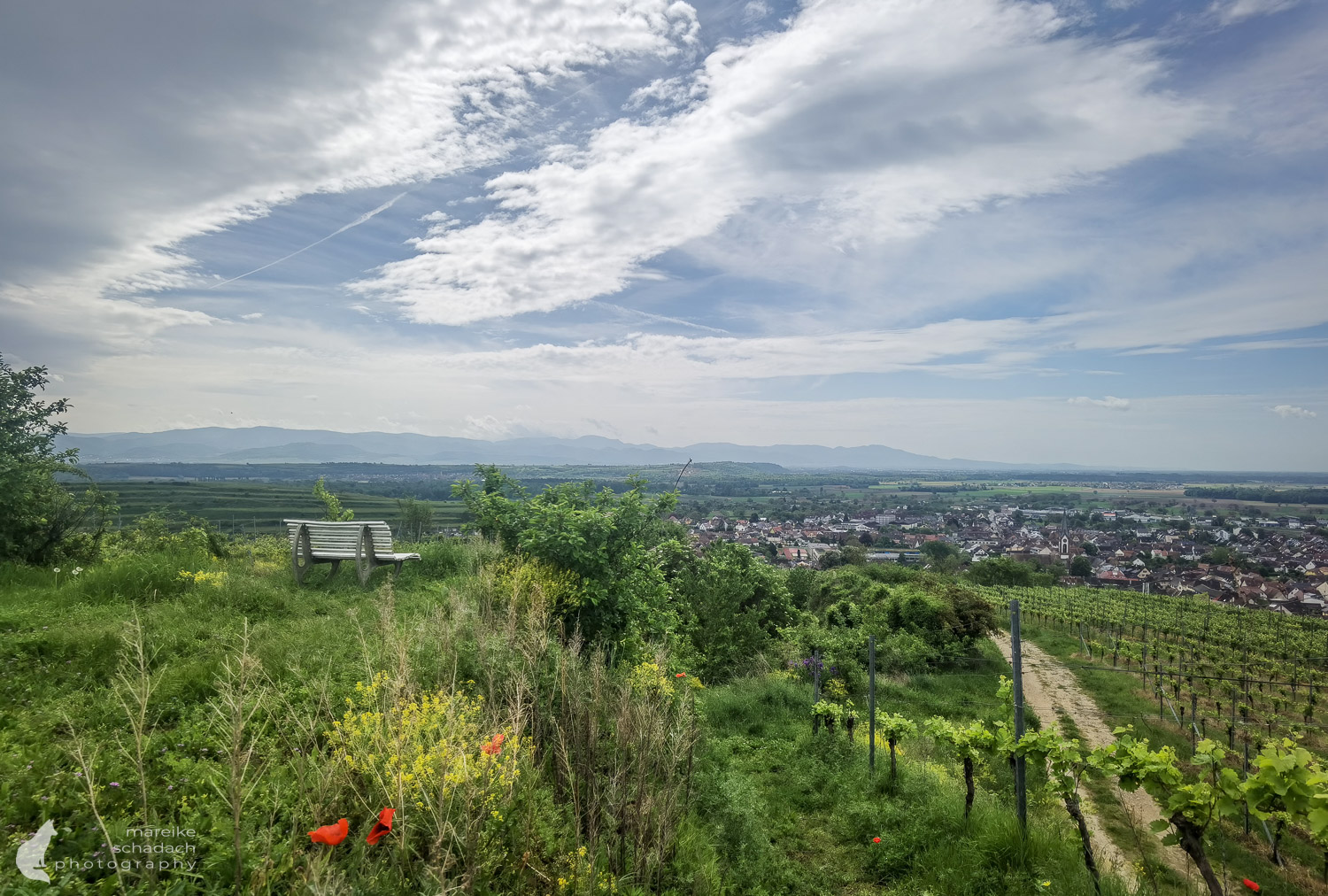
The Kaiserstuhl Trail winds through the region’s characteristic vineyards and terraced landscapes, which define the Kaiserstuhl’s landscape and give it its distinctive character. Over centuries of work, winemakers have created a unique cultural landscape here, where grapevines thrive on artfully laid-out terraces, often lined with dry stone walls that also provide habitats for many animals. The warm southern slopes, the fertile loess soil, and the sunny climate make the Kaiserstuhl one of Germany’s most important wine-growing regions. Burgundy grape varieties, in particular, find ideal conditions here.
Green Lizards
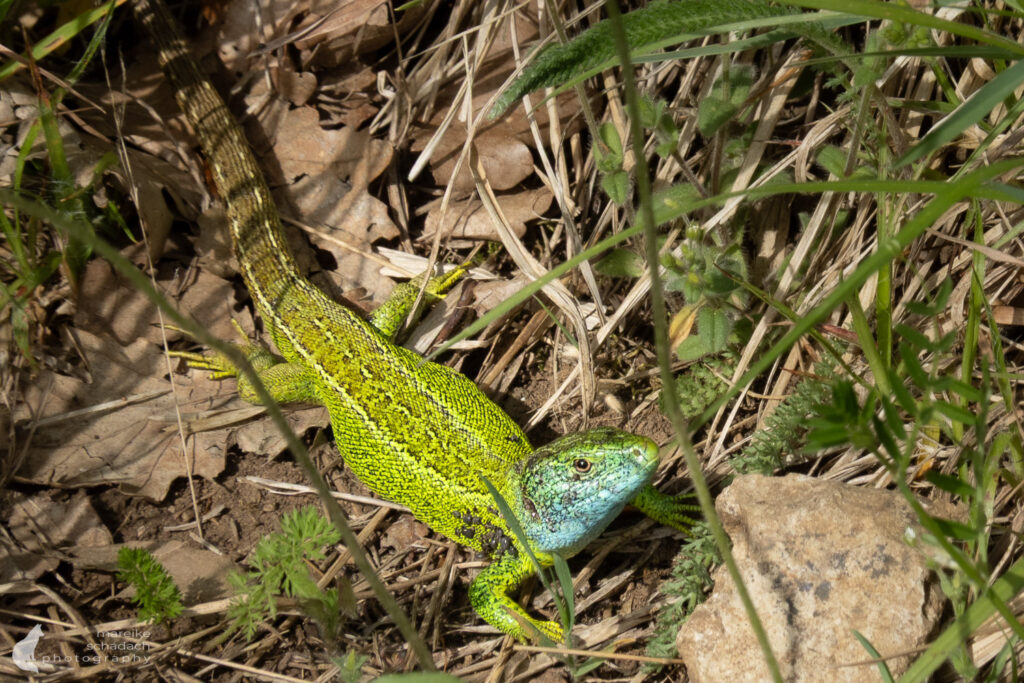
With its bright green-blue scales, the green lizard is a real eye-catcher. It is one of the largest lizards in Central Europe and feels particularly at home on the warm, sunny slopes and loess cliffs of the Kaiserstuhl. Especially during the mating season in spring, the males display their intensely turquoise throats. If you hike with your eyes peeled, you might spot them sunbathing or darting into the bushes in a flash.
Bee-eater
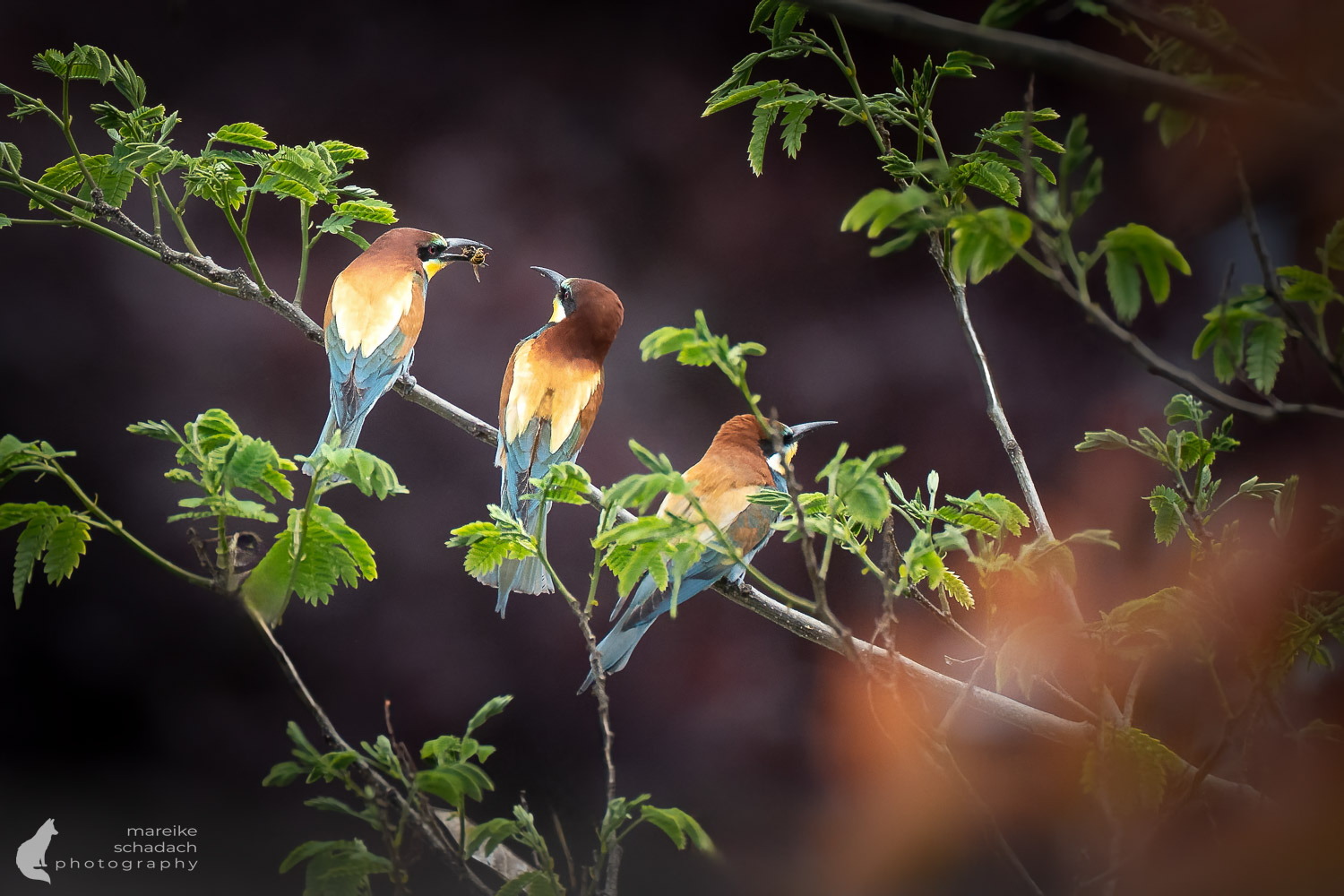
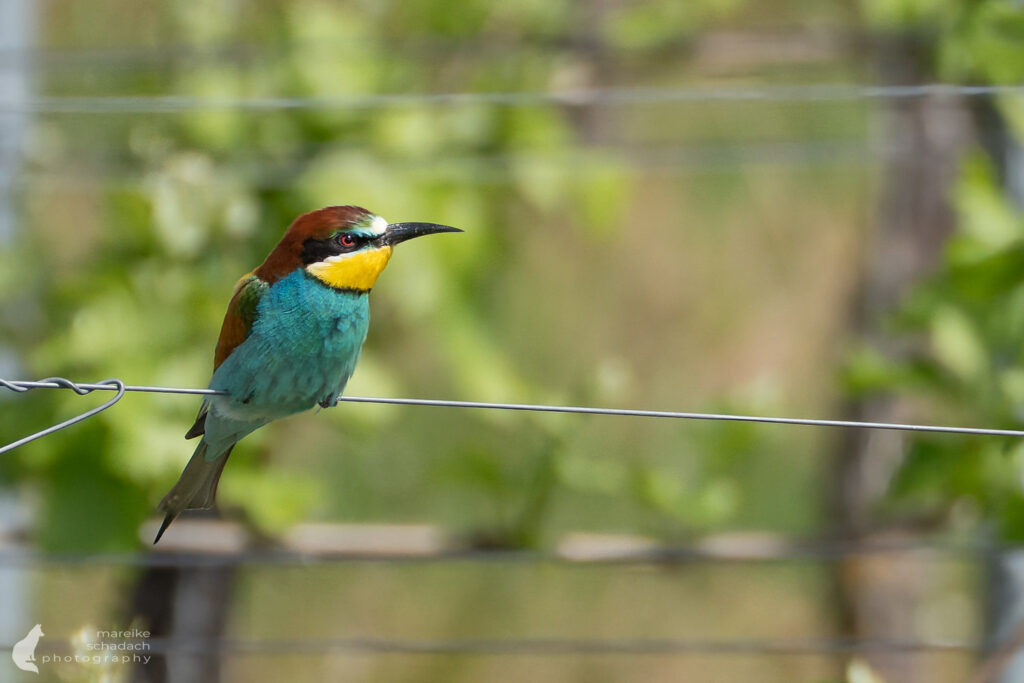
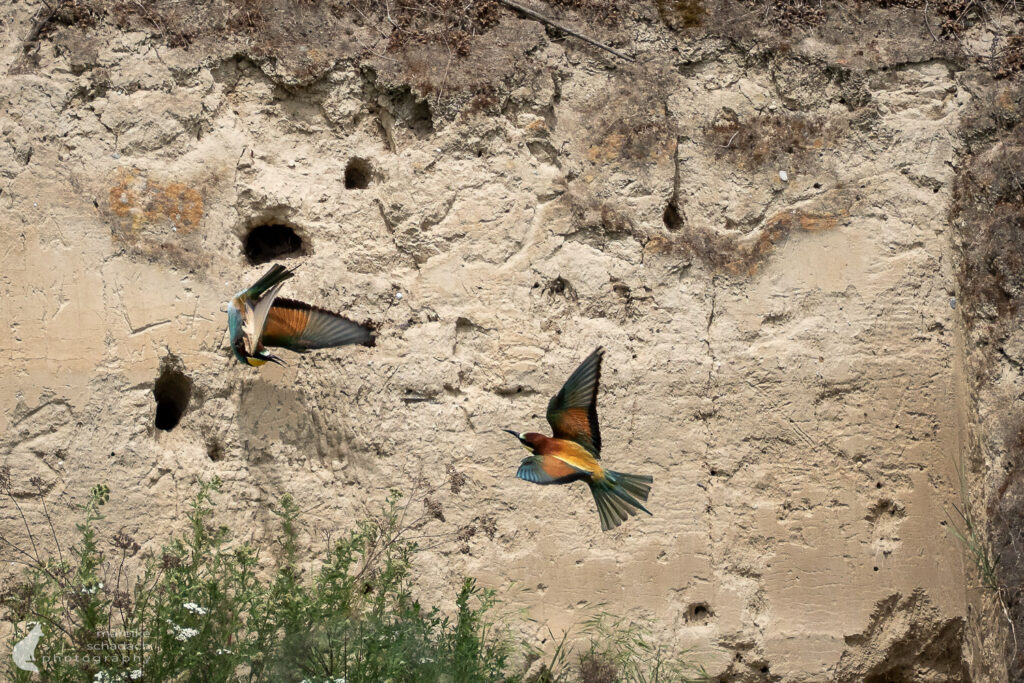
The bee-eater is one of the most colorful and, at the same time, most unusual birds in Germany. Thanks to the warm, dry climate and the open loess landscapes, this originally Mediterranean breeding bird finds ideal conditions here. With its bright turquoise-yellow plumage, slender silhouette, and characteristic call, the bee-eater is not only an ornithological rarity but also a symbol of the extraordinary biodiversity in the Kaiserstuhl. It nests in steep, sandy loess cliffs, where it digs long tunnels into the ground. Its diet consists mainly of insects, particularly bees, wasps, and dragonflies, which it elegantly catches in flight. The return of the bee-eaters in the spring makes the Kaiserstuhl a hotspot for birdwatchers. There are good viewing opportunities near Ihringen, where there is even a small birdwatching hut behind the cemetery.
Hoopoe
With its striking appearance and unmistakable “hoop-hoop-hoop” call, the hoopoe is one of the most charismatic bird species in the Kaiserstuhl. With its rust-orange plumage, distinctive crest, and long, curved beak, it’s hard to miss. Thanks to its warm climate, diverse landscapes, and numerous cavities in old trees, dry stone walls, or nest boxes, the Kaiserstuhl offers ideal living conditions for the hoopoe. If you hike with your eyes and ears open, you have a good chance of spotting this rare bird near Ihringen. I’ve also seen a few hoopoes on my hikes, but only briefly or from a great distance. Maybe you’ll have better luck.
Flora
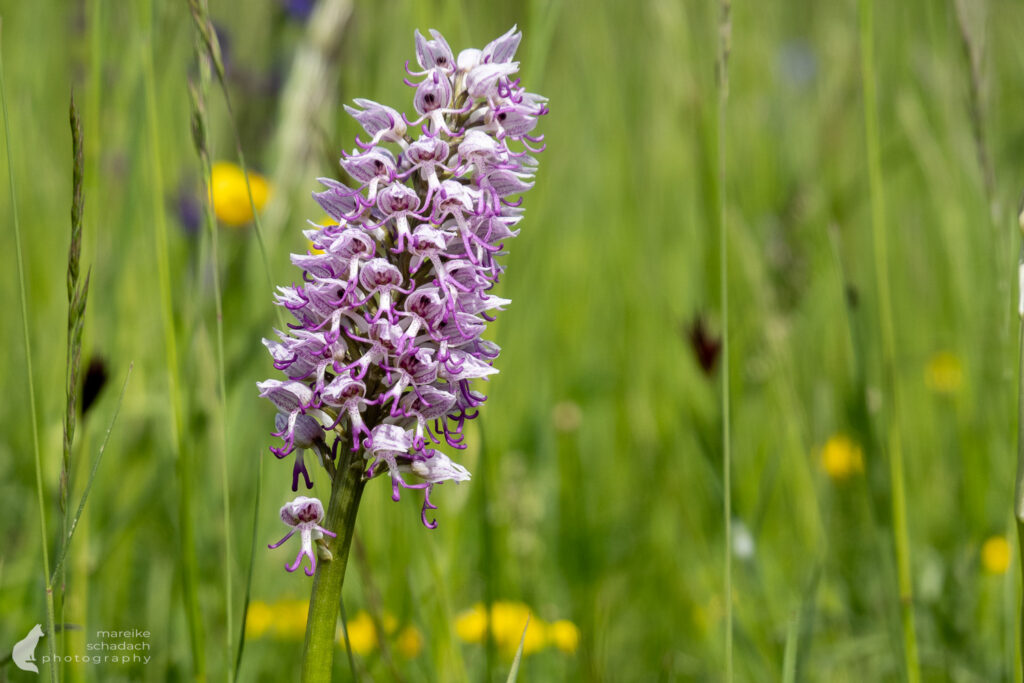
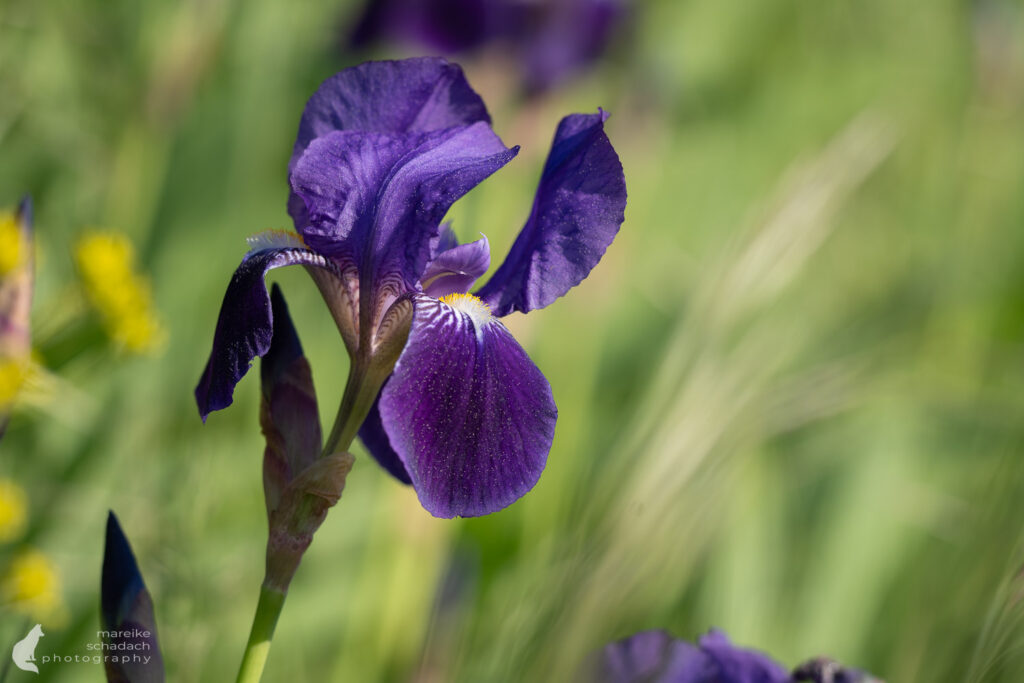
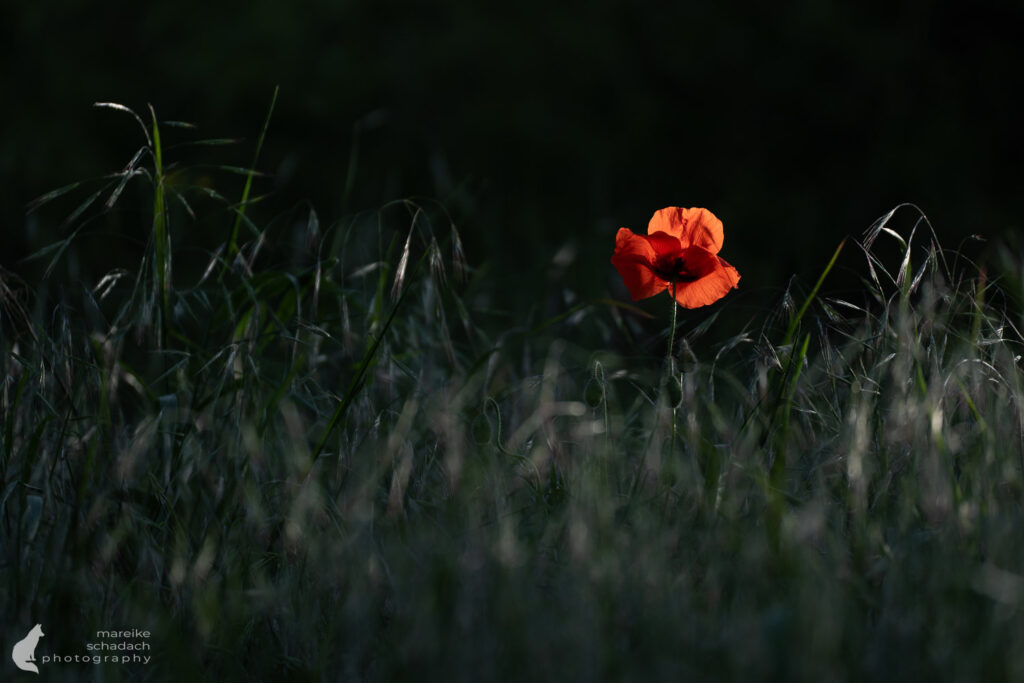
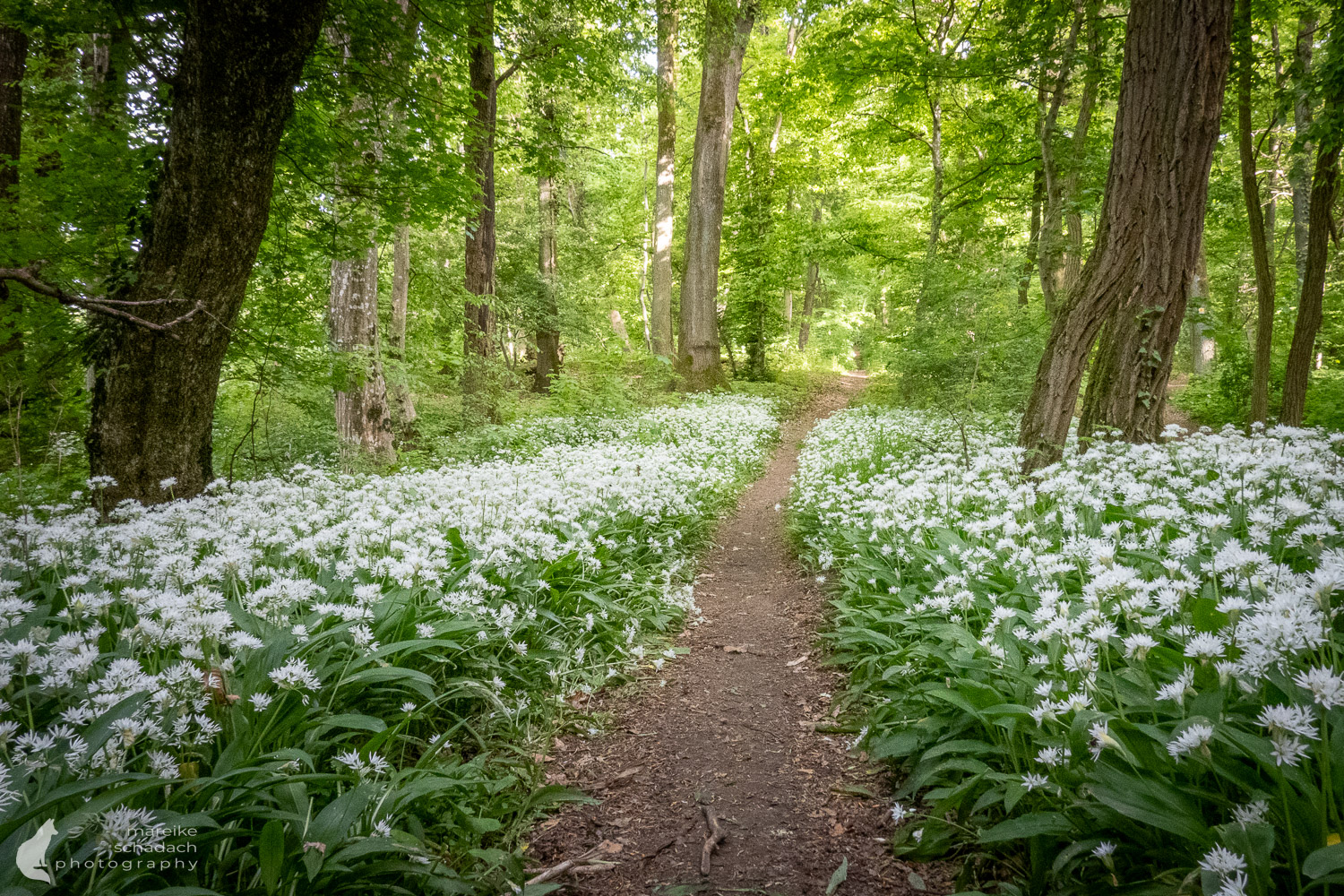
The Kaiserstuhl’s flora is exceptionally diverse and ranks among the most species-rich in Germany. The combination of a mild climate, south-facing slopes, loess soil, and historical land use creates ideal conditions for many rare and heat-loving plant species. Especially on the dry grasslands and in the loess ravines, a colorful variety of flowers blooms, reaching its peak in spring and early summer. This rich plant life also makes the Kaiserstuhl a paradise for insects.

The Wine-Growing Village of Ihringen
The charming wine-growing village of Ihringen marks the southern end or starting point of the Kaiserstuhl Trail and is an ideal place to end or begin a hike. As one of the warmest municipalities in Germany, Ihringen is known for its wine-growing and offers cozy wine taverns and vineyards serving local specialties and excellent wines. If you like, you can also stay overnight here or round off your visit with a wine tasting.
Best time to hike the Kaiserstuhl Trail
The trail is accessible year-round, but it does require a certain level of basic fitness, not least because of the sometimes steep ascents and the varying elevation profile.
The Kaiserstuhl is considered one of the warmest regions in Germany. Even in spring, you need to be prepared for strong sunlight: sunscreen, a sun hat, and plenty of drinking water should be packed in your backpack. You can refill your water bottles along the way, for example at a restaurant in Bickensohl. Along the way, there are sunken paths that provide shade, as well as numerous benches and picnic areas in shaded spots. The sections of the trail through the forest (such as the northern half of the route) are pleasantly shaded, though the climbs make them more strenuous than the southern section.
Practical Tips for Your Hike on the Kaiserstuhl Trail
Safety and Equipment
- Footwear: Sturdy hiking boots with good traction, as some sections are steep or rocky.
- Water: It gets very hot in the summer, especially on the south-facing trails. Be sure to bring plenty of water!
- Sun protection: A hat and sunscreen are essential.
- Check the weather: Some trails are slippery when wet, and fog can severely limit visibility.
- Don't forget your first aid kit
Getting there
- Public Transportation: Endingen and Ihringen are both easily accessible by train, making the Kaiserstuhl Trail ideal for a round-trip hike without a car. Trains depart every 30 minutes from Freiburg Central Station and from Breisach.
Places to Stop for Refreshments
- In Endingen, Bickensohl, and Ihringen, there are wine taverns, wine bars, and restaurants.
Book Recommendations for the Kaiserstuhl
You want to know where the journey goes? Then I can recommend these books*.
You can order the books on Amazon by clicking on the images. If you purchase a product through an affiliate link, I receive a small commission, and you help me continue to fill Fernweh-Motivation with interesting articles. This doesn't increase the price of the product for you, and you're doing me a huge favor. As an Amazon Associate, I earn from qualifying purchases.



Want to know when there are new articles on my blog? Then follow me on Facebook, Pinterest or Instagram. I am also very happy if you share my article with your friends.
Recommendations for further Reading
Do you enjoy being outdoors? Then you'll definitely be interested in my articles on staying healthy on trekking tours or about midges in Scotland.