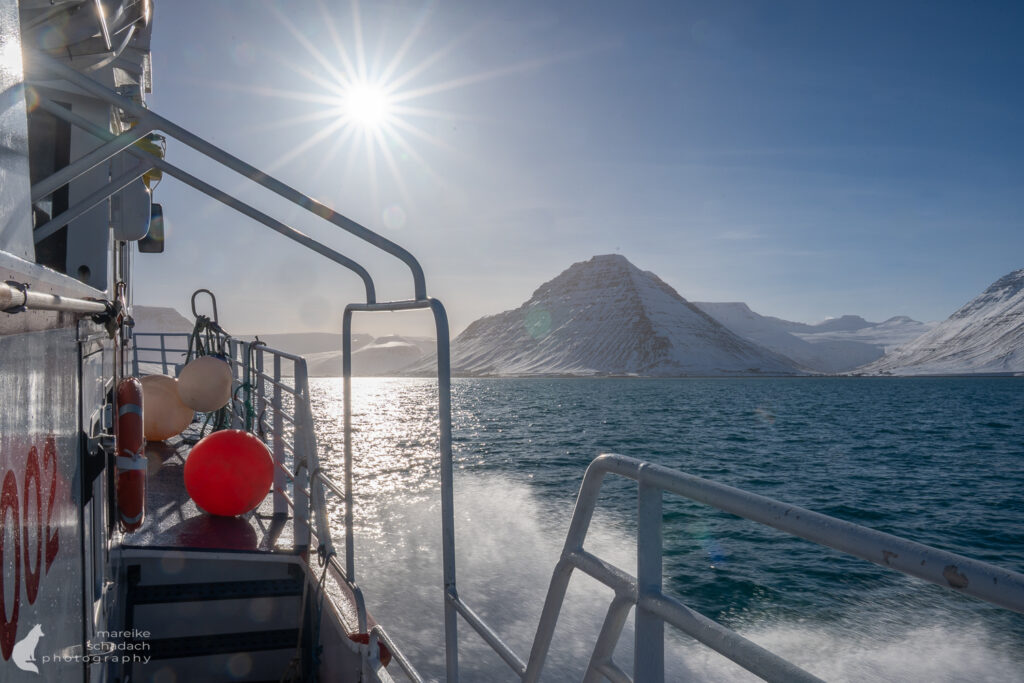
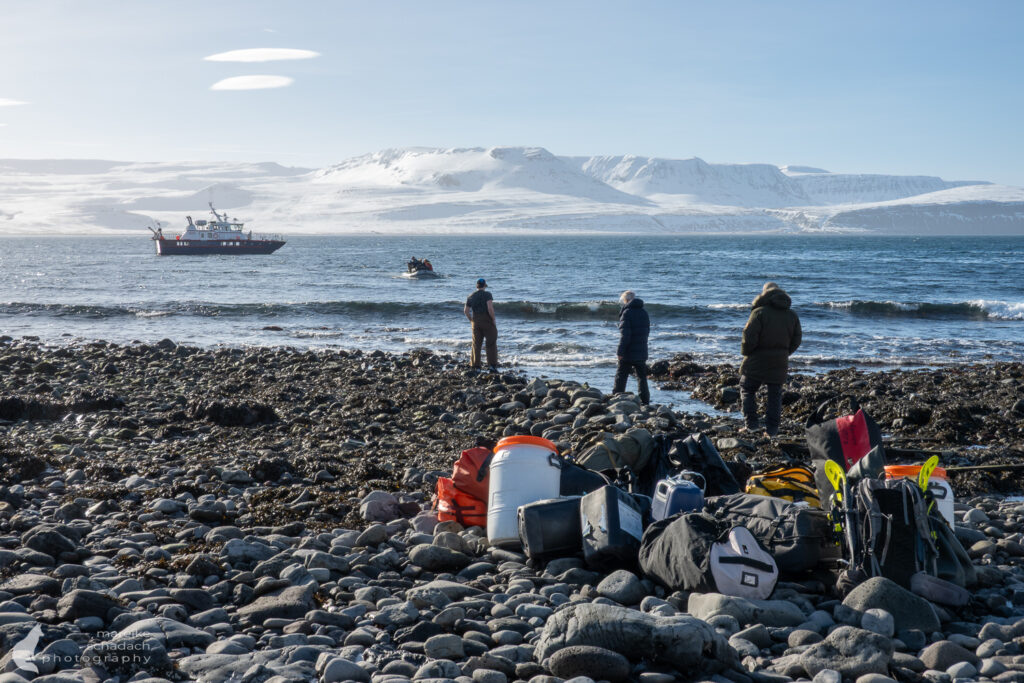
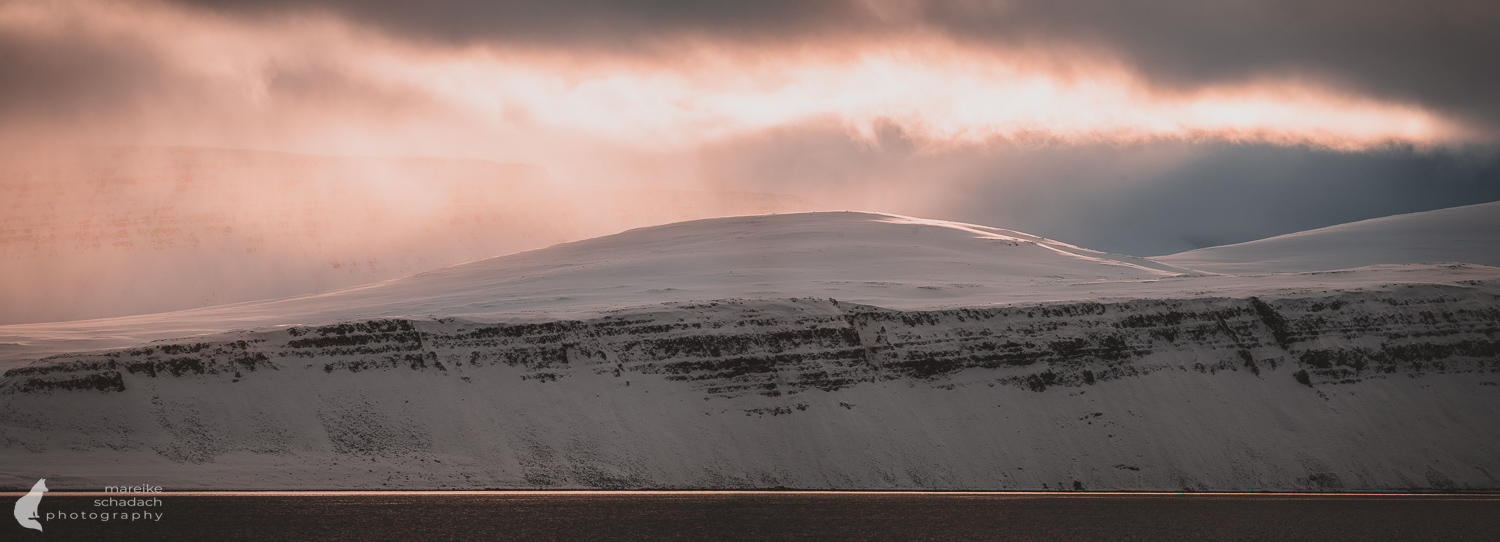
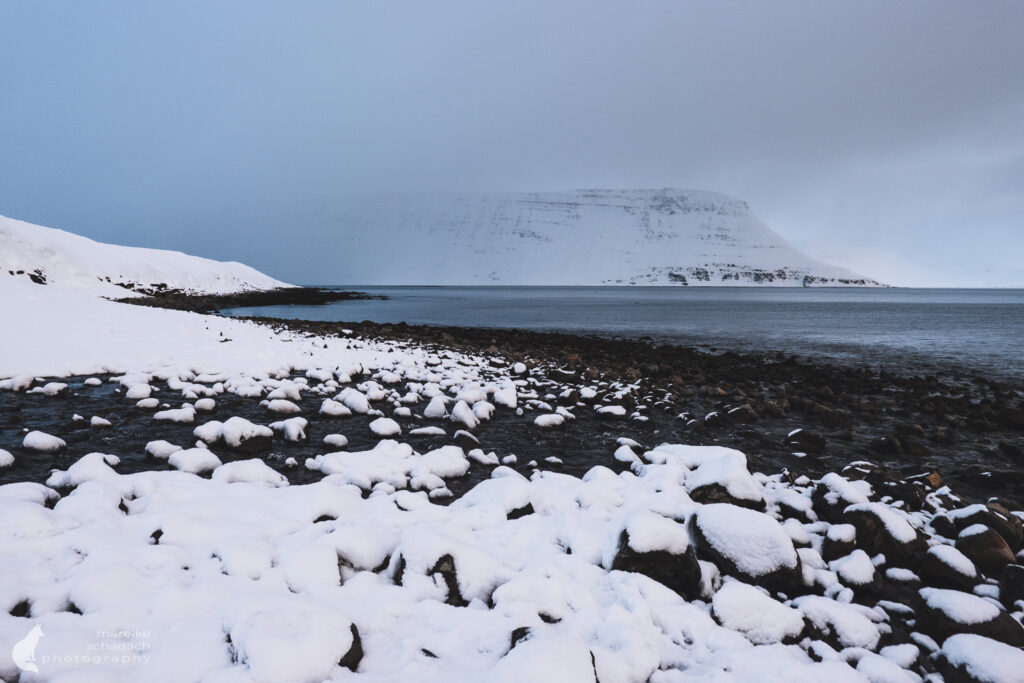
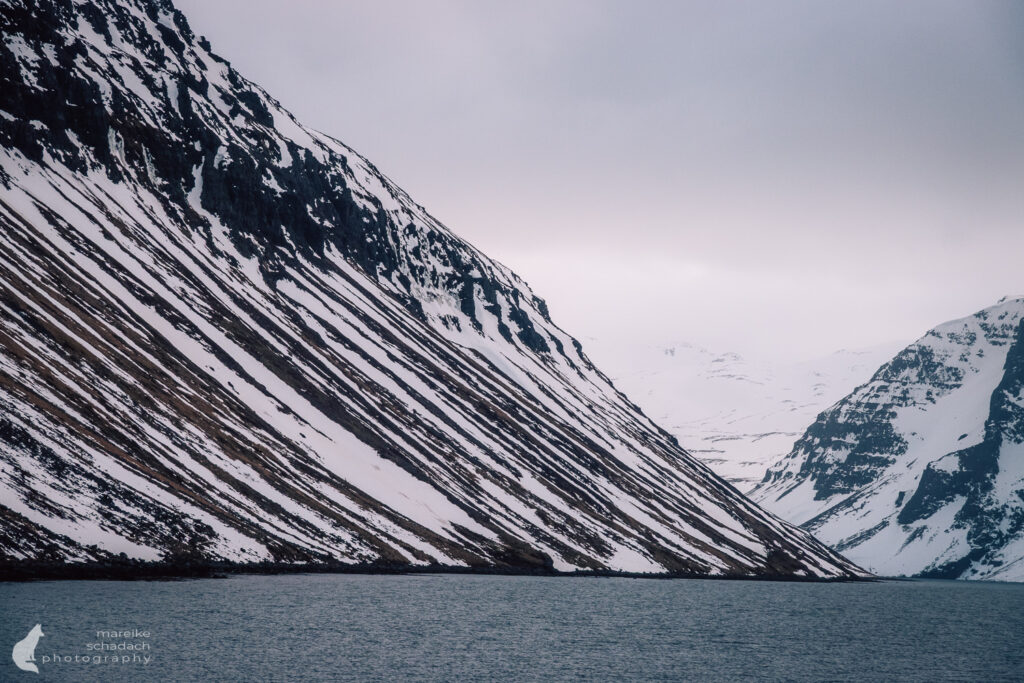
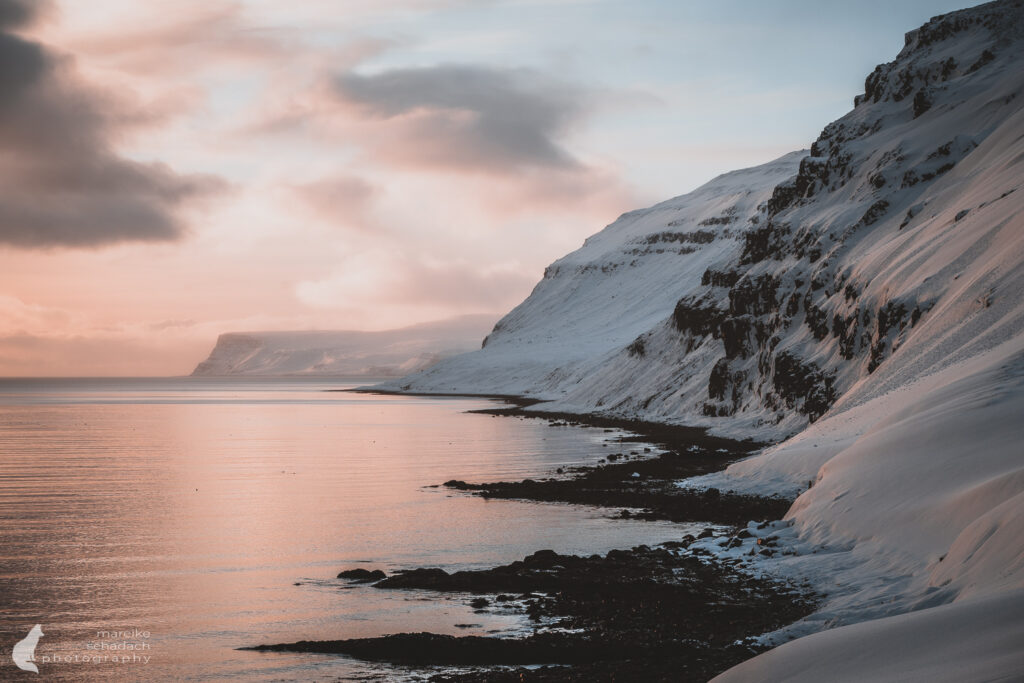
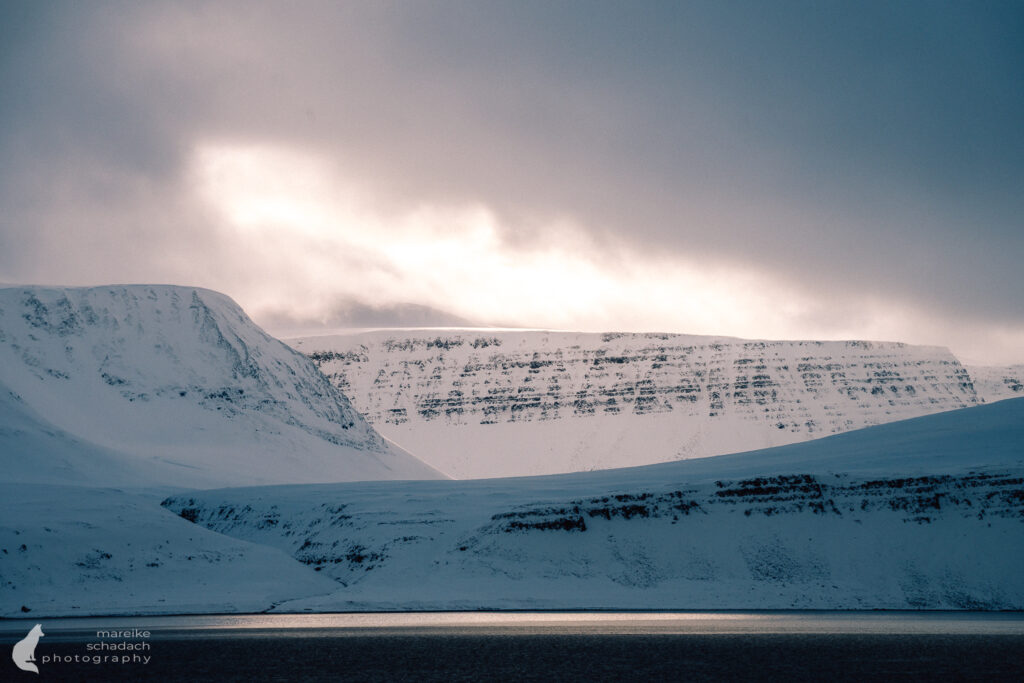
Iceland. Anyone traveling in Iceland will come across the term “wilderness” time and again. But while much of the island is now well-developed and accessible to tourists, there are still places that remain largely untouched by human activity. One such place is Hornstrandir—a remote, uninhabited stretch of land in the far northwest of Iceland. In winter, this already isolated region becomes a quiet, almost forgotten world. That’s exactly where my journey took me: to the Kvíar Lodge in the Hornstrandir Nature Reserve, one of the best places in Iceland to spot arctic foxes.
Unassigned, unpaid advertising. The article contains affiliate links.
Secluded Hornstrandir in Iceland's Westfjords
In earlier times, the people of Hornstrandir lived primarily from whaling, as farming was virtually impossible in the barren, inhospitable landscape. When whaling was banned, many turned to herring fishing. However, better fishing grounds elsewhere and more attractive job opportunities led to more and more families gradually moving away from the region. In the 1950s, the last residents left the peninsula, driven out by harsh winters, rugged nature, and the hardships of daily life. Even the Kvíar farm in the Kvíadalur Valley—inhabited since the 14th century—was abandoned to the elements in 1948.
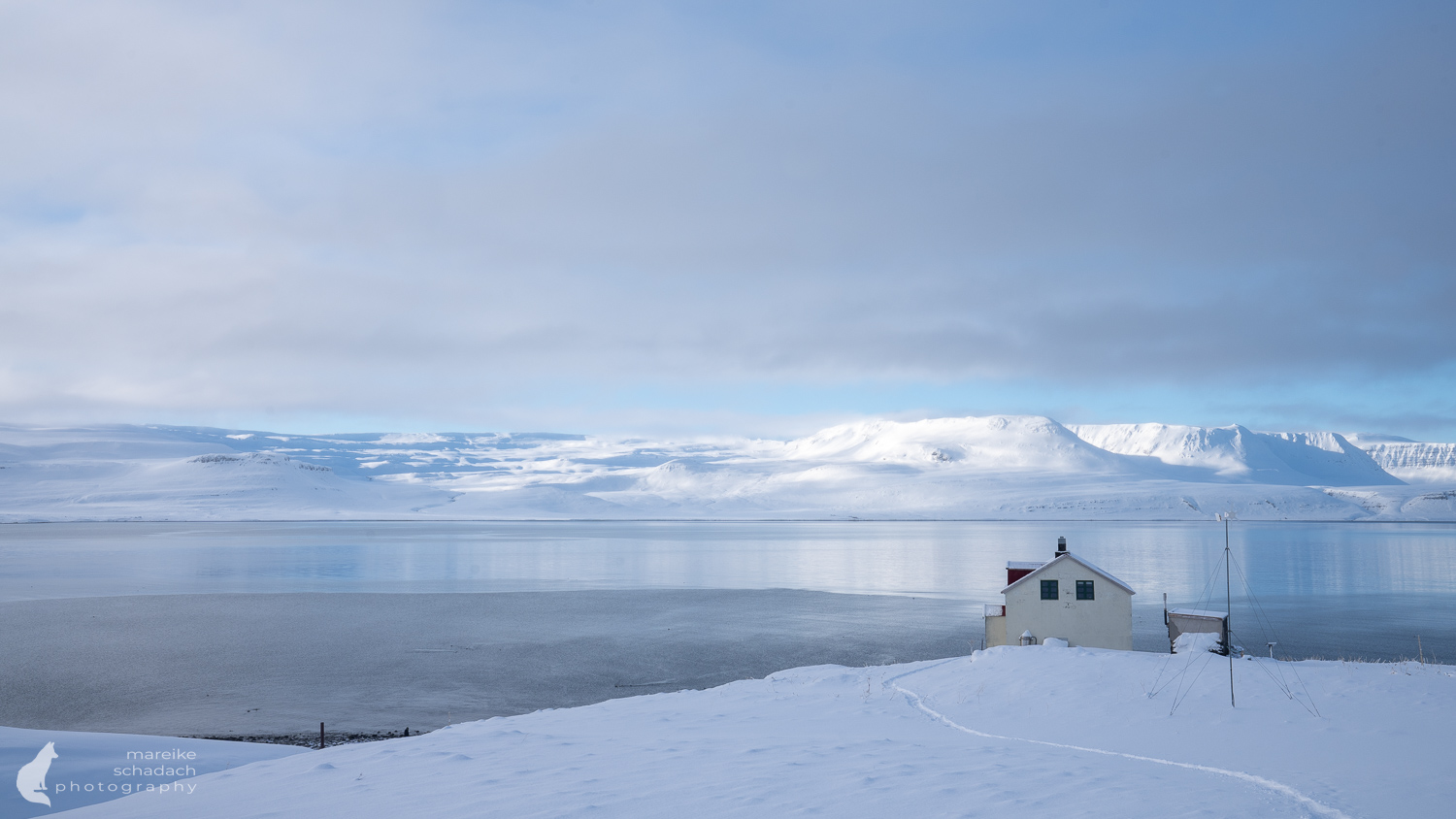
In 2012, the farm was brought back to life and has since served as a base for tours and winter stays. The Kvíar Lodge will also host our small group of eight nature photographers, plus a guide from Borea Adventures, for a week. There’s no luxury here, but exactly what you quickly come to appreciate in a place like this: oil heating, a wood-burning stove, delicious meals, and a sauna. The area has been a nature reserve since 1975. To this day, there are no roads leading to Hornstrandir.
Iceland's Polar Fox Reserve
The Arctic fox is the only terrestrial mammal species endemic to Iceland whose origins date back to the end of the last Ice Age. It is believed that Arctic foxes crossed the frozen sea from Greenland or Scandinavia and reached the island before humans settled there. The subspecies found in Iceland Vulpes lagopus fuliginosus unterscheidet sich genetisch und morphologisch leicht von anderen Populationen im arktischen Raum, deren Verbreitungsgebiet zirkumpolar nördlich der Waldgrenze liegt.
For the early Icelandic settlers, the Arctic fox was both a threat and a resource: it stole chickens and lambs, but at the same time, its fur and meat provided warmth and food. Traditional hunting methods, such as den hunting, are still common in Iceland today, even though the fur has lost its economic significance. While foxes are still hunted in large parts of the country, the population in Hornstrandir has enjoyed full protection since 1994. This is clearly reflected in the animals’ behavior, as the foxes show very little wariness. The Icelandic Arctic fox population is currently estimated at about 10,000 animals, although its distribution depends heavily on food availability and regional hunting regulations. The fox on Hornstrandir has no natural predators to fear, such as the Arctic wolf or polar bear. Nor does displacement by the red fox—which is advancing northward due to global warming—play a role here, at least not yet.
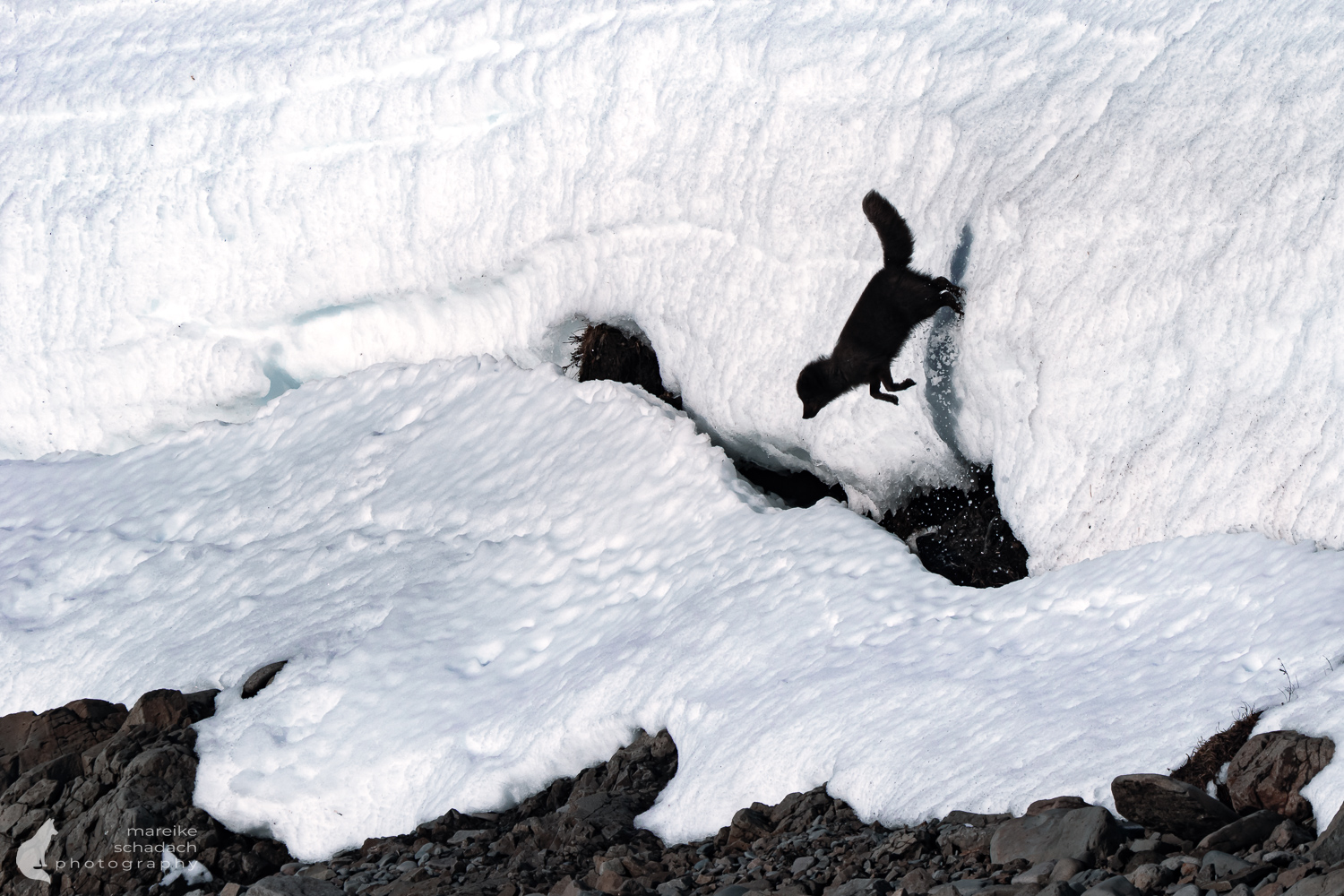
A key advantage for the Arctic foxes in Hornstrandir is not only the hunting ban but also the abundant food supply. Millions of seabirds—including puffins, fulmars, and guillemots—breed on the peninsula’s imposing cliffs, providing a rich source of food. The long coastline, with its numerous bays and fjords, ensures a steady food supply in winter, when the arctic foxes feed on washed-up carrion, marine animals, and even algae.
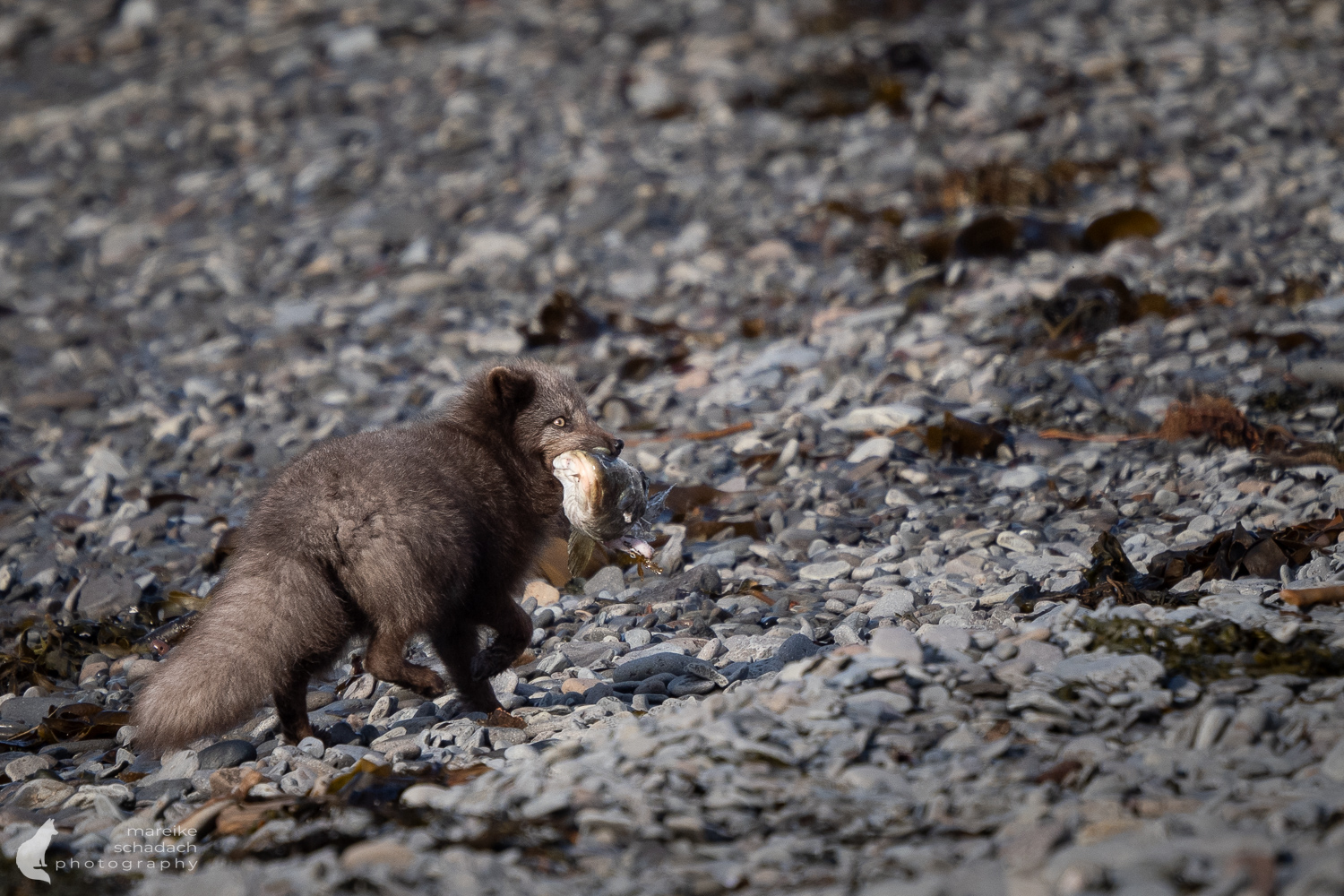
Anatomy of a Survivalist
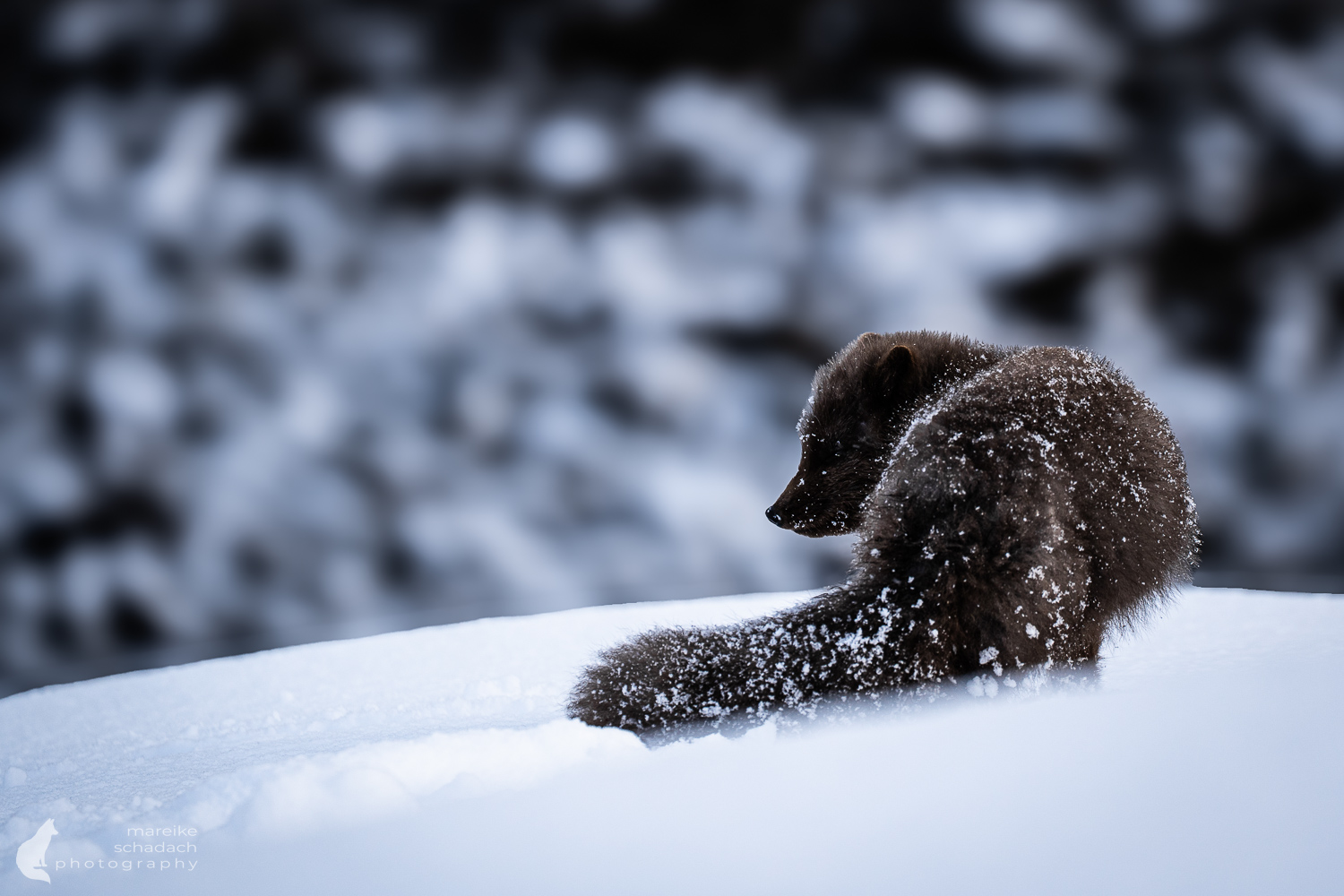
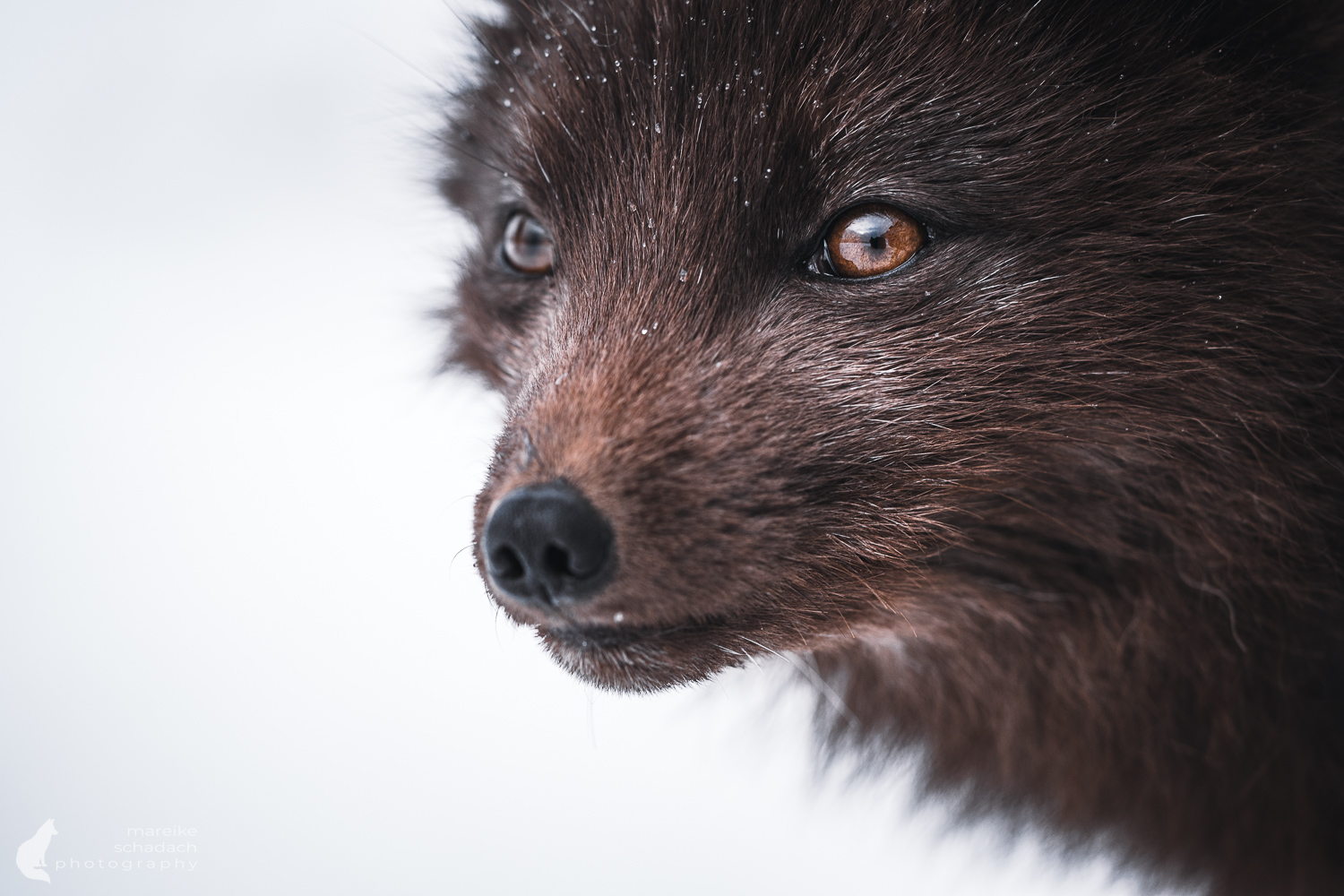
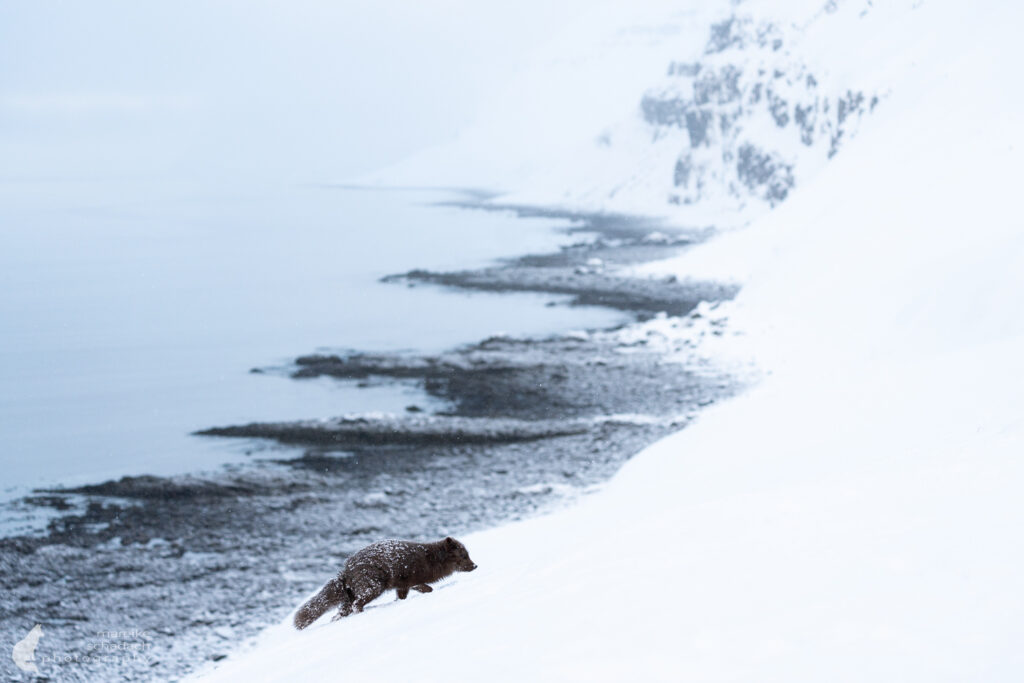
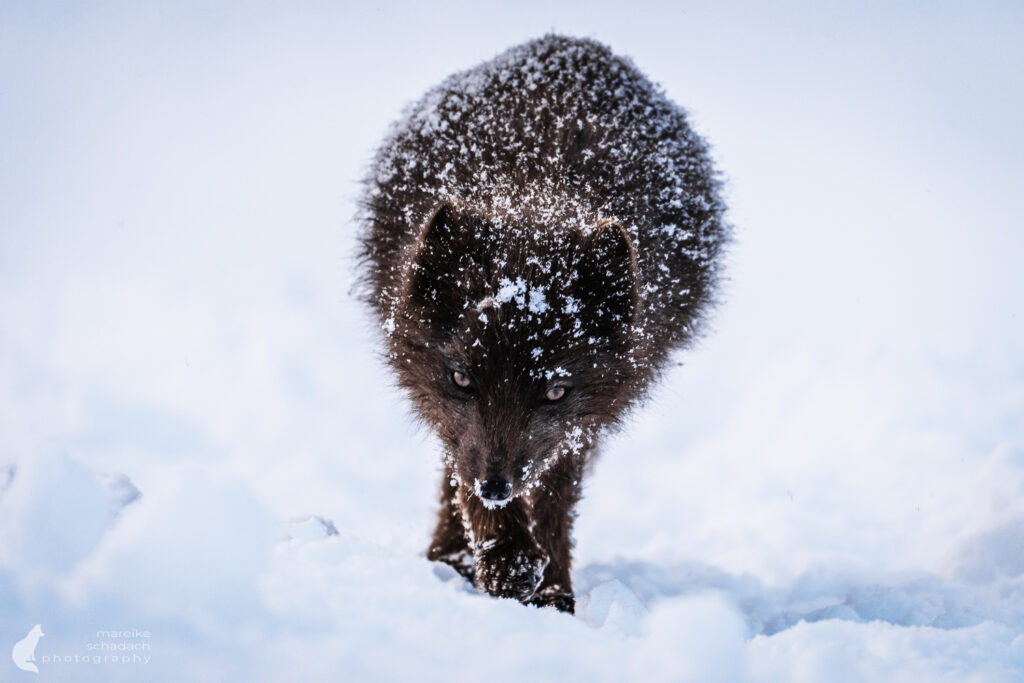
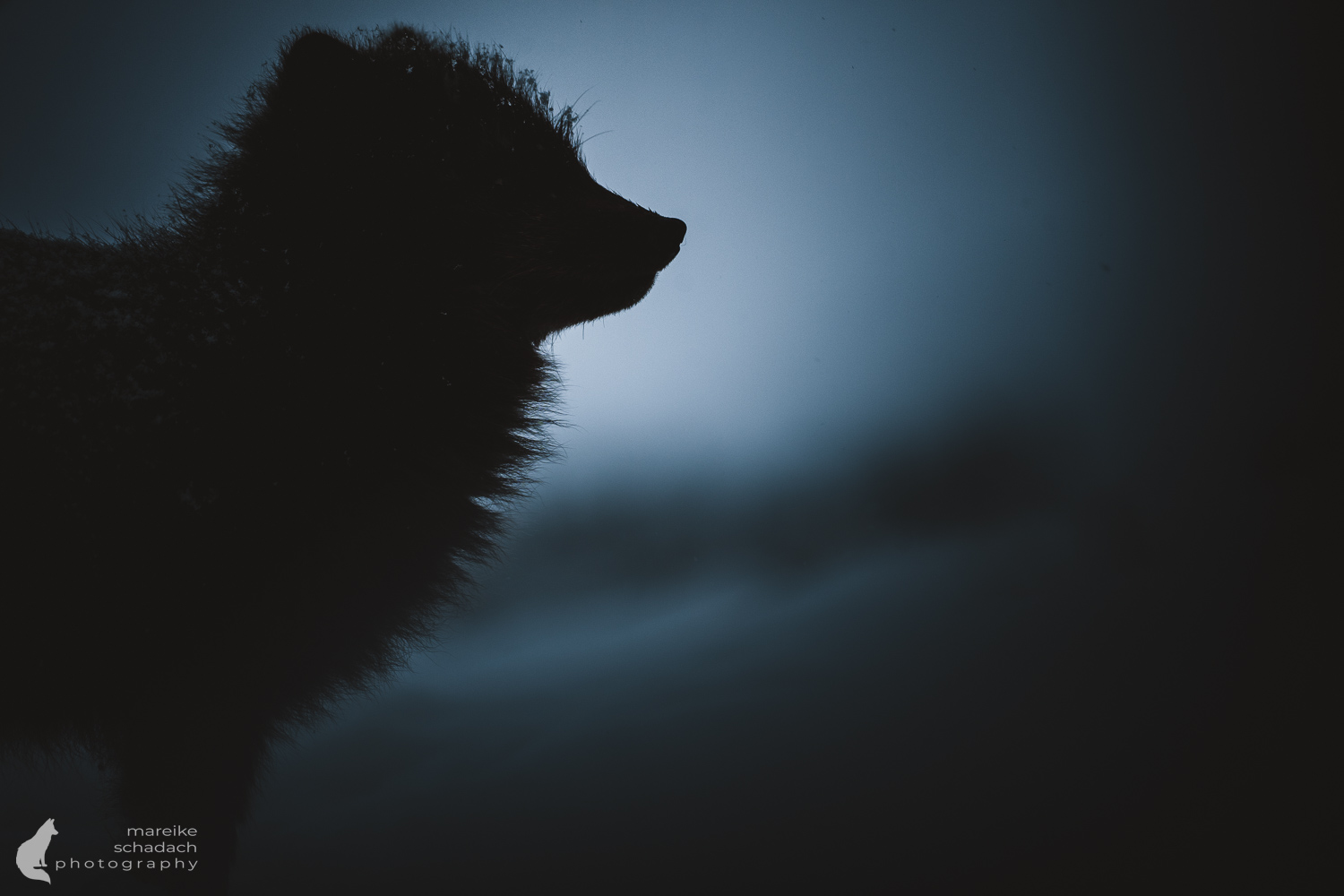
With its stocky build, short legs, and small ears, the arctic fox is perfectly adapted to extreme cold, with temperatures dropping below −50 °C. Its multi-layered fur is among the densest in the entire animal kingdom: it is covered with up to 25,000 hairs per square centimeter. Even the pads of its paws are covered with fur, just like those of arctic hares—which, incidentally, is where it gets its scientific name Vulpes lagopus meaning “hare-footed fox.”
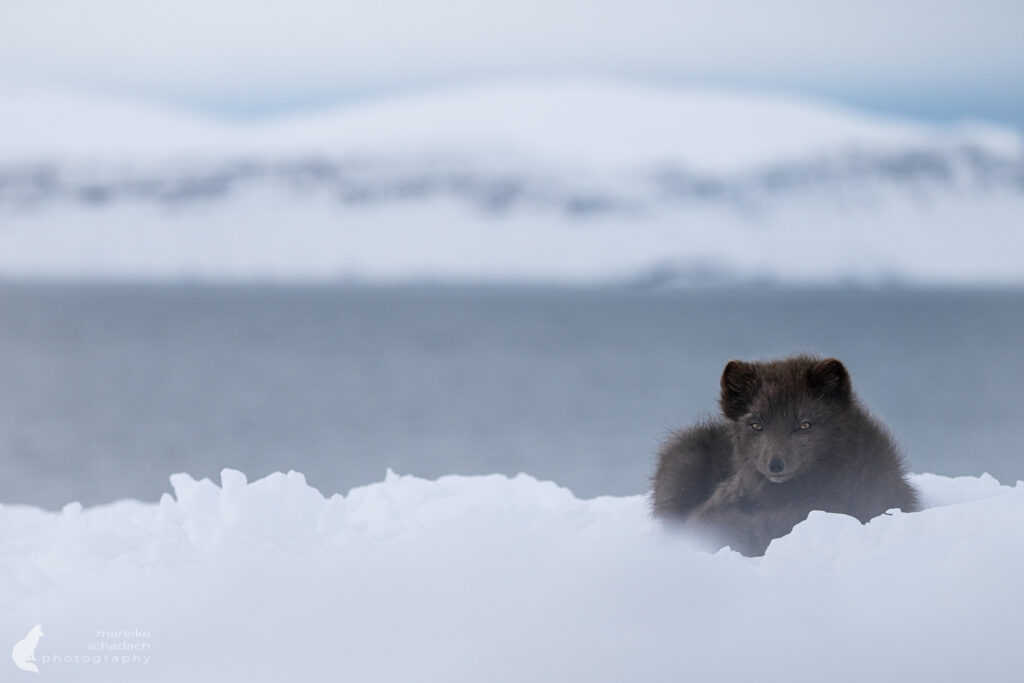
The broad, fur-lined tail serves both as a balancing aid and as an extra blanket or mattress when resting. When winter storms are at their worst, the arctic fox lies down in a sheltered spot and lets the snow cover it, or burrows into a snowdrift. In addition to its fur, the polar fox is protected by its fat reserves, which it builds up in the fall and which can nearly double its body weight. The summer and winter appearances of polar foxes are completely different, as the thick winter coat makes them appear plump and short-legged, while in summer they look slender and long-legged.

Another adaptation to the cold is the integrated heat exchanger in the limbs, where the arteries and veins are located very close to one another. Warm arterial blood transfers heat energy to the cooler venous blood, which flows back in the opposite direction. This way, relatively little heat energy is lost, and the venous blood is already preheated before it flows back to the body’s core.
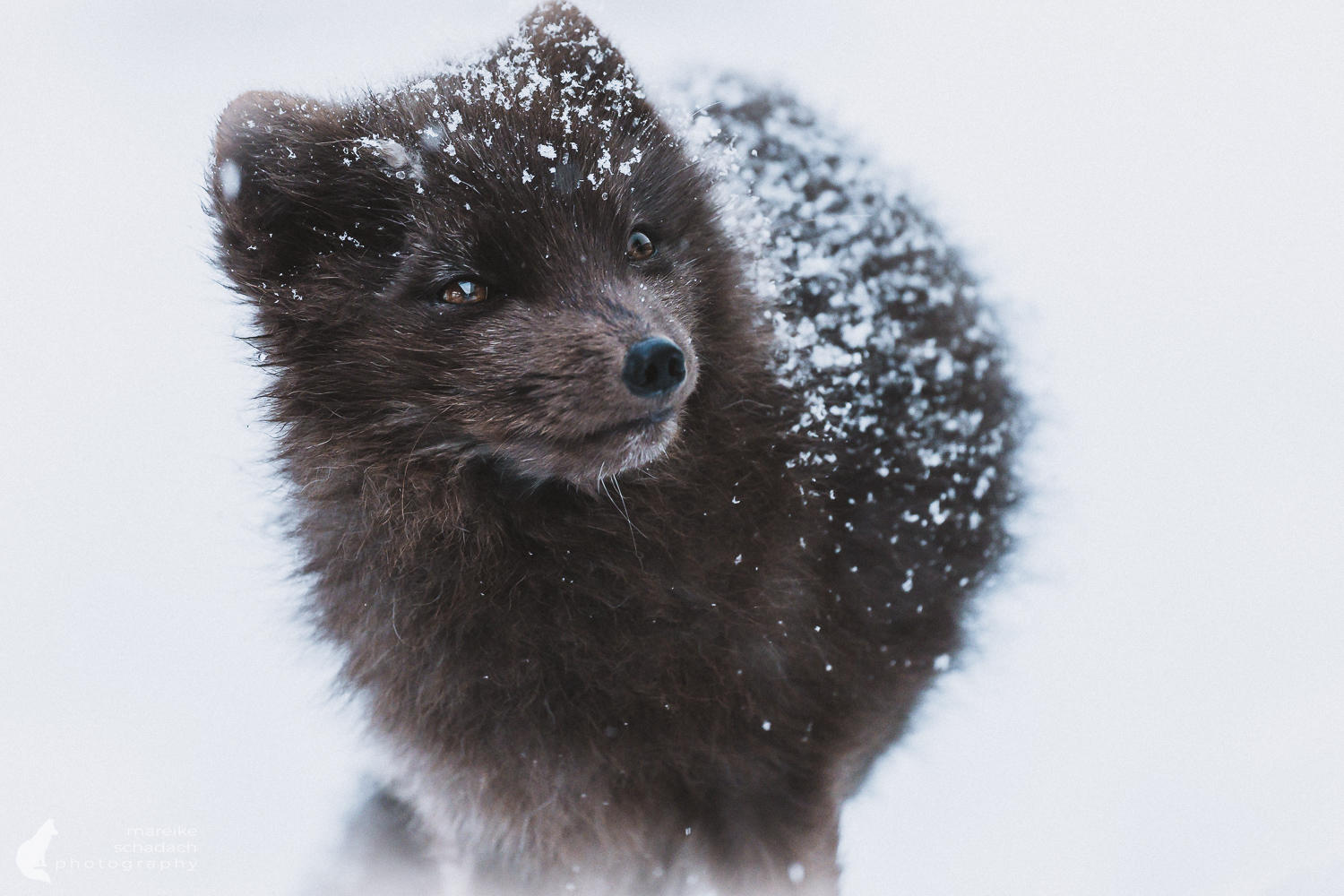
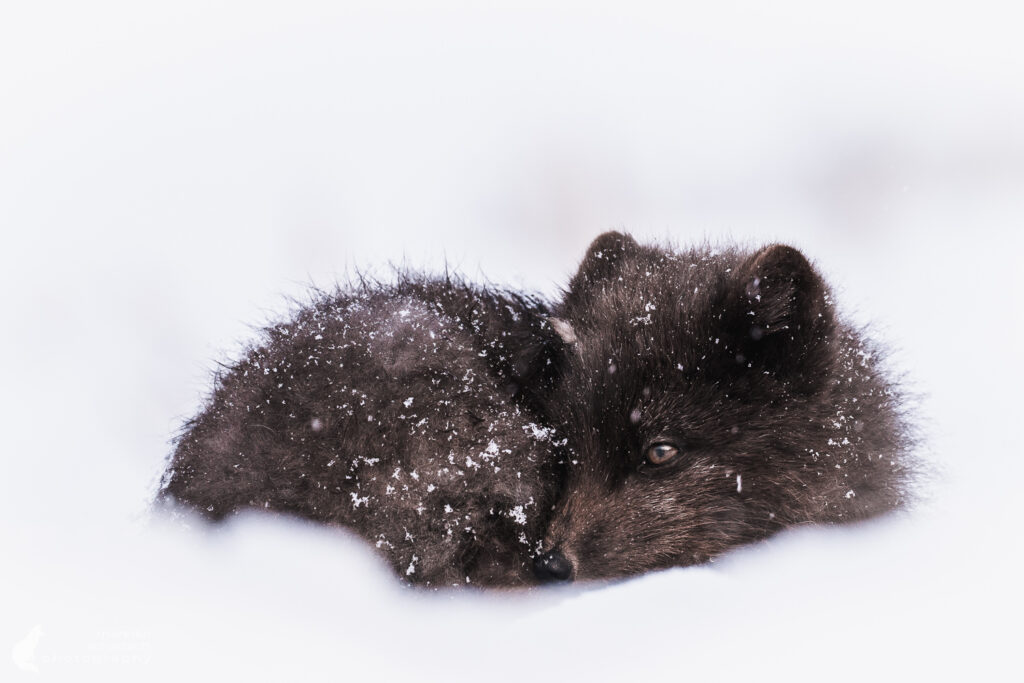
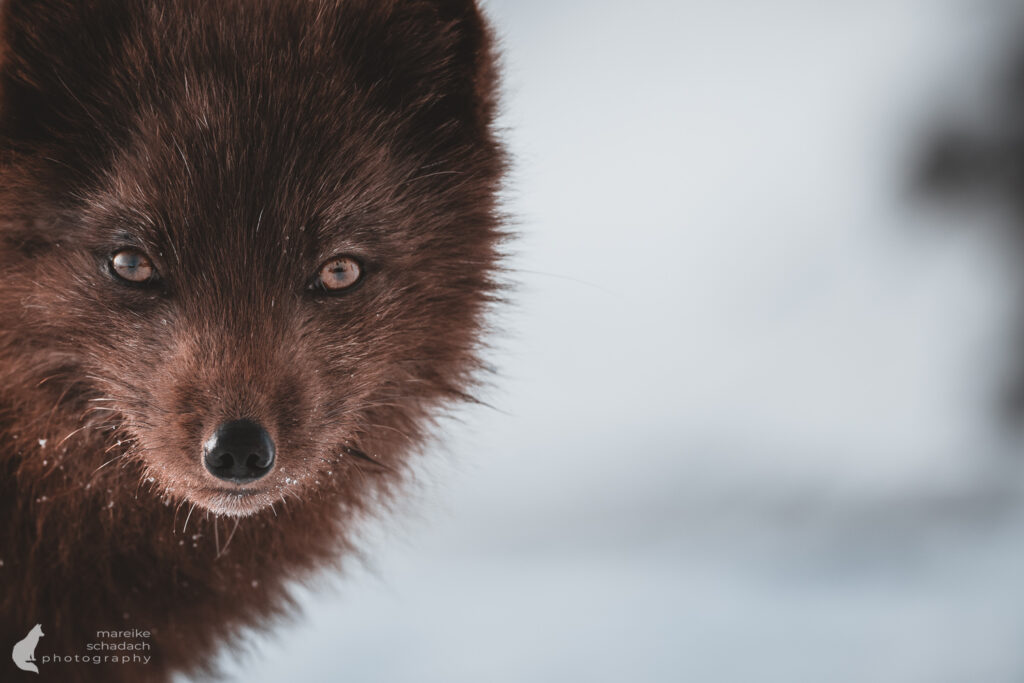
First Encounter with the Polar Foxes of Hornstrandir
Shortly after our tour of the house, we heard the first fox bark. We dropped everything, grabbed our cameras, and rushed outside. It was the female fox. Mating season is about to begin, and the arctic foxes are now becoming highly territorial. They mark the boundaries of their territories with urine and use a complex repertoire of vocalizations and body language to communicate. The female fox, who looked very large in her winter coat, ran past our lodge coming from the coast and disappeared as a small dark speck in the distance. A short time later, we saw her again with her mate.
Arctic foxes form monogamous pairs during the breeding season and remain together in the same territory for years. They live in dens, the size of which can vary greatly depending on conditions. The annual mating season begins in March and can last until April. After a gestation period of about two months, three to nine blind, deaf pups covered in dark brown fur are born. For the first three weeks, they feed exclusively on their mother’s milk, and the male provides the female with food. After three weeks, the pups begin to eat solid food, which their parents bring to the den. At about four months, they are fully independent. In the fall or winter, they then leave their mother and begin to search for their own territory. Young polar foxes reach sexual maturity about ten months after birth and live to be three to six years old.
Sometimes, a territory will also tolerate other foxes that are not mated. Usually, this is a young fox from the last litter, which then helps care for the cubs when the new litter is raised the following summer. A second female fox also resides in the territory at Kvíar Lodge. Just recently, she was involved in a fierce fight. In addition to an abrasion on her forehead, we could see a leg bone that had fused crookedly beneath her delicate pink skin. The little vixen was limping, yet she moved nimbly through the snow and over the rocks with her own unique agility. I was always especially pleased when I saw that she had been successful in foraging along the shore.
Color Morphs of Polar Foxes
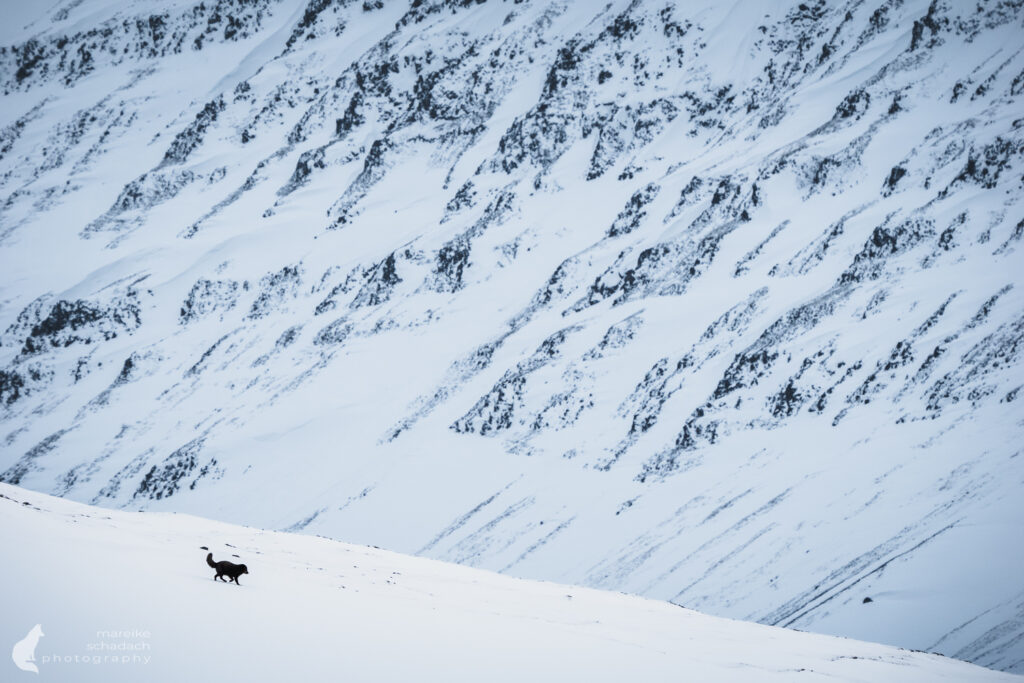
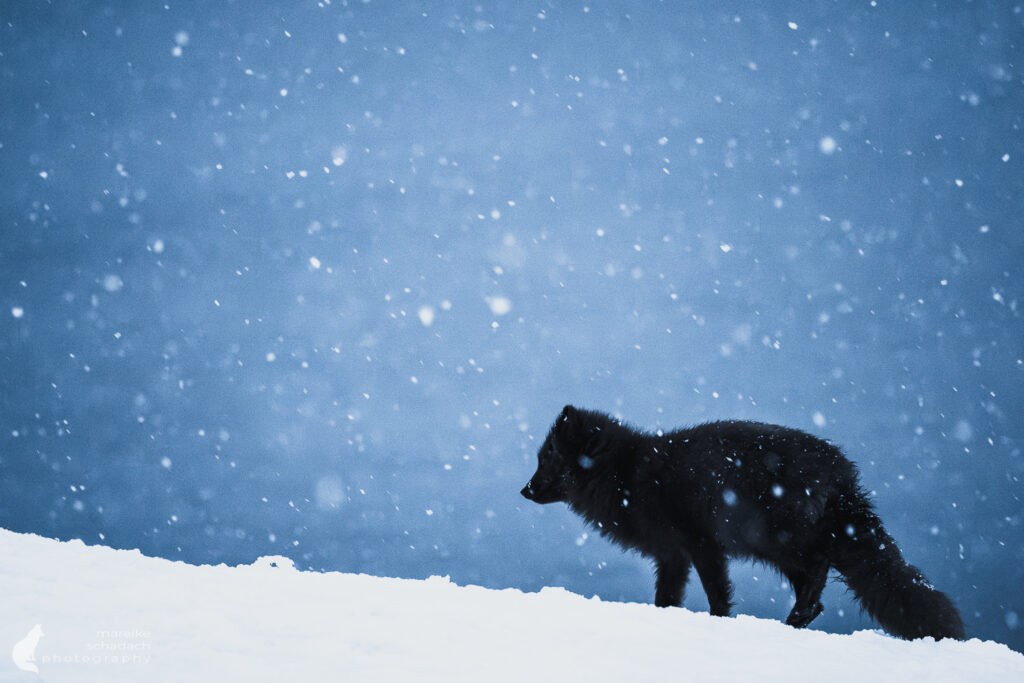
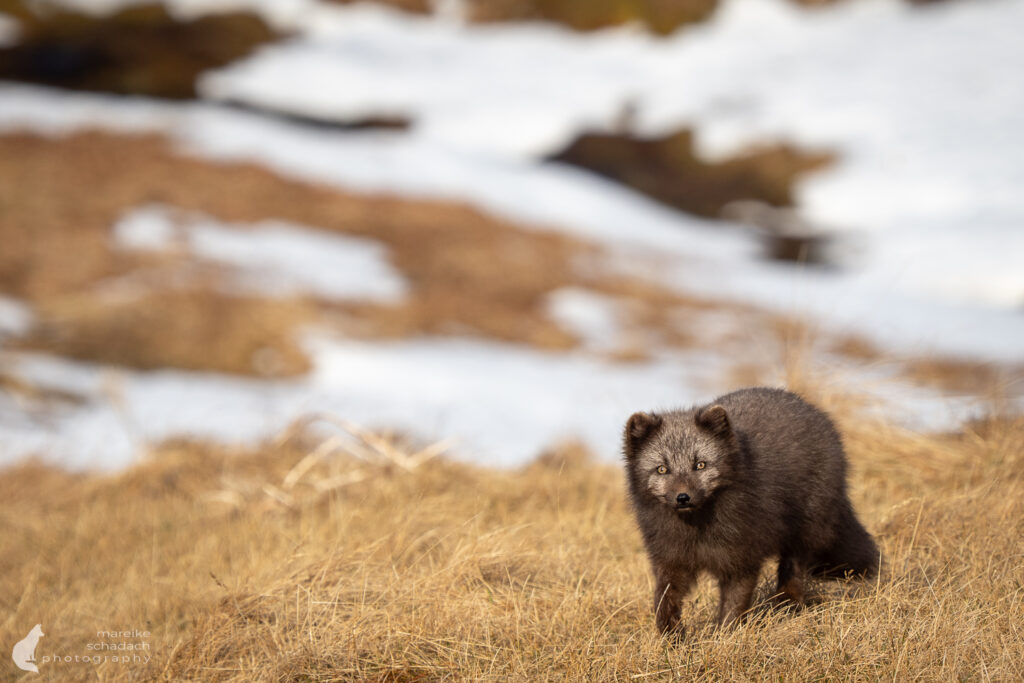
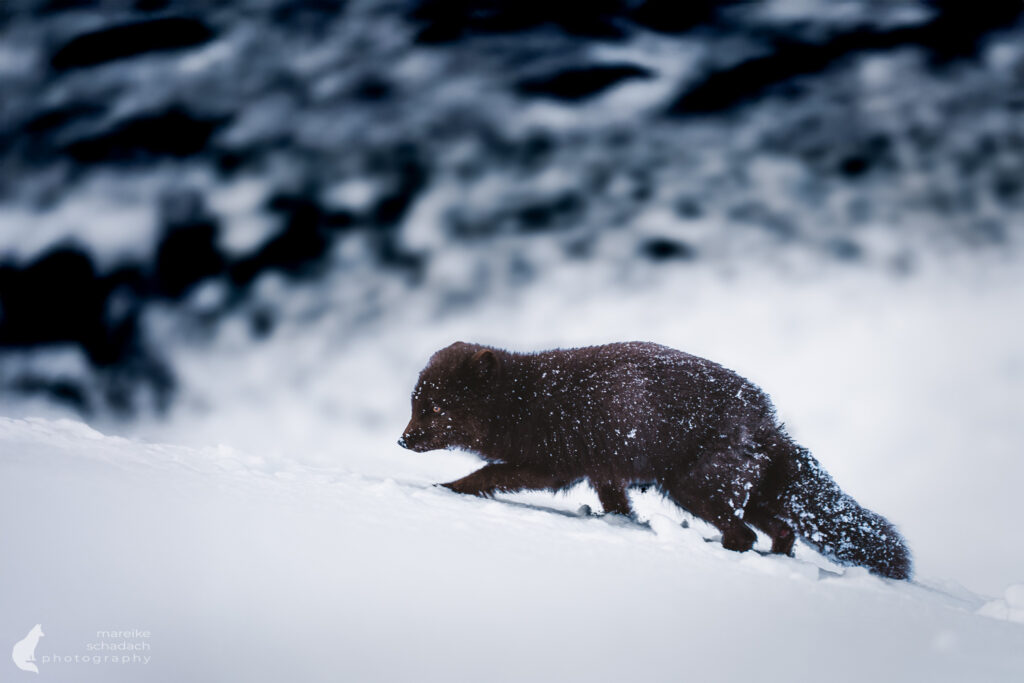
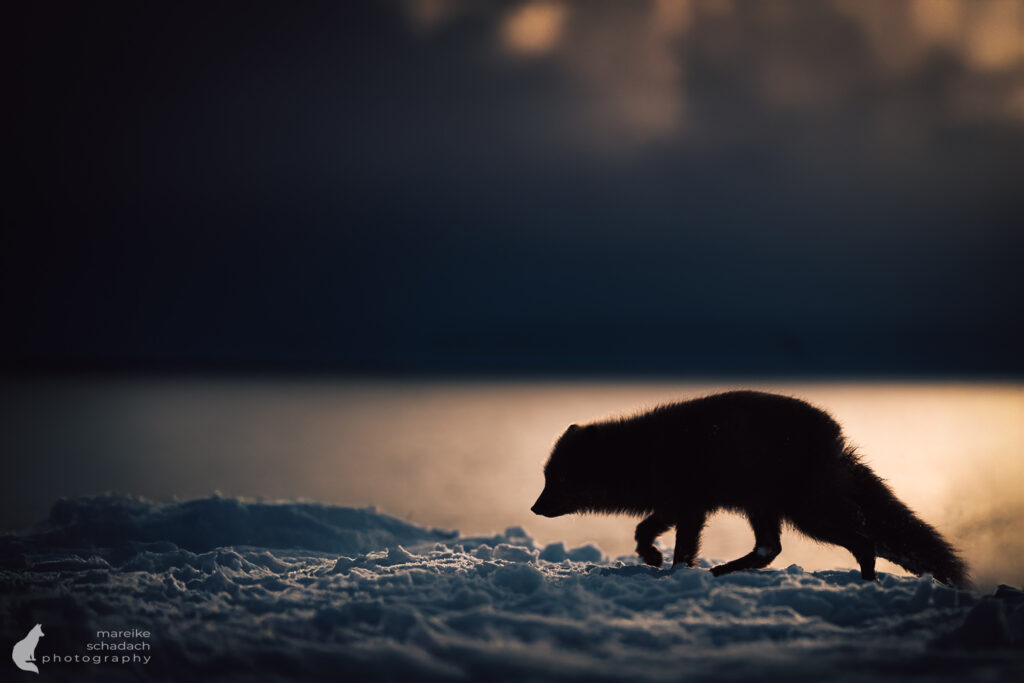
In Iceland, two color morphs of the Arctic fox occur: the white morph and the dark (so-called “blue”) morph. About one-third of Icelandic foxes have a white winter coat, which turns grayish-brown in the summer. The dark variant retains its coloration year-round. This morph is primarily found along coastal regions and on islands such as Hornstrandir. In higher-elevation, more continental areas and in the interior highlands, however, the white variant dominates. The distribution appears to be closely linked to habitat conditions and camouflage advantages: in the rocky, snow-poor coastal environment, the dark morph provides better cover, whereas it stands out more in snow-white tundra.
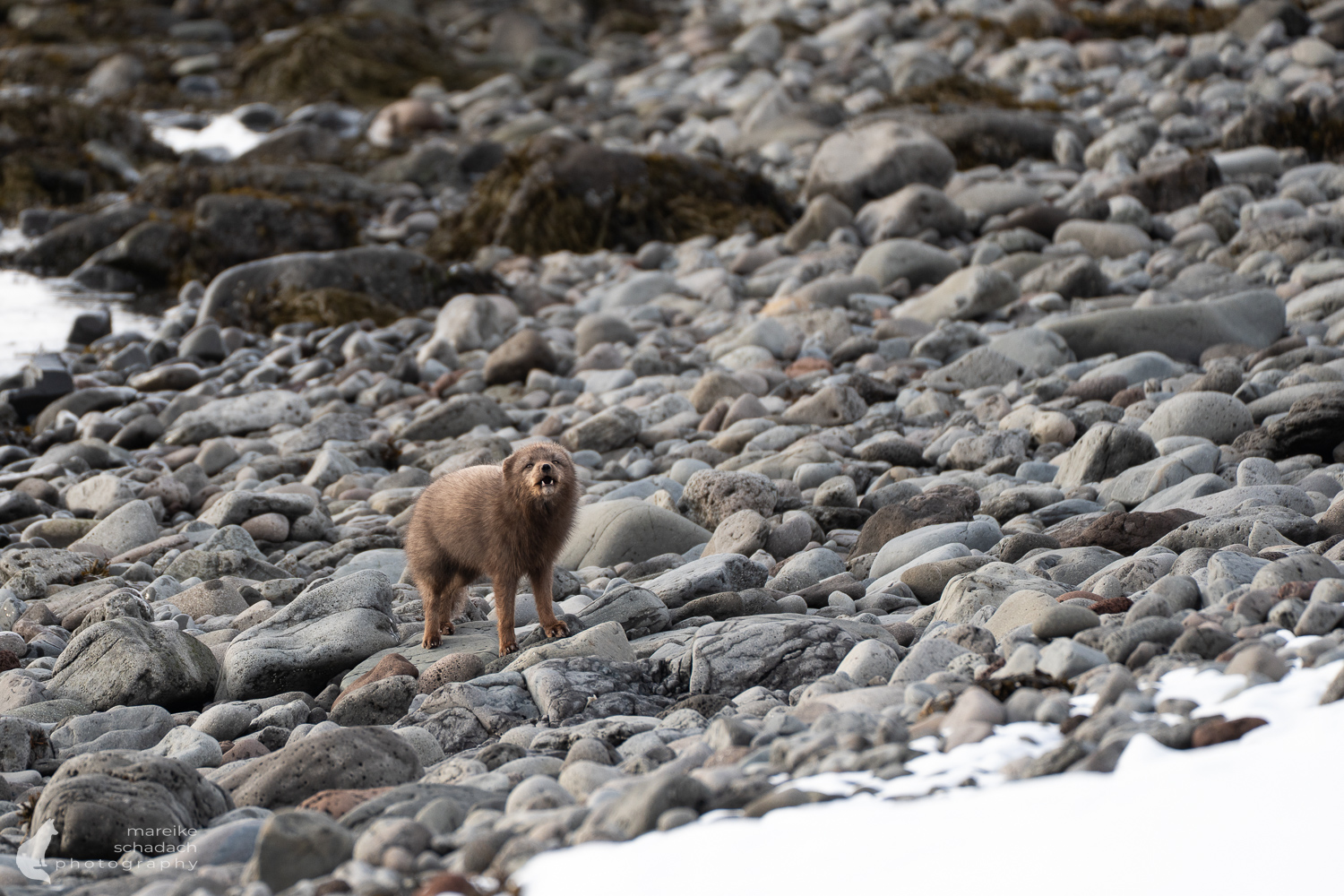
The white coat color is caused by a recessive allele, so dark-coated parents can have both white and dark-coated offspring. White-coated parents, however, produce only white offspring, and mixed-coated pairs produce mixed-coated offspring.
In Tune with Nature
We spent most of the next few days out in the field. Sometimes right in front of the lodge, looking out over the shore; other times on the beach, hidden among the rocks. Bundled up warmly, we practiced patience, observed our surroundings, and waited for the arctic foxes. Sometimes the animals appeared right away; other times, they didn’t show up for hours. We had the best chances of spotting them during low tide, when the foxes would wander along the shore in search of food. But even without a sighting, the time was never wasted—in this landscape, even the waiting is an experience. And every now and then, our guide Jake would come by with coffee, tea, and cookies to make the wait more enjoyable.
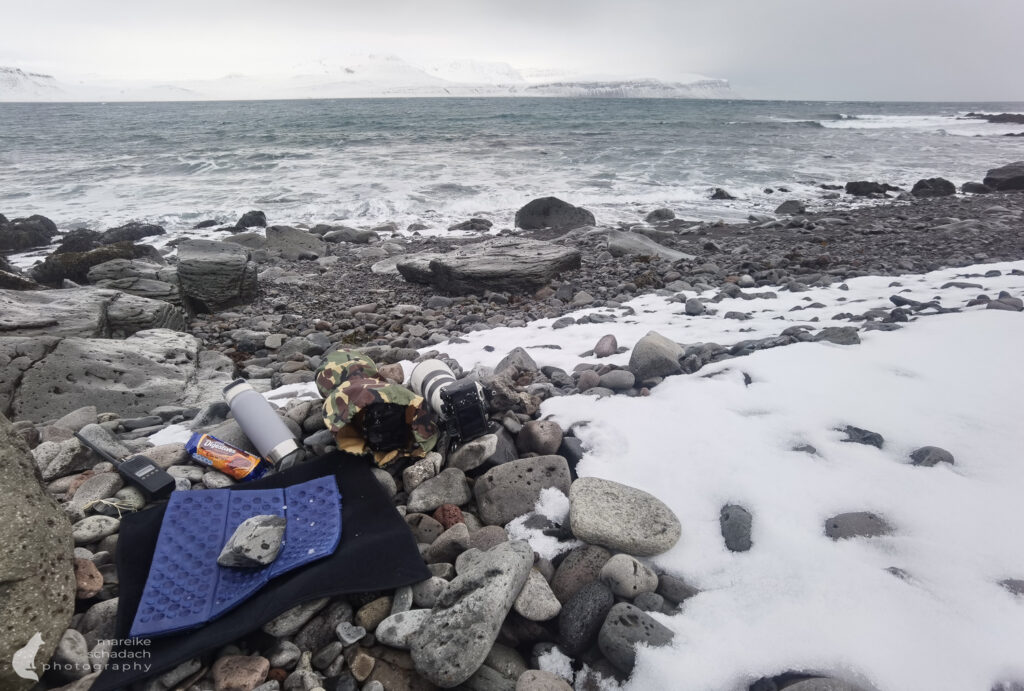
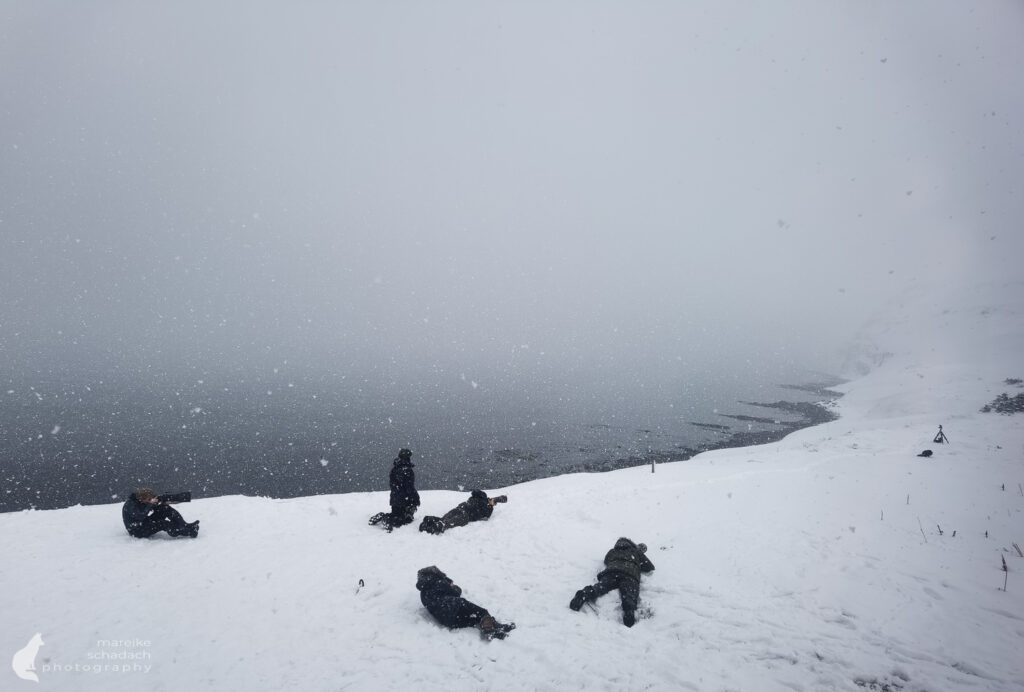
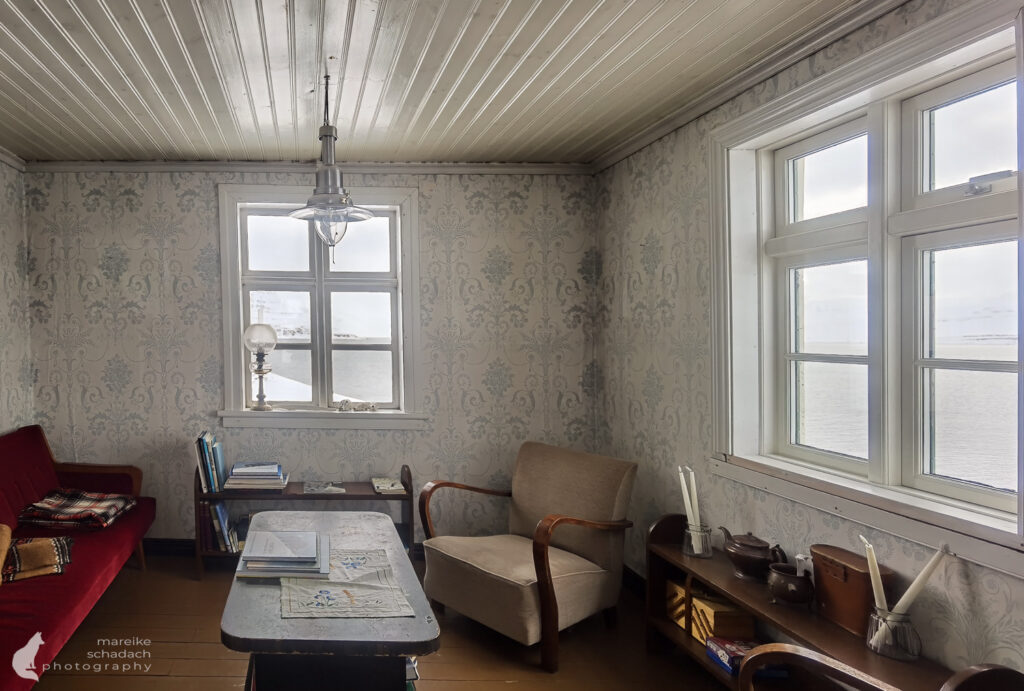
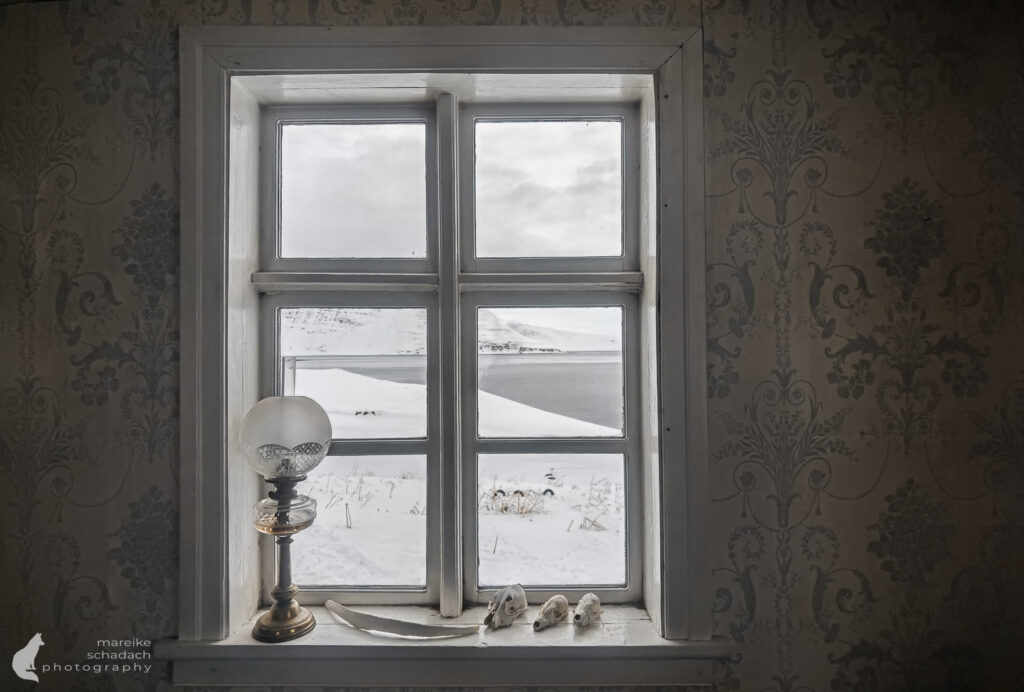
Returning to the lodge for dinner quickly became a regular ritual: take off our shoes, put away our gear, set the table. In the evenings, we often sat for a long time at the large wooden table next to the stove, talking about what we’d seen that day or discussing the effect this place has on you. It’s the same scene that could just as easily have existed centuries ago. Only the clouds and the light are always different—and always a sight to behold.
“In the solitude of the wilderness, nature doesn't speak any louder, but we hear it better.”
— Icelandic proverb (freely translated)
After seven days, it was hard to say goodbye to Kvíar Lodge and the arctic foxes. I had many great photos on my memory card—but even more memories in my mind. Anyone who visits the polar foxes in Hornstrandir isn’t just entering a nature reserve, but also the habitat of an animal that survives there under conditions all its own. The foxes’ apparent proximity to the camera may seem deceptive: especially in a region like this, where the animals show hardly any shyness, it’s up to us to act with the utmost respect and restraint.
Guided Tours in Iceland
Don’t feel like exploring on your own and would rather join a guided tour in Iceland? Nothing could be easier. Check out the great selection offered by Guide to Iceland Here you’ll find not only a wide variety of tours but also the perfect rental car and accommodations. If you book through the affiliate link on Guide to Iceland, you’ll support Fernweh-Motive with a small commission, which allows me to continue bringing you interesting content. The booking won’t cost you any more.
Book Recommendations for Iceland
Do you want to know where the journey is going? Then I can recommend this travel guides* to you.
You can order the travel guides on Amazon by clicking on the pictures. If you buy a product via an affiliate link, I get a small commission and you help me to keep filling Fernweh-Motive with interesting articles. This does not make the product more expensive for you.


Are you familiar with the Hornstrandir Nature Reserve, and have you perhaps even seen polar foxes there? Or do you have any other tips for spotting polar foxes in Iceland? If so, please leave me a comment!
Do you want to know when there are new articles on my blog? Then follow me on Facebook, Pinterest or Instagram. I would also be very happy if you share my article with your friends.
Recommendations for further Reading
Do you love wildlife watching as much as I do? If so, you'll definitely be interested in the following articles: