Japan. Hokkaido, Japan’s northernmost island, is a worthwhile destination for wildlife photographers in winter. The eastern part of the island, in particular, is known for its rich wildlife. Here, you can watch Manchurian cranes performing their elegant dances, photograph Steller’s sea eagles catching fish, spot whooper swans at hot springs, and discover red foxes in the frosty landscape. Sika deer are also fascinating to watch, and in some places can even be seen right by the roadside. In the following article, I’ll share my experiences from my winter trip to Hokkaido’s best wildlife spots and provide practical tips for planning your own trip.
Unassigned, unpaid advertising. The article contains affiliate links.
The Red-crowned Cranes – Dancers in the Snow
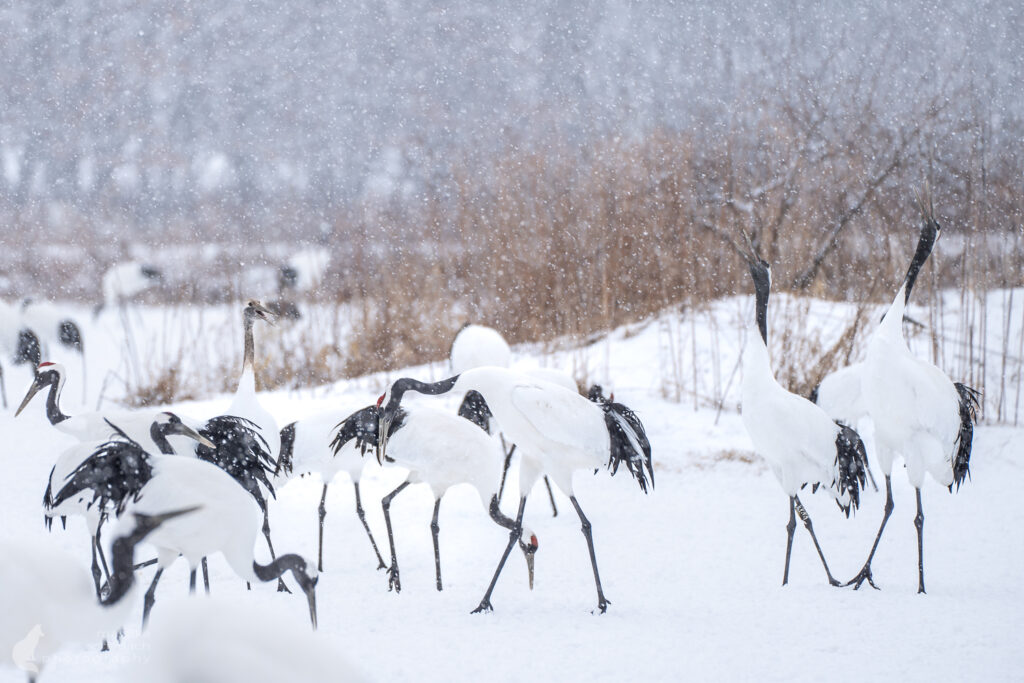
West of the port city of Kushiro lies the Kushiro Shitsugen Marsh. It is Japan’s largest wetland, a UNESCO Ramsar Site, and perhaps the most famous spot for wildlife watching in Hokkaido. In winter, it looks like a white labyrinth of frozen river branches and snow grass. This is exactly where the red-crowned cranes (Grus japonensis)migrate in winter. They are one of Japan’s most famous symbols and were the main reason for my trip to Hokkaido.

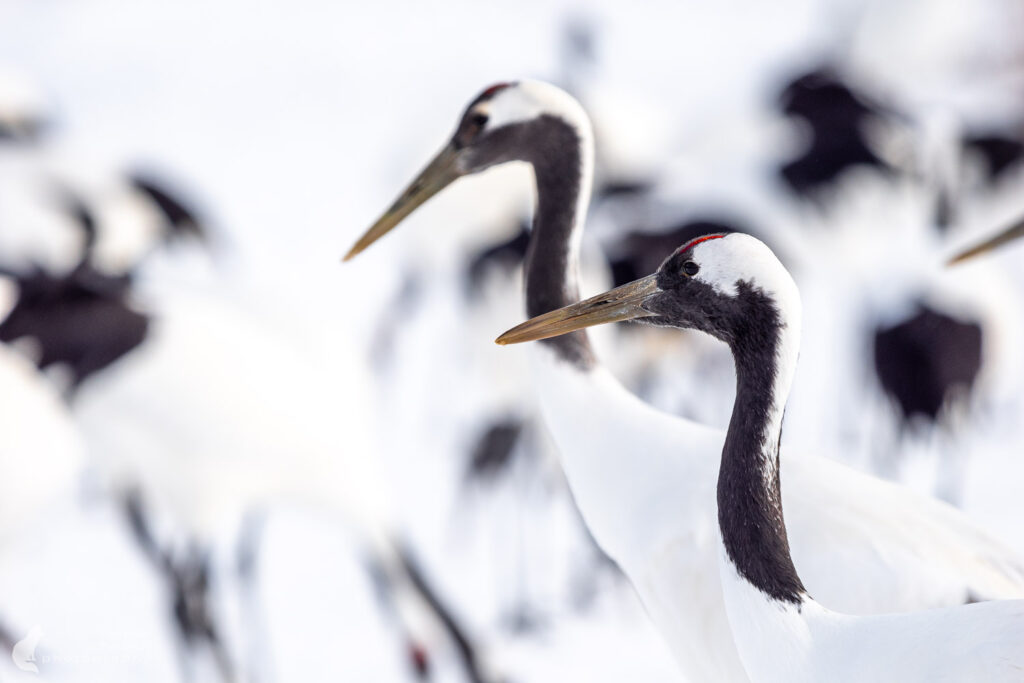
Am Tag nach der Ankunft begrüße ich unseren Guide von PicchioThe day after we arrive, I greet our guide from Picchio. Our small group sets off for the Kushiro Wetlands in a small Mitsubishi van. It’s snowing, and we crawl along the country road at 40 km/h. Do we even stand a chance of seeing cranes in this weather? But our guide is confident.
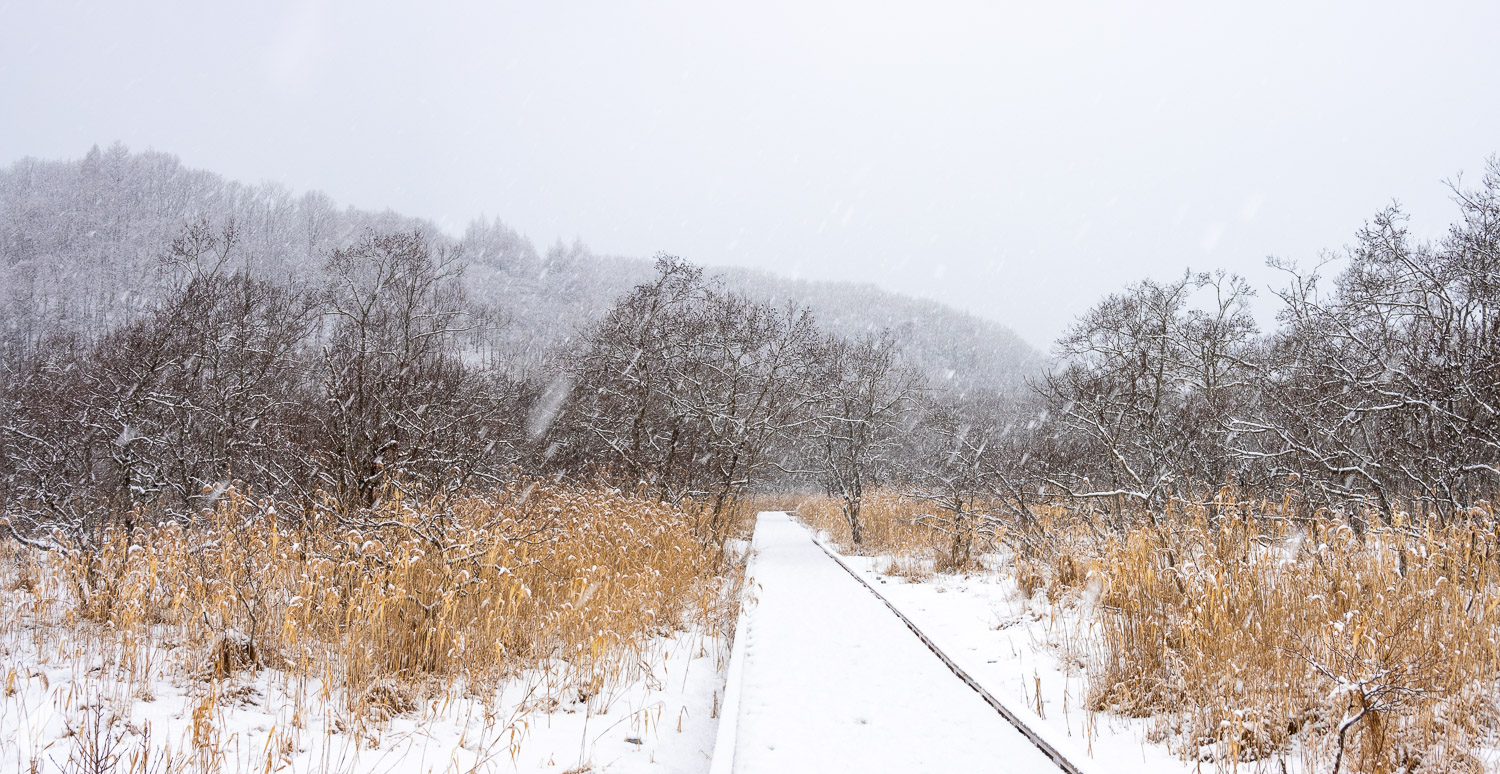
First, we stop by the On’nenai Visitor Center and trudge along snow-covered wooden walkways through the marshland, where cranes also nest in the summer. Then I see my first crane—as a cardboard model in the exhibit. I’m impressed—it’s huge! Fully grown, these birds can reach up to 1.60 meters in height and have a wingspan of up to 2.50 meters. I’m getting impatient and can hardly wait to get to the observation point and finally see a real crane.
Winter Feeding of the Red-crowned Cranes
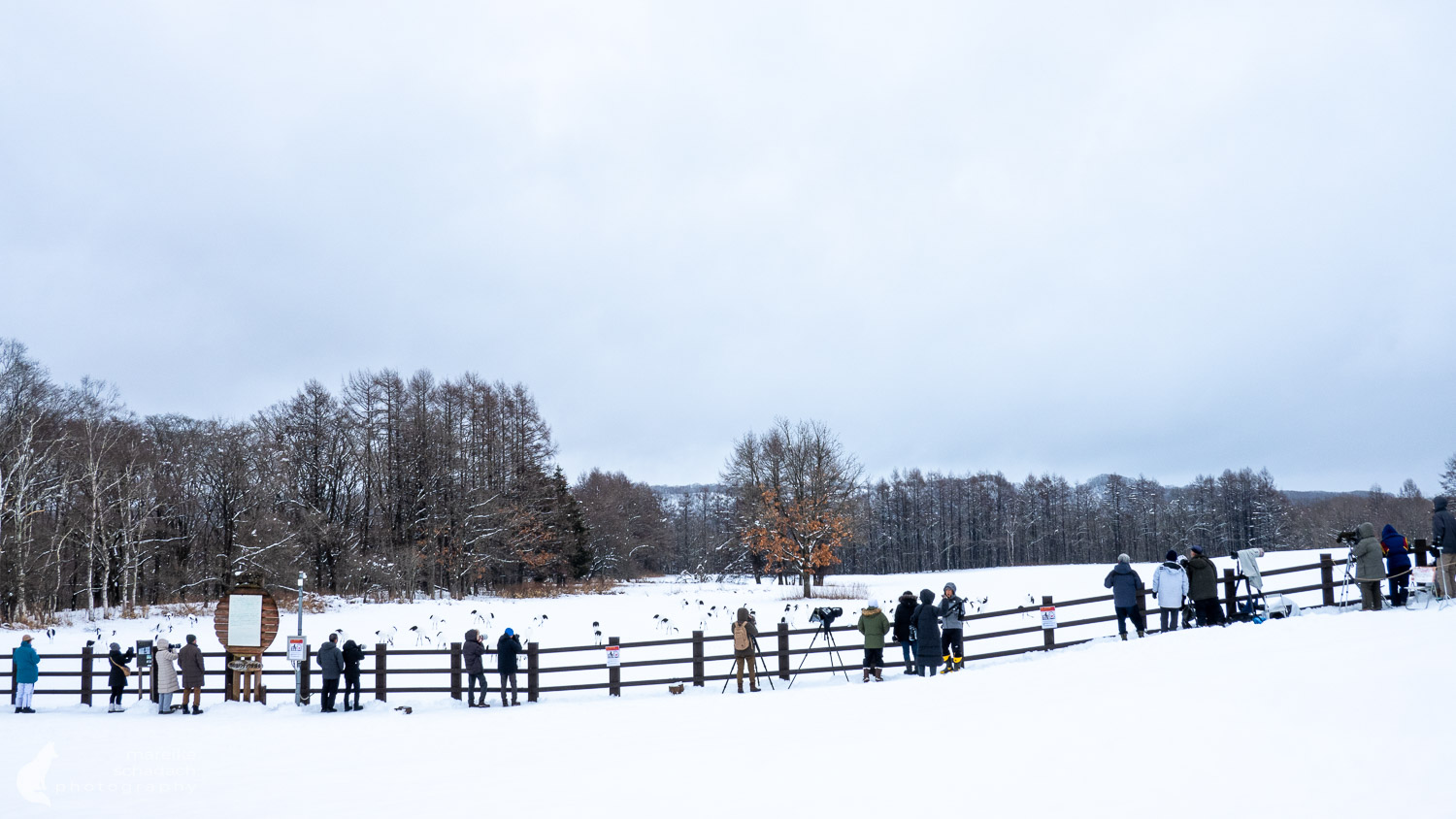
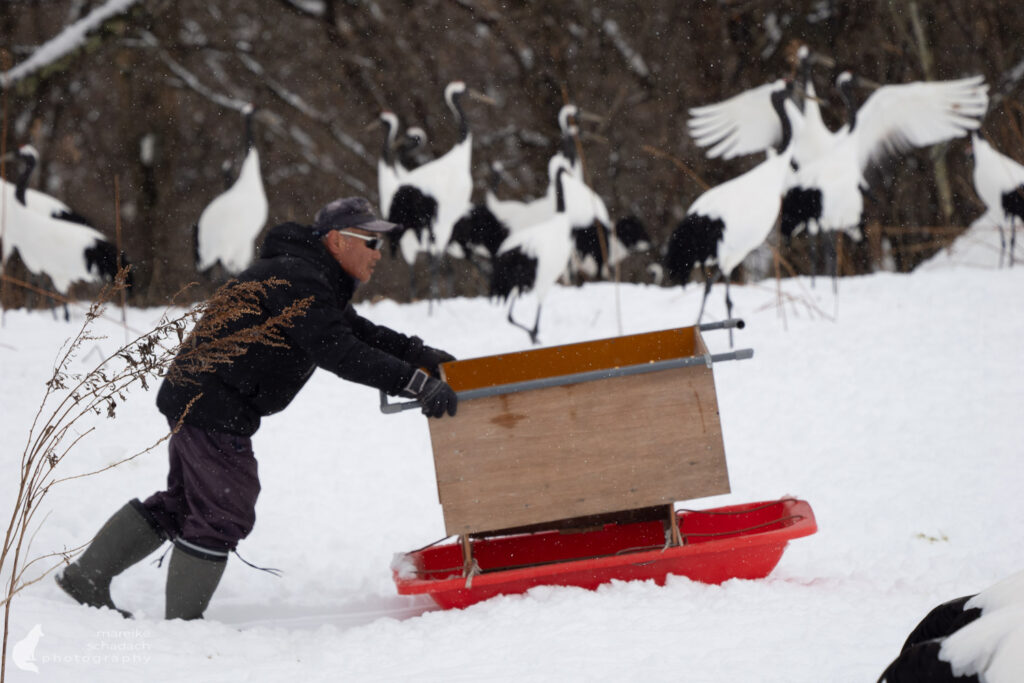
When I watch cranes in Germany, I have to be careful. Given their long flight distance, the birds would otherwise quickly disappear with their thunderous trumpeting calls. Here in Kushiro, everything is completely different. I rest my camera on the wooden railing and start taking pictures. The red-crowned cranes fill my entire camera frame—they’re that close. There’s a lot of activity in front of the barrier: people come and go, chat, and take pictures. Behind the barrier, the cranes are the picture of calm. Snow is falling lightly, and the cranes are searching the ground for corn kernels, which are scattered twice a day in winter. The birds have learned that people stay behind the barrier and that they are fed by certain people. Three different feeding stations have been set up in the Kushiro wetlands for this purpose.
On my second day of observation, I was even able to witness the feeding. The birds arrive well in advance, prancing excitedly as their red headplates swell and display their vibrant color. The birds are by no means shy at these moments, and perhaps they don’t mind being photographed by dozens of photographers. After all, this allows them to tell their own story and share the great success of the species conservation efforts taking place here with the whole world.
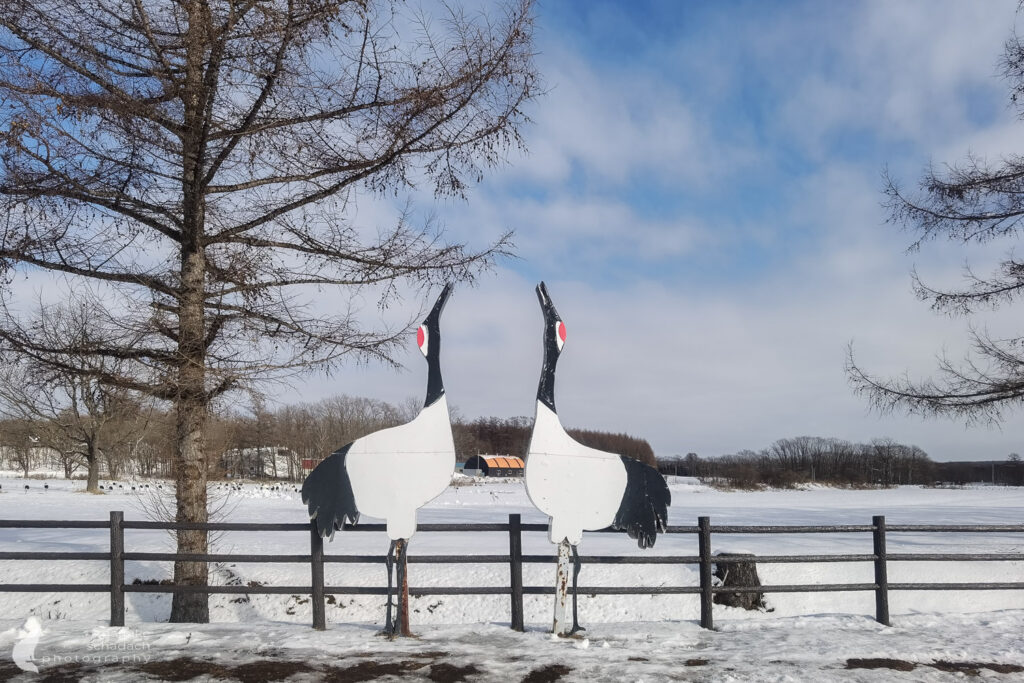
You can learn more about the red-crowned cranes—how they were saved from extinction and where the best places are to observe them—in my separate article, Crane Observation in Hokkaido: Locations and Photo Tips.
Sika Deer – Winter Survivors
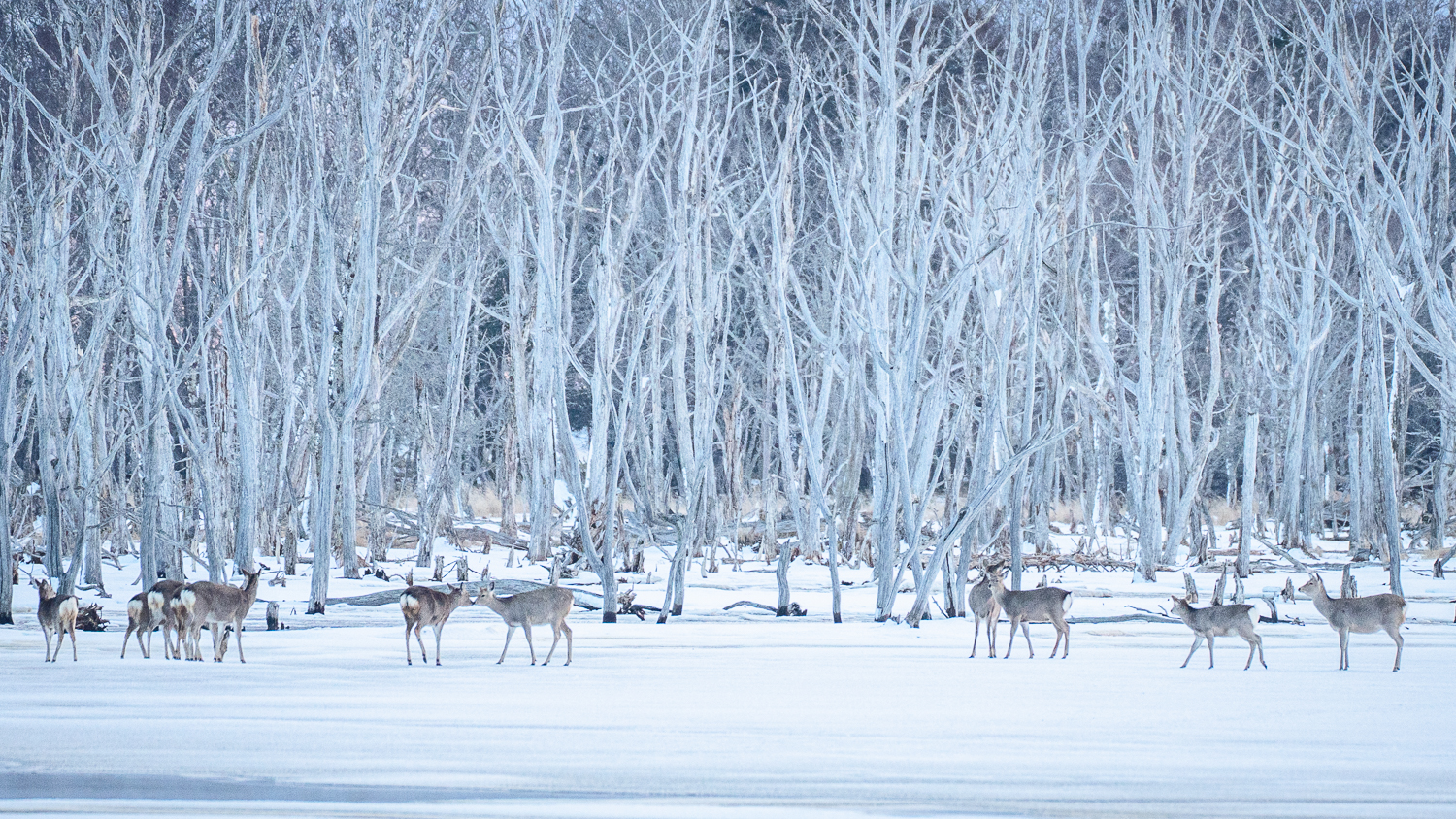
After a long day at the crane feeding stations, we head back to Kushiro. It’s still light out for a while, so we take the small, longer road right through the wetland. In the snow-covered landscape, we still spot a few cranes sneaking some livestock feed, and we stop at a horse pasture where a group of Hokkaido ponies—an ancient traditional breed—are braving the winter. After a few kilometers, the landscape changes; we’re surrounded by lakes and gnarled trees, and suddenly three sika deer are standing right in front of us on the road. In the twilight, we can only proceed slowly from here on out, as we keep seeing sika deer along the roadside. That evening, I would never have believed what awaited me later on the Notsuke Peninsula.
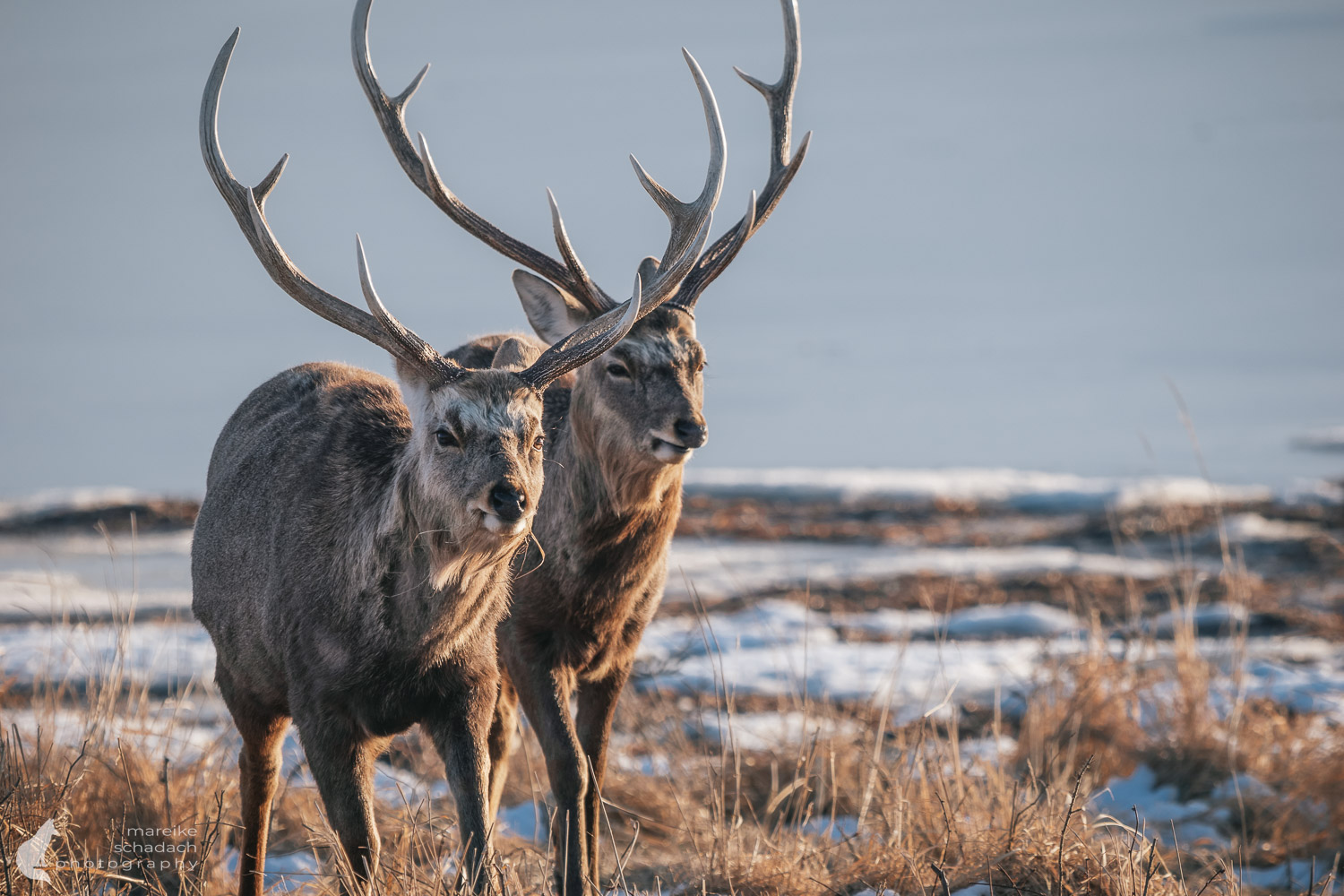
The sika deer (Cervus nippon yesoensis) is ubiquitous in Hokkaido and shapes both the island’s landscape and its culture. Originally a forest dweller, it has long since spread to open coastal regions and agricultural areas as well. Especially in winter, when the interior is covered in deep snow, many sika deer migrate to the coast. There, they feed not only on grasses and shrubs but also on washed-up seaweed and algae—an unusual but nutritious addition to their diet. The population is considered one of the largest in the world and continues to grow despite regulated hunting, leading to conflicts with forestry and agriculture. At the same time, the deer are deeply rooted in the Japanese understanding of nature, and these proud animals with their distinctive white patches can be observed in many regions of Hokkaido.
The Deer of the Notsuke Peninsula
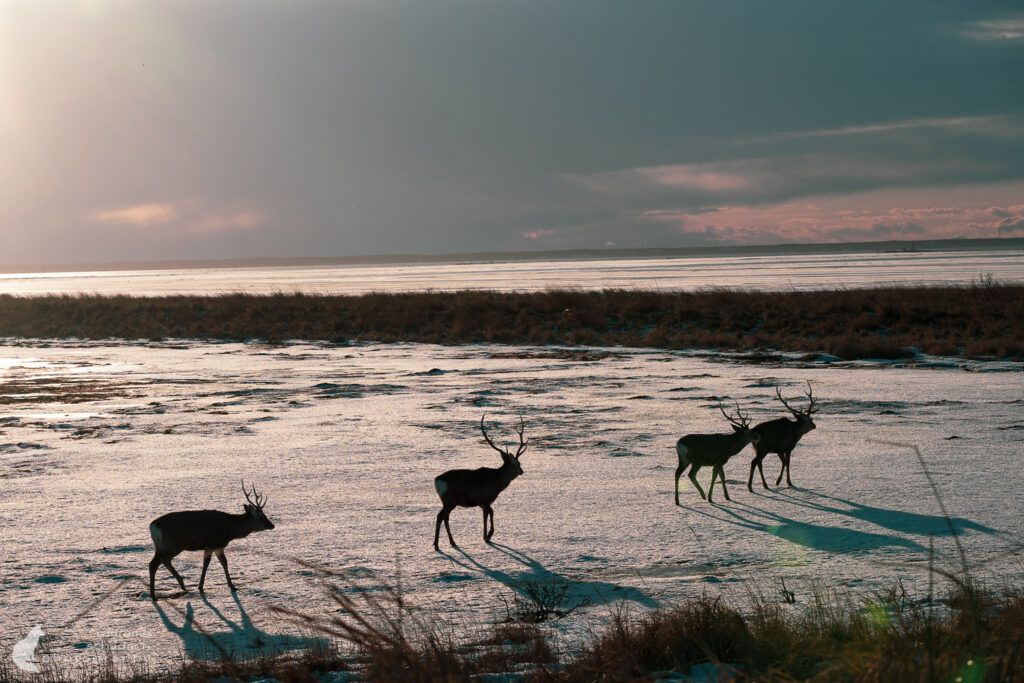
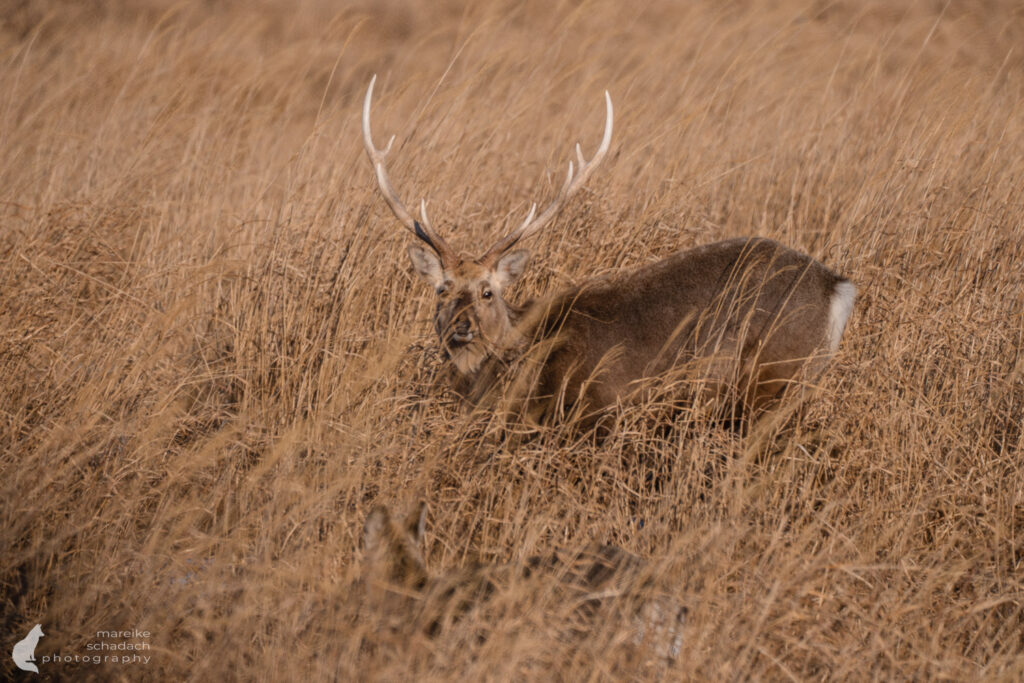
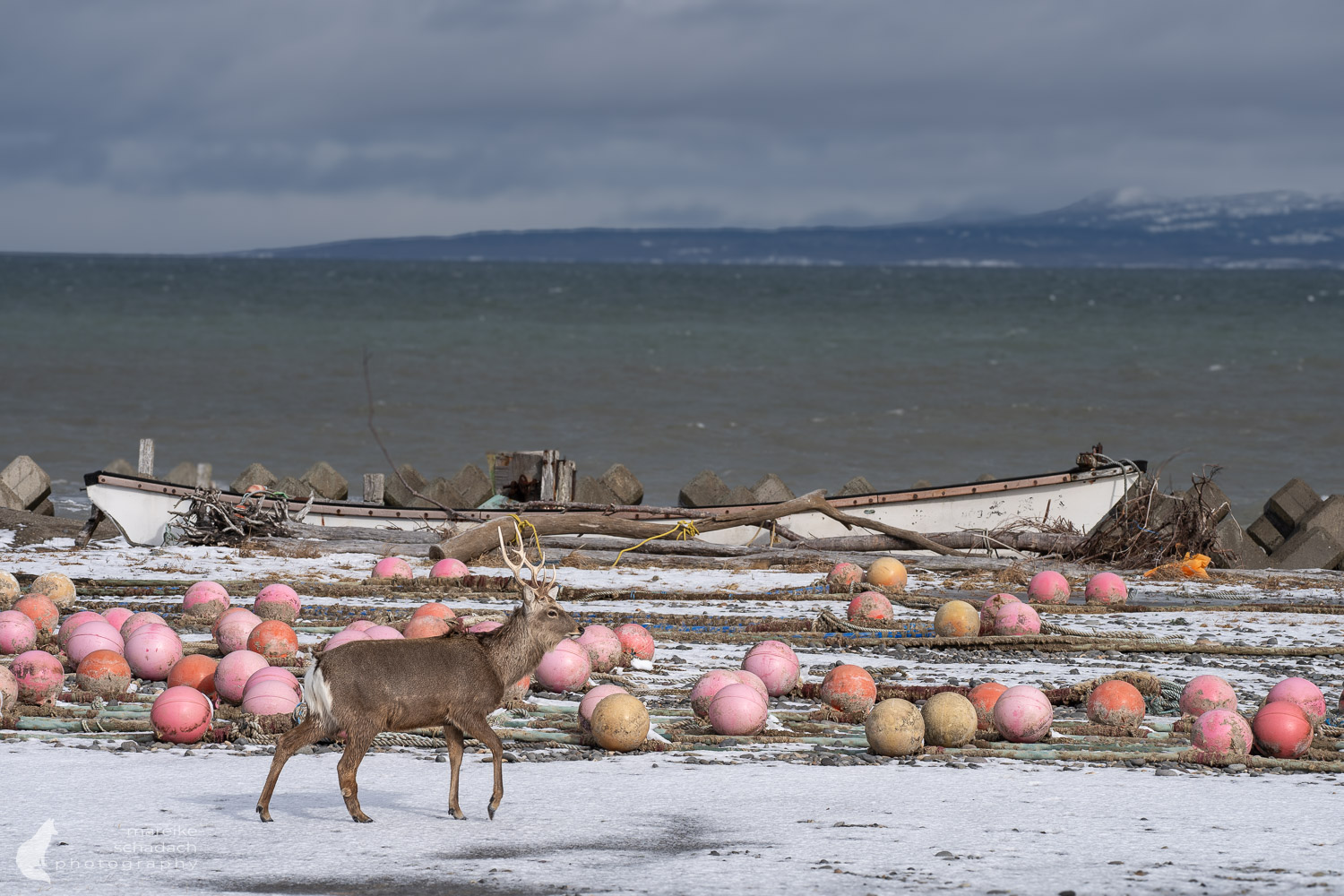
As I stand on the narrow spit of land that is the Notsuke Peninsula, an icy wind blows in from the sea. Even on the approach road, I spot the first animals by the roadside, grazing calmly in the dry grass. Then I come across a larger group standing near the fishing gear and boats, right by the roadside. The deer seem accustomed to the presence of humans; they lift their heads, fix me briefly with alert eyes, and then return to feeding or playful sparring. It is particularly impressive to see them moving in small groups through the snow-covered, barren landscape, seemingly perfectly adapted to the harsh conditions of winter.
Read more about Wildlife and Landscapes in Winter on the Notsuke Peninsula
Red Foxes – Clever Cultural Followers
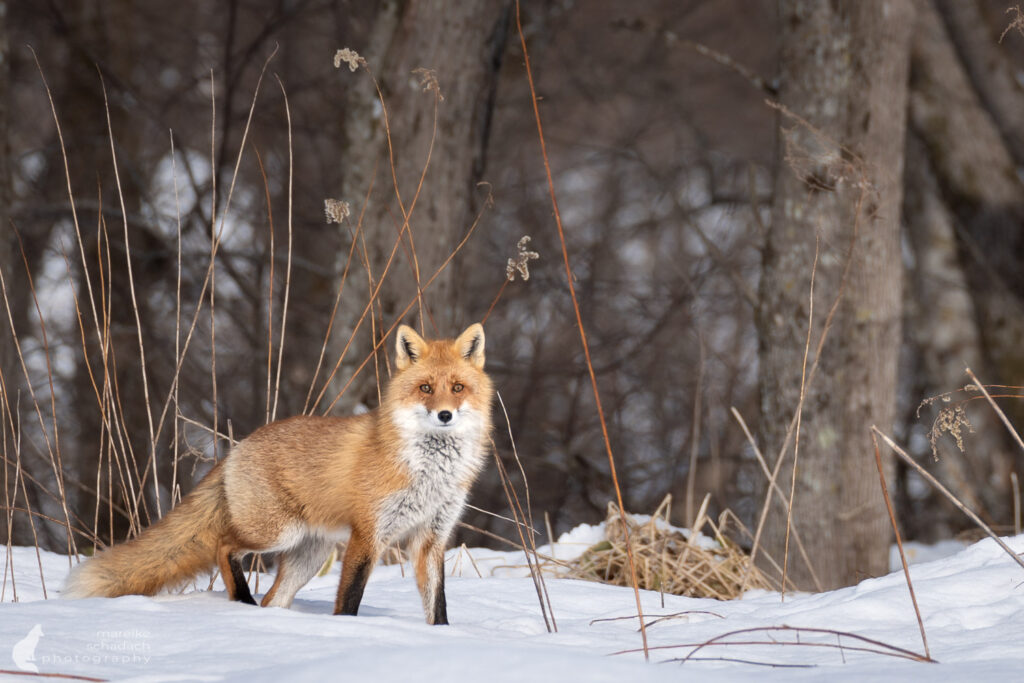
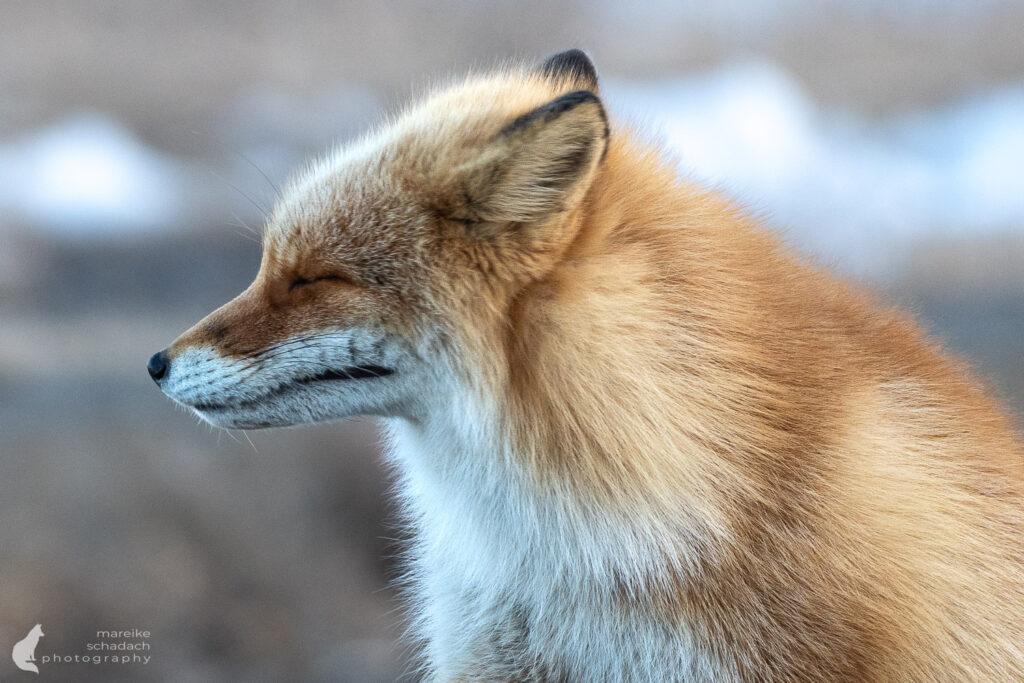
Hokkaido’s red foxes have particularly bushy fur in winter. This makes them look much larger than the foxes back home. And they are far less shy. I soon figure out why that might be: The foxes running along the roadside are repeatedly fed from passing cars. One fox goes about it with particular determination. He sits down at the roadside, waits until a car stops, and then walks expectantly straight to the driver’s side, where he’s tossed a snack through the open window. It doesn’t take long for traffic chaos to ensue. More cars stop, people run into the street, and while the fox poses coquettishly, some other drivers who want to keep going curse. One grows impatient and weaves his way through the crowd of people and the animal at an unreasonably high speed. So much was going wrong here, and I’m glad when the fox slinks away and the cars start rolling again.
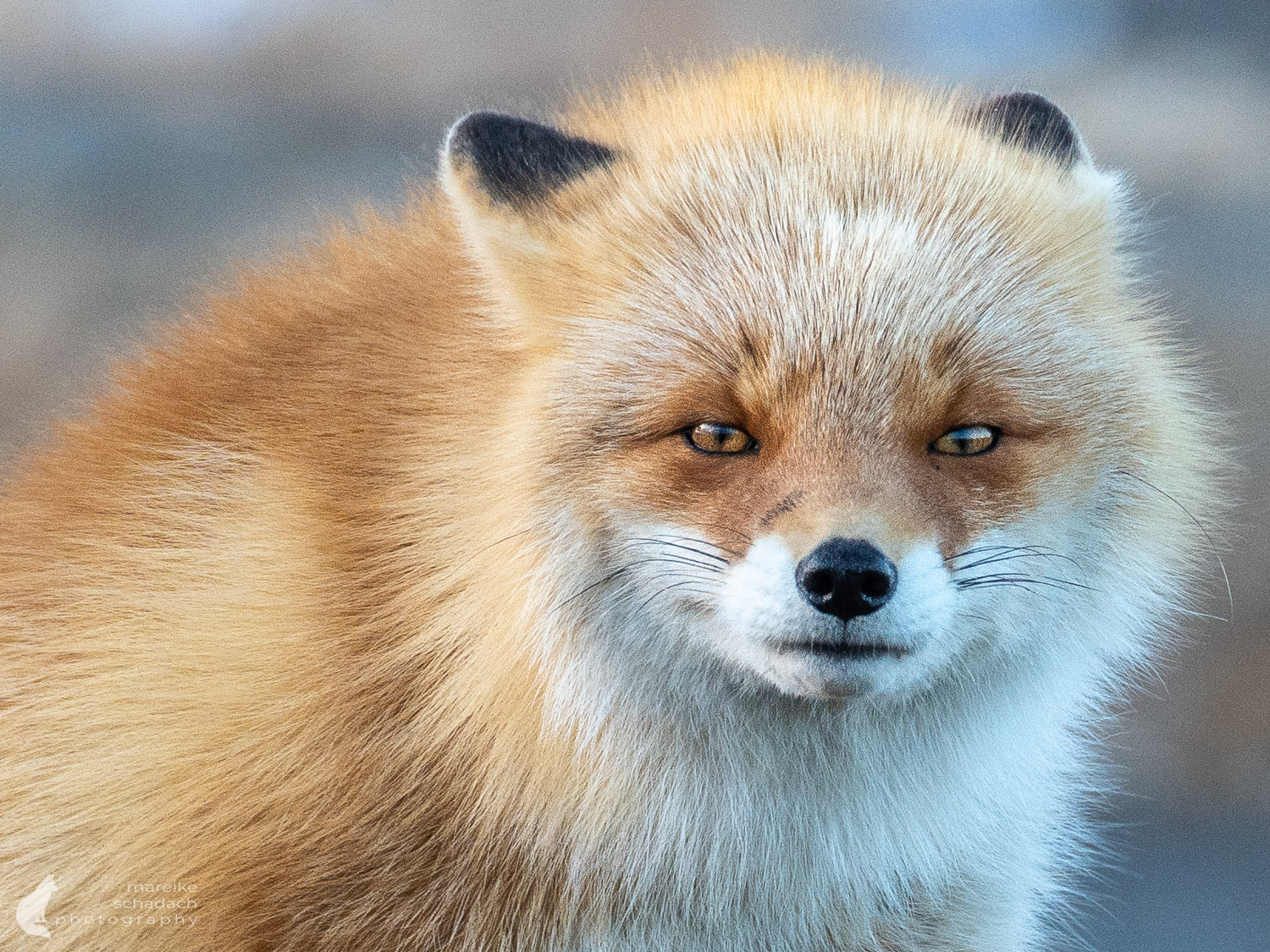
The red fox (Vulpes vulpes schrencki) is widespread throughout Hokkaido and hard for visitors to miss. These animals, with their thick, reddish-brown fur, often roam across fields, forest edges, and even through villages and towns in the early morning or at dusk. They are adaptable and, in addition to natural prey such as mice, birds, and insects, also scavenge for scraps or food offered by humans. However, this proximity carries risks. Many foxes also suffer from parasites such as the fox tapeworm, which is why direct contact should be avoided. These curious, alert animals, with their bushy tails and graceful demeanor, hold a great fascination and are a quintessential part of the natural experience in Hokkaido for many travelers.
Eagles – Rulers of the Skies
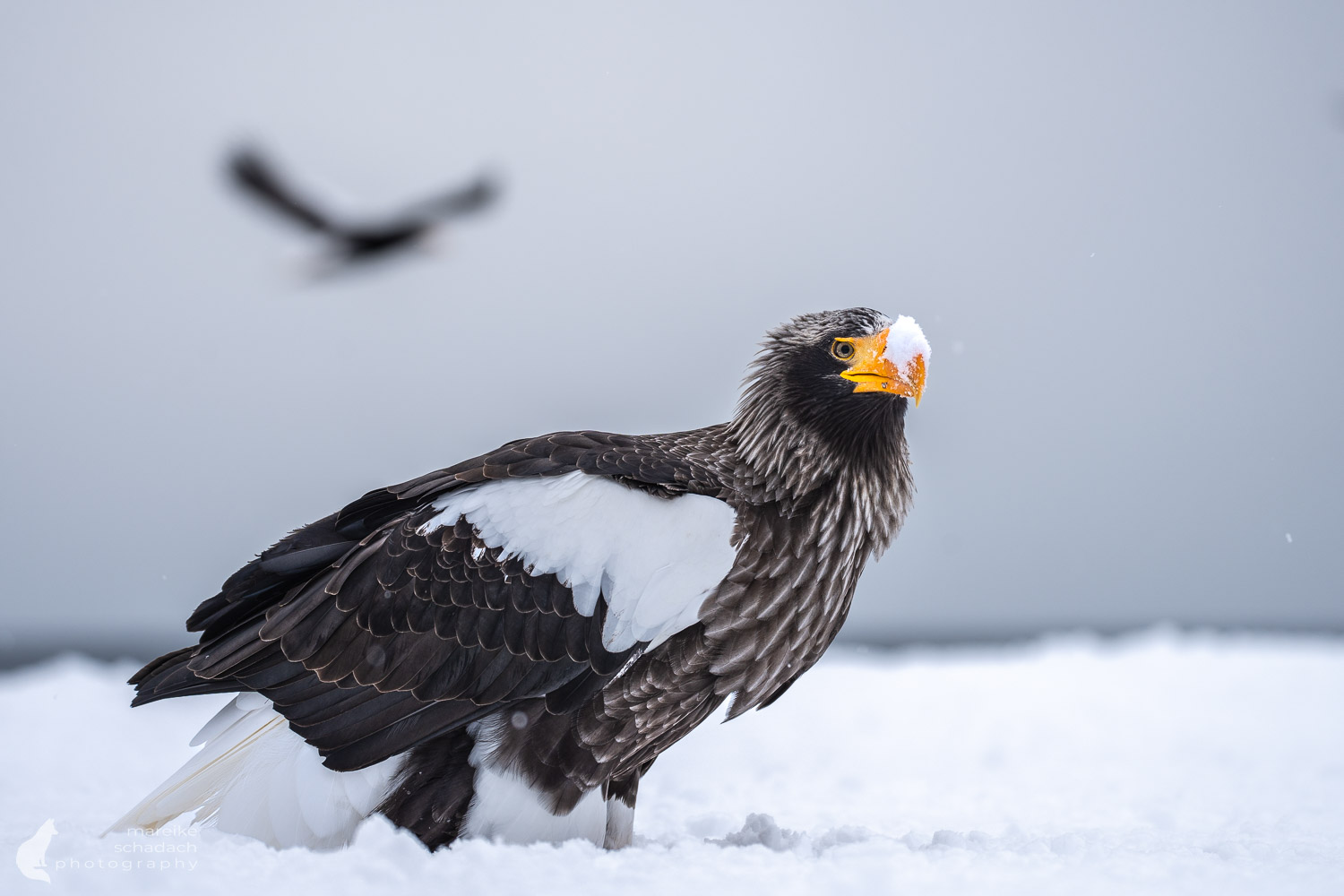
The journey continues to the Shiretoko Peninsula in northeastern Hokkaido. The mountains and coastlines here are part of one of Japan’s wildest regions and attract hikers with their pristine forests, waterfalls, and sweeping views of the Sea of Okhotsk. At the same time, the area is home to many Ussuri brown bears. Hikers are therefore advised to wear bear bells, store food securely, and check for recent sightings and safety guidelines before setting out on a hike. Even in winter, encounters can occur, as not all bears hibernate continuously here. However, it is far more likely to encounter one of the kings of the skies here in winter: the Steller’s sea eagle.
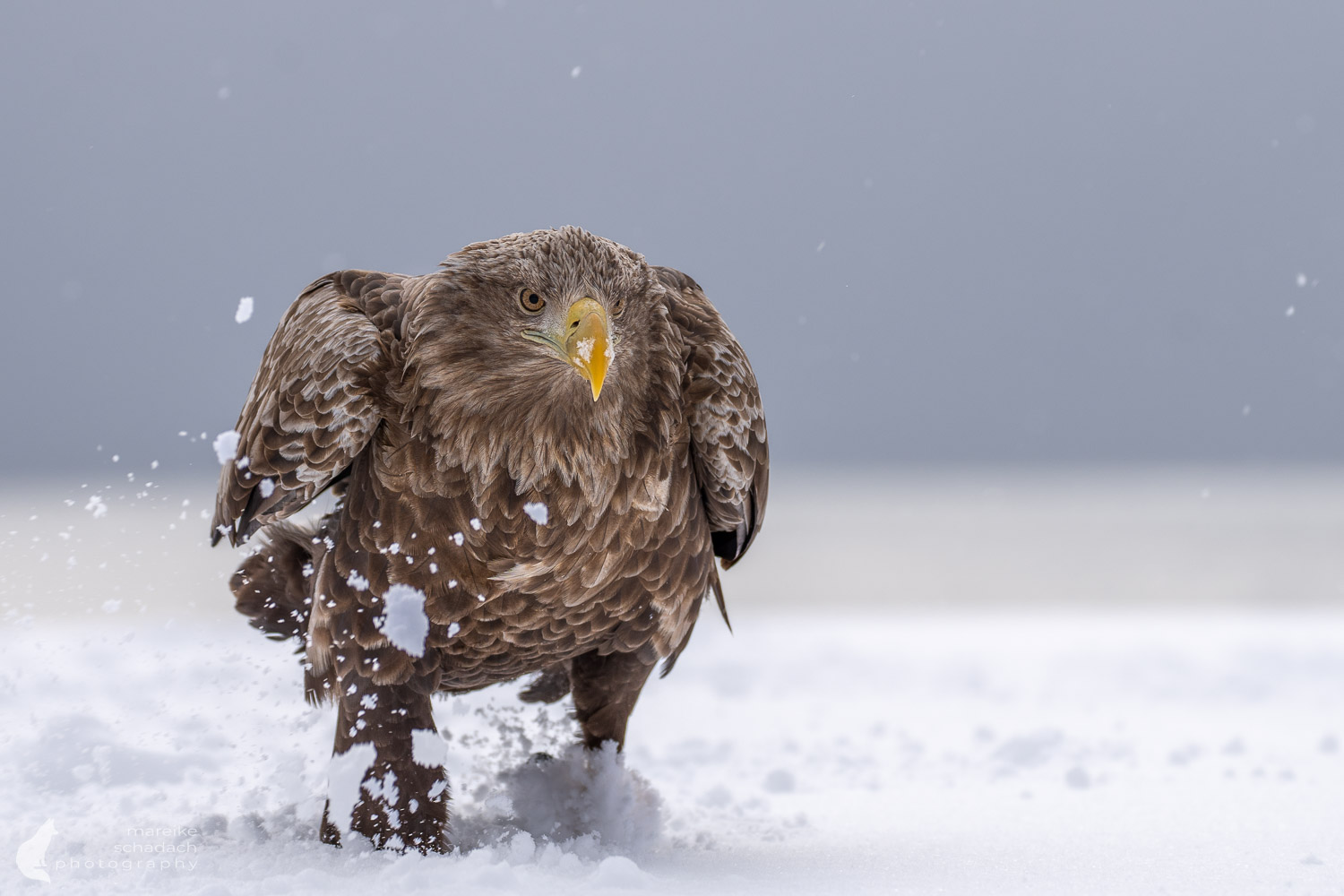
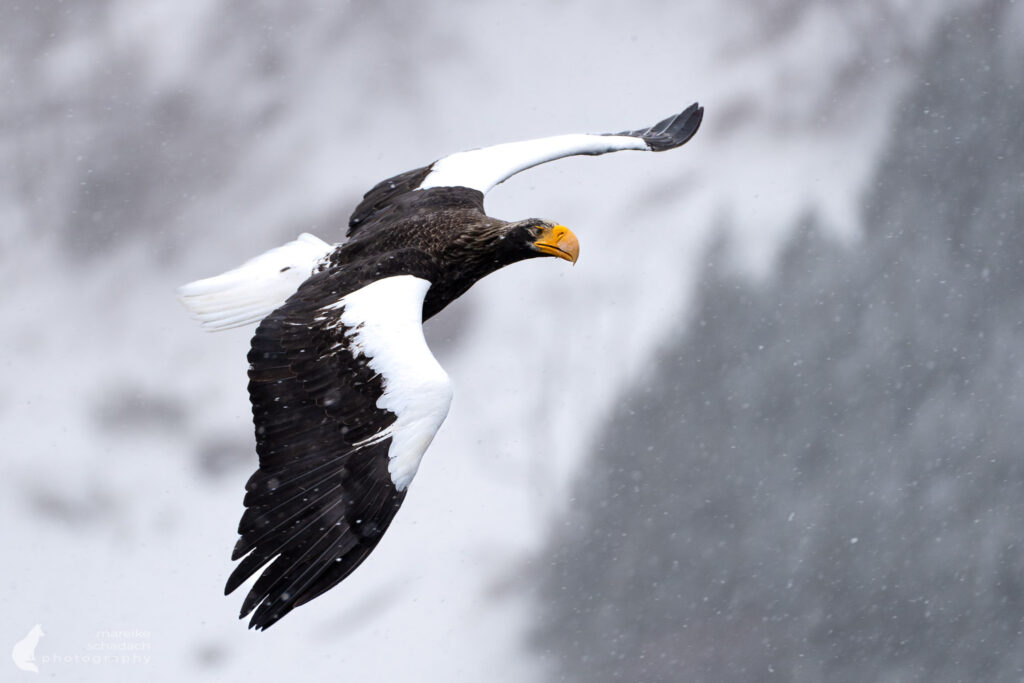
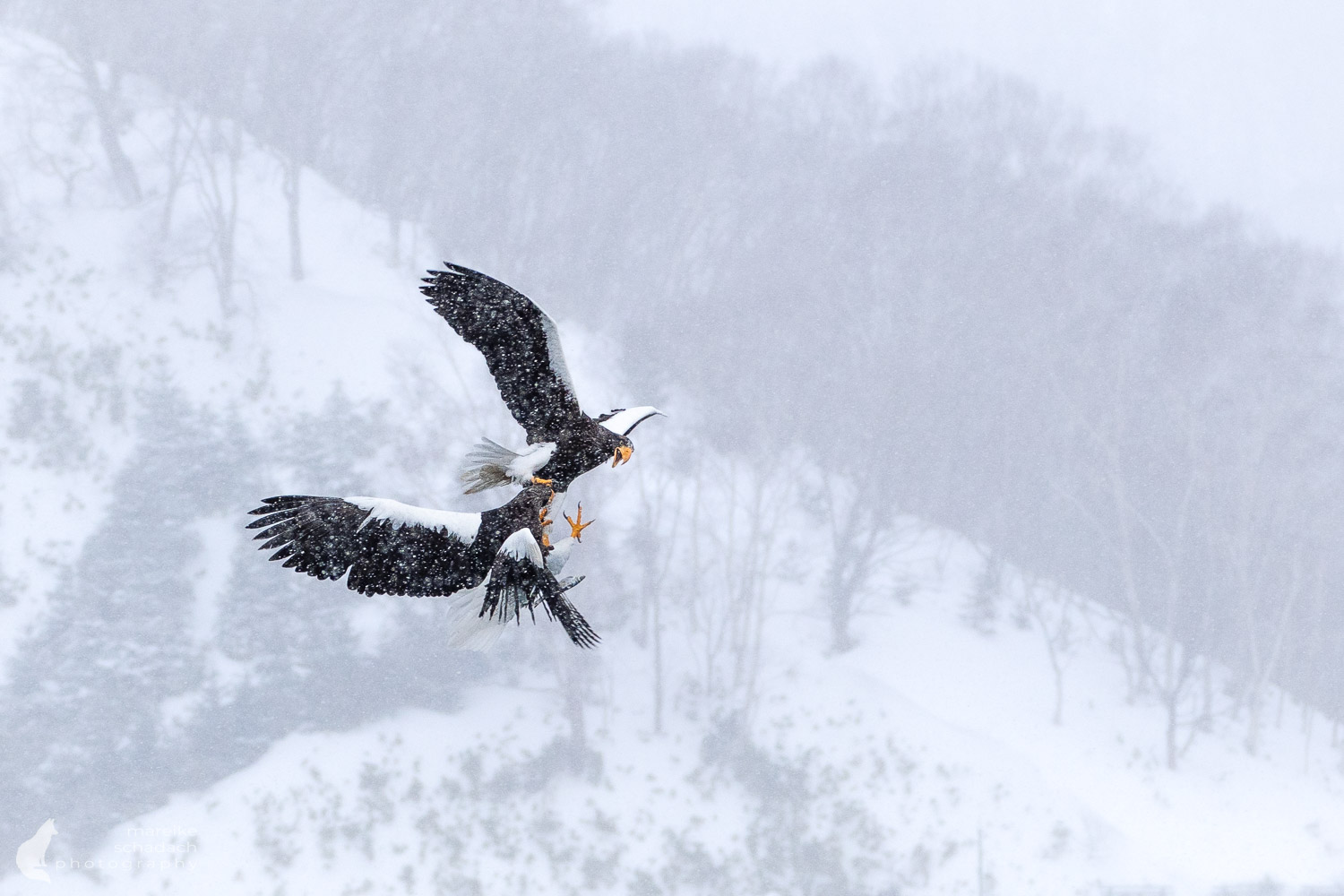
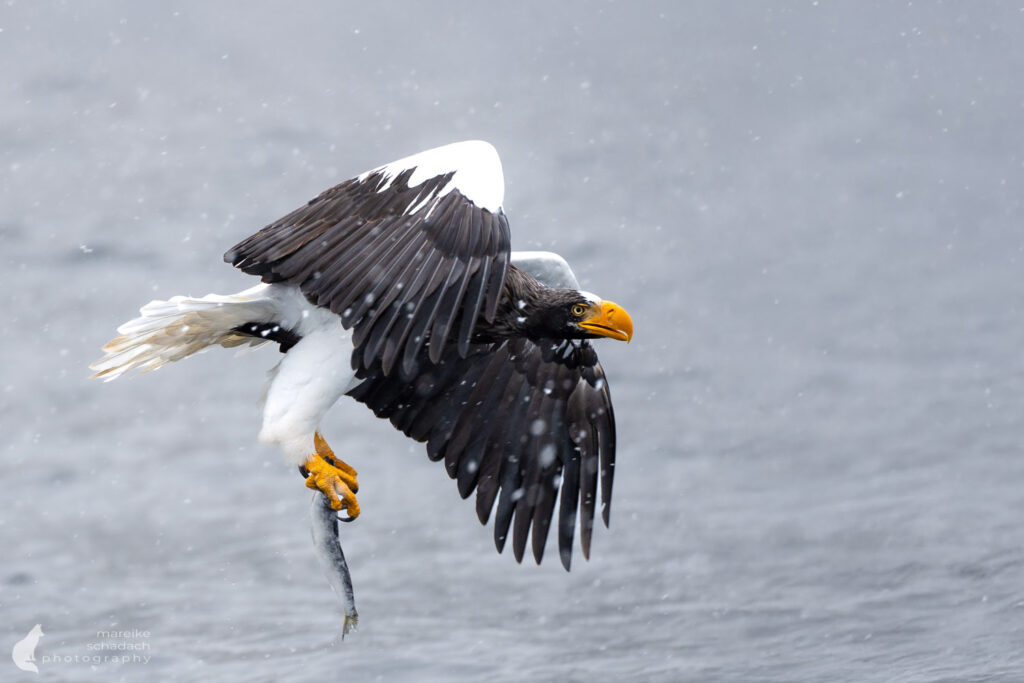
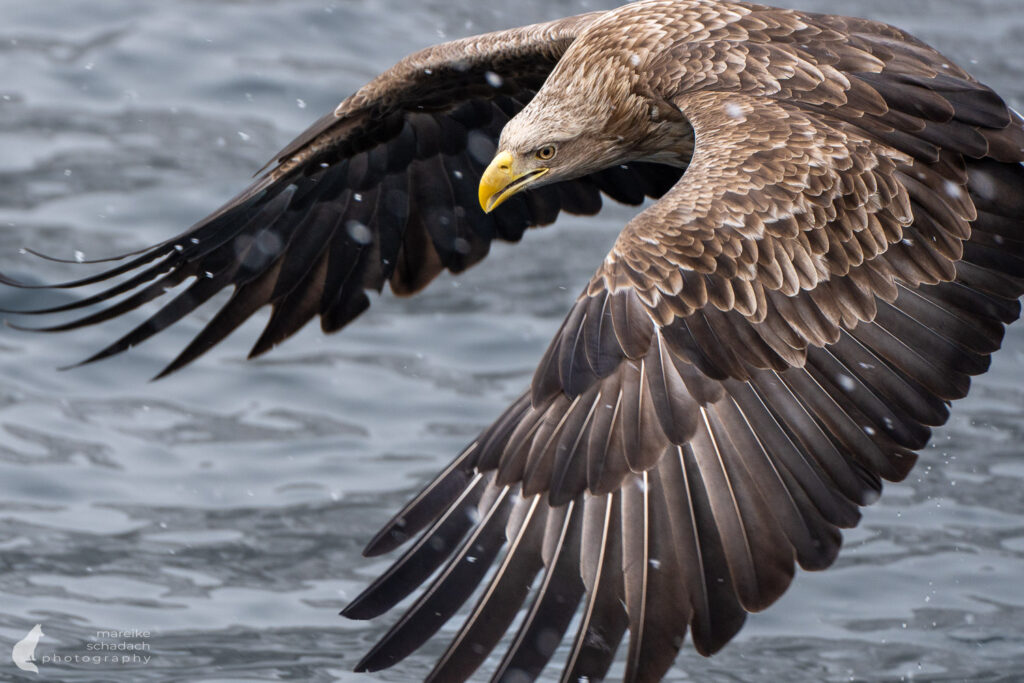
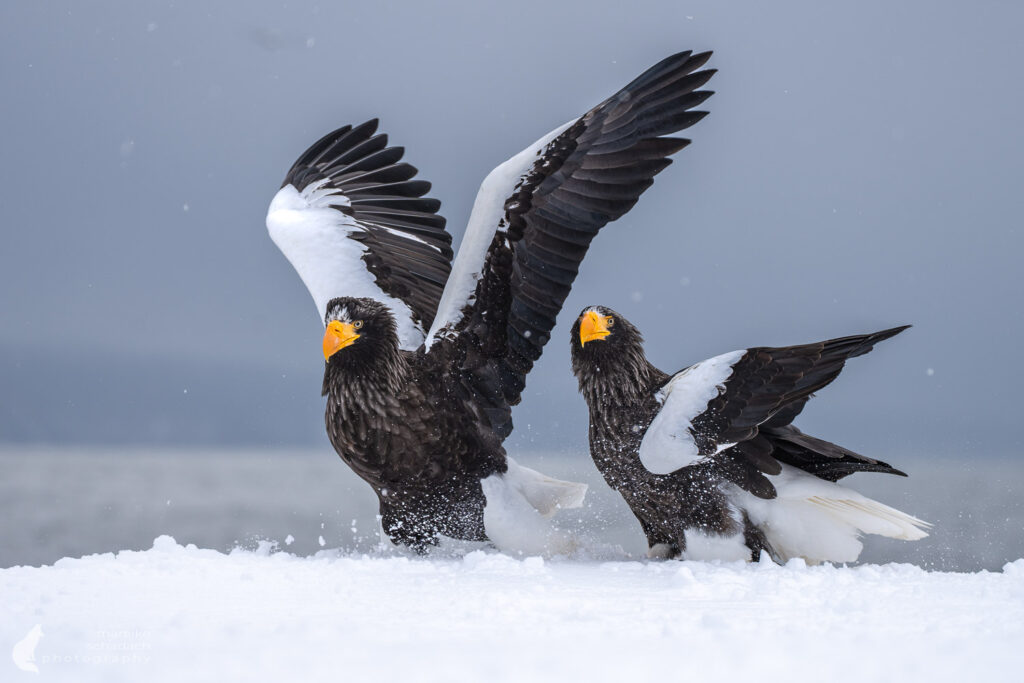
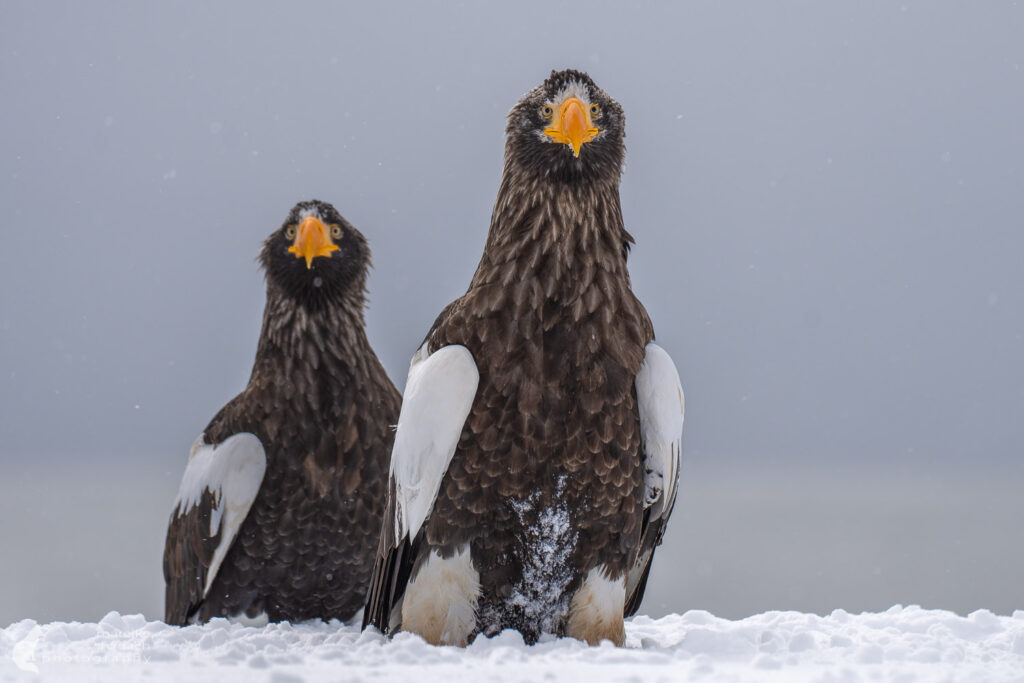
In winter, unusually large numbers of Steller’s sea eagles (Haliaeetus pelagicus) and white-tailed sea eagles (Haliaeetus albicilla)gather along the coast of Hokkaido. Steller’s sea eagles breed in the summer primarily along the coasts of Eastern Siberia, particularly in Kamchatka and the Kuril Islands, and migrate south to Hokkaido in the winter, where the sea does not become covered in drift ice until mid-February. According to estimates, several thousand individuals spend the winter in Hokkaido—nearly a third of the global population. Many Steller’s sea eagles, which have a vast breeding range stretching from Scandinavia to the Far East, also overwinter in Hokkaido. Both species benefit from the abundant fish stocks around the Shiretoko Peninsula, making the area one of the world’s best spots for observing sea eagles. You’ll easily spot them by scanning the tall trees along the coast or simply gazing up at the sky for a while. The best spots for spotting them are around Utoro, Rausu, on the Notsuke Peninsula, as well as near Lake Furen and Nemuro..
Boat Tour to See the Eagles
Early in the morning, the port of Rausu still lies sleepy beneath its blanket of snow. Only a few birdwatchers, bundled up warmly, gather in front of the tour boat to see the white-tailed eagles. We don’t have to go far to see them. Already perched on the outer wall of the harbor, several Steller’s sea eagles and white-tailed sea eagles watch our boat as it departs. They’re getting ready for breakfast. Lured by the fish, dozens of eagles soon circle above our ship, diving down and snatching one fish after another with their powerful talons.

Whooper Swans – Elegant Winter Visitors
On the way to Lake Kussharo, winter is relentless, and we cross the Bihoro Pass with the utmost caution. Upon arriving in Kusshar, the roads were deeply snow-covered, but our car takes us to the lake without difficulty. Snow and a biting wind sweep across the shore. I get my camera ready, slip it into a waterproof bag, and venture out. Will the swans even be here in this weather?
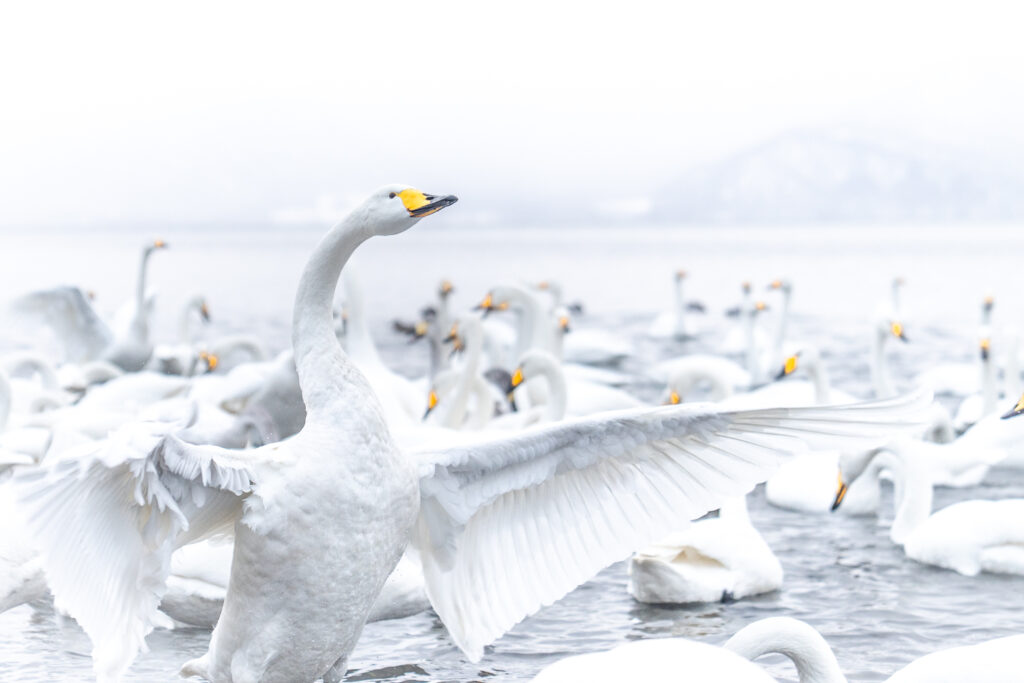
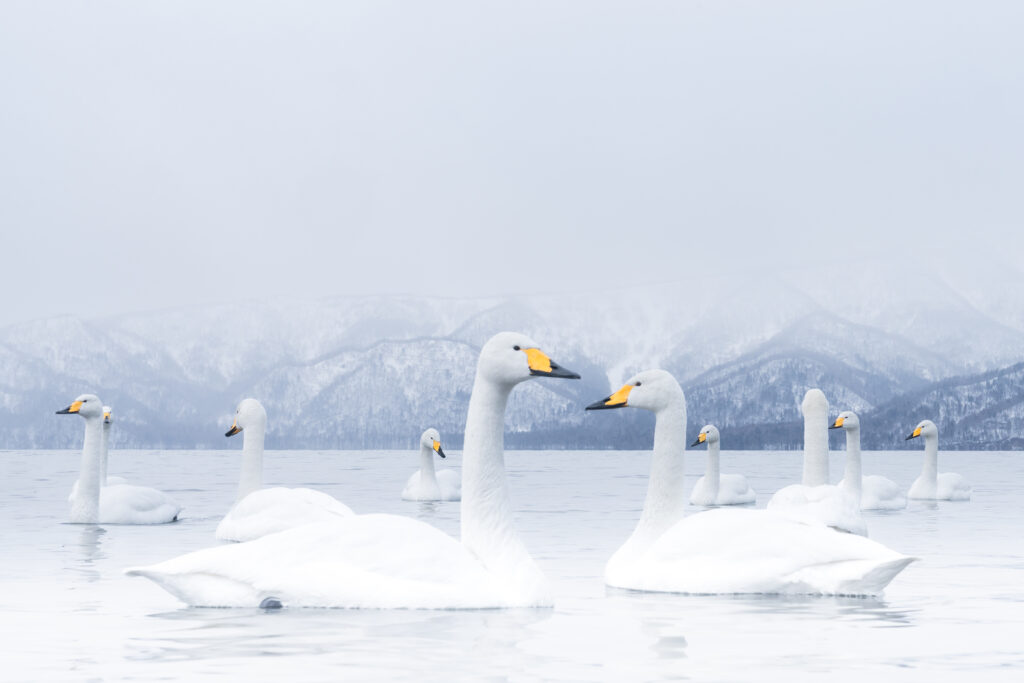
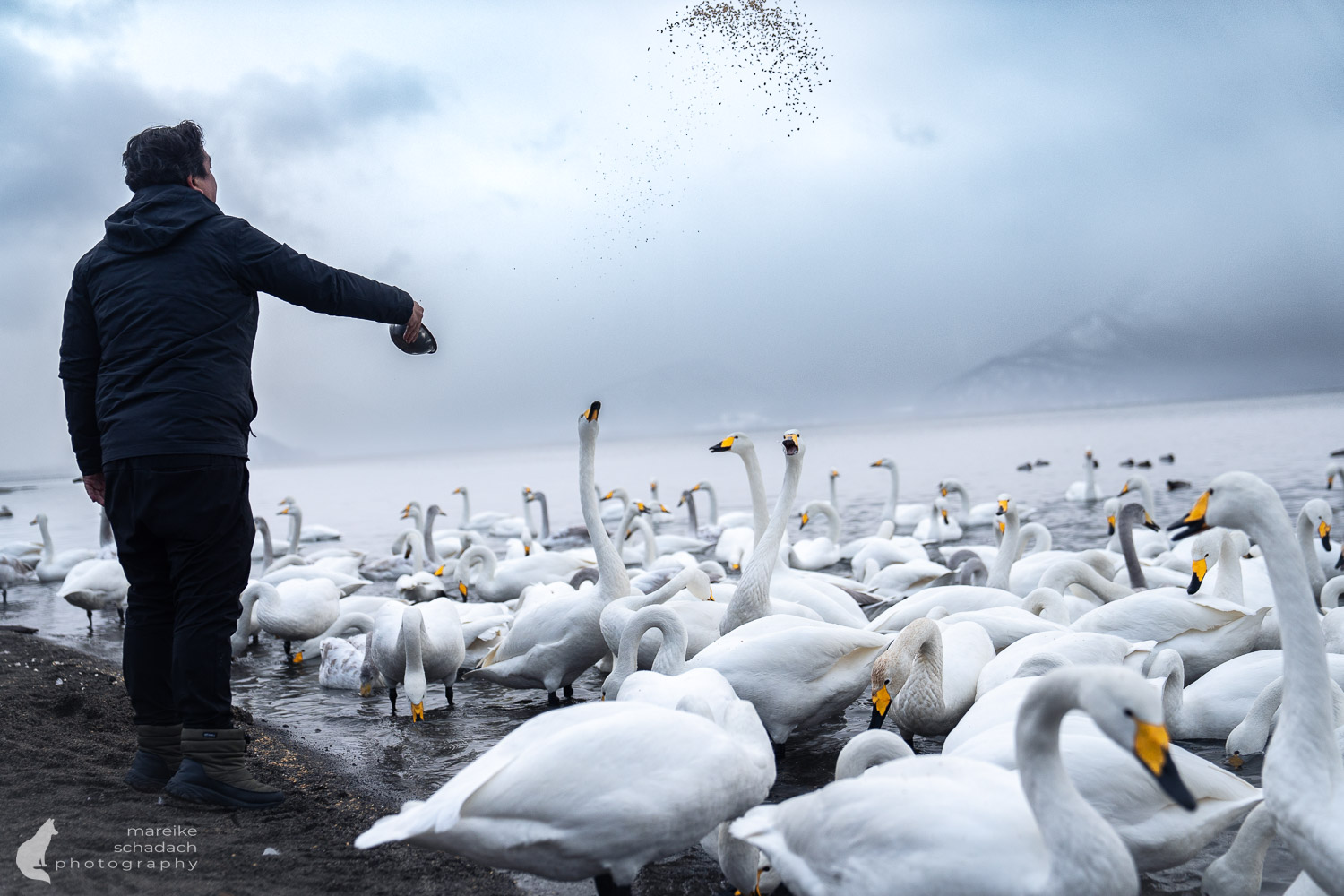
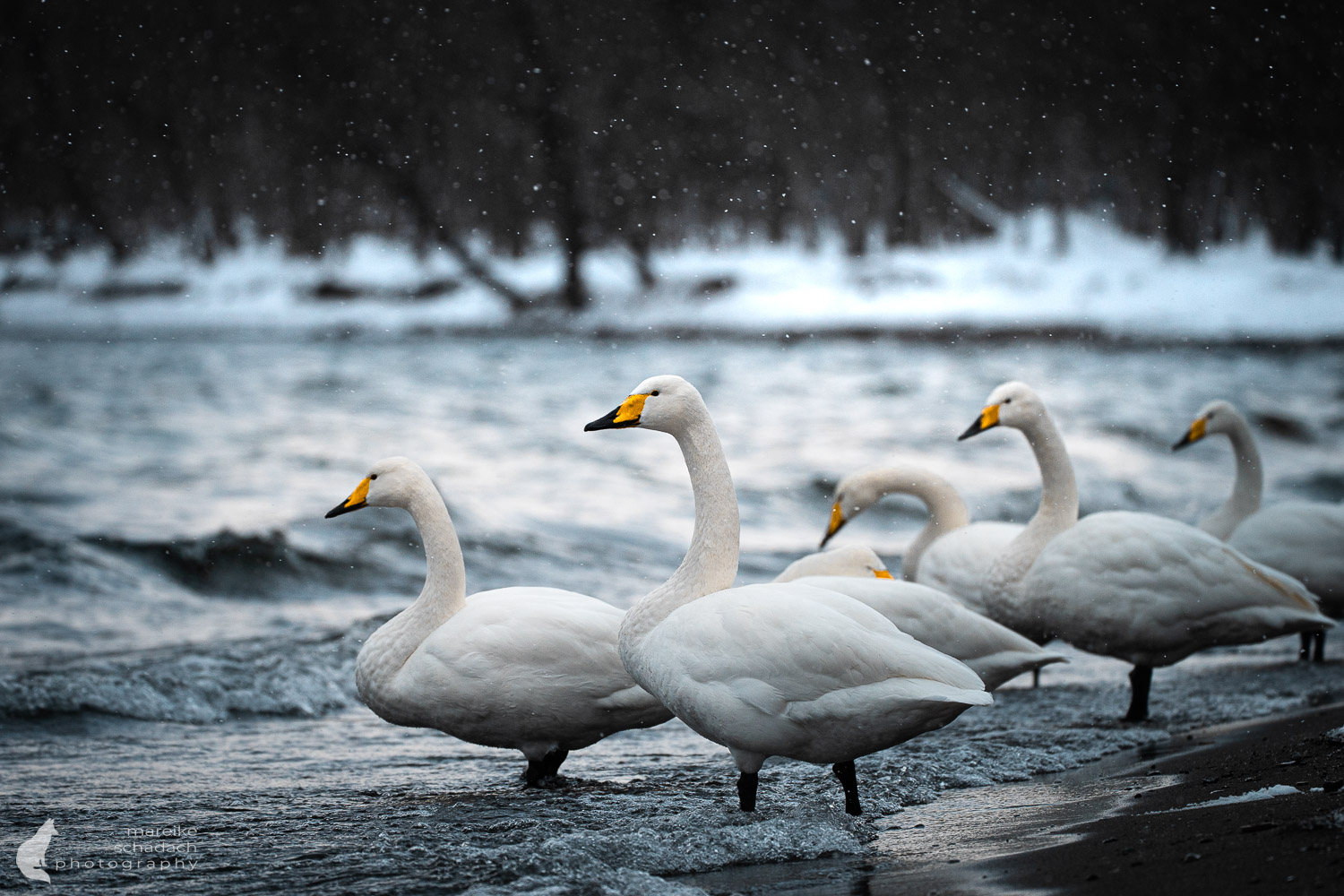
But after just a few meters, I spot a good two dozen birds, showing off their best side to a few weather-proofed observers. As I crouch behind a wall to shelter from the wind, the whooper swans stretch their long necks with full elegance, as if the weather doesn’t affect them at all. It soon becomes clear to me why so many birds gather here. It’s not just the warm water from the hot springs that keeps this section of Sunayu Onsen ice-free, but also the winter feeding that makes the eastern shore of Lake Kussharo so popular. Grain feed is scattered with large spoons, and the swans swimming farther away hurry over so they don’t miss out. In the midst of the spectacle, the sky clears a bit, and the mountains on the opposite shore of the lake provide a striking contrast to the swans’ white plumage.
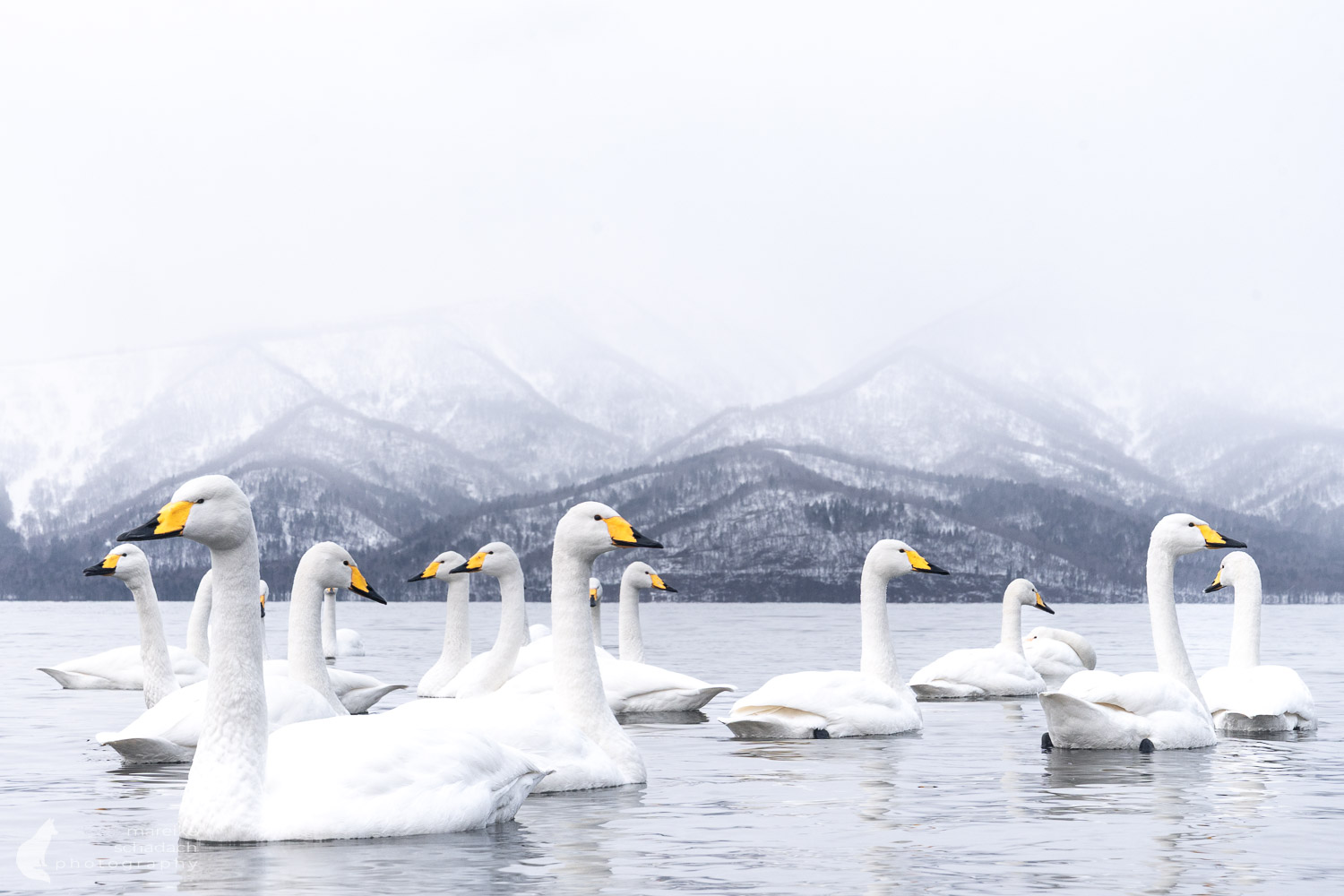
Lake Kussharo as a Wintering Ground
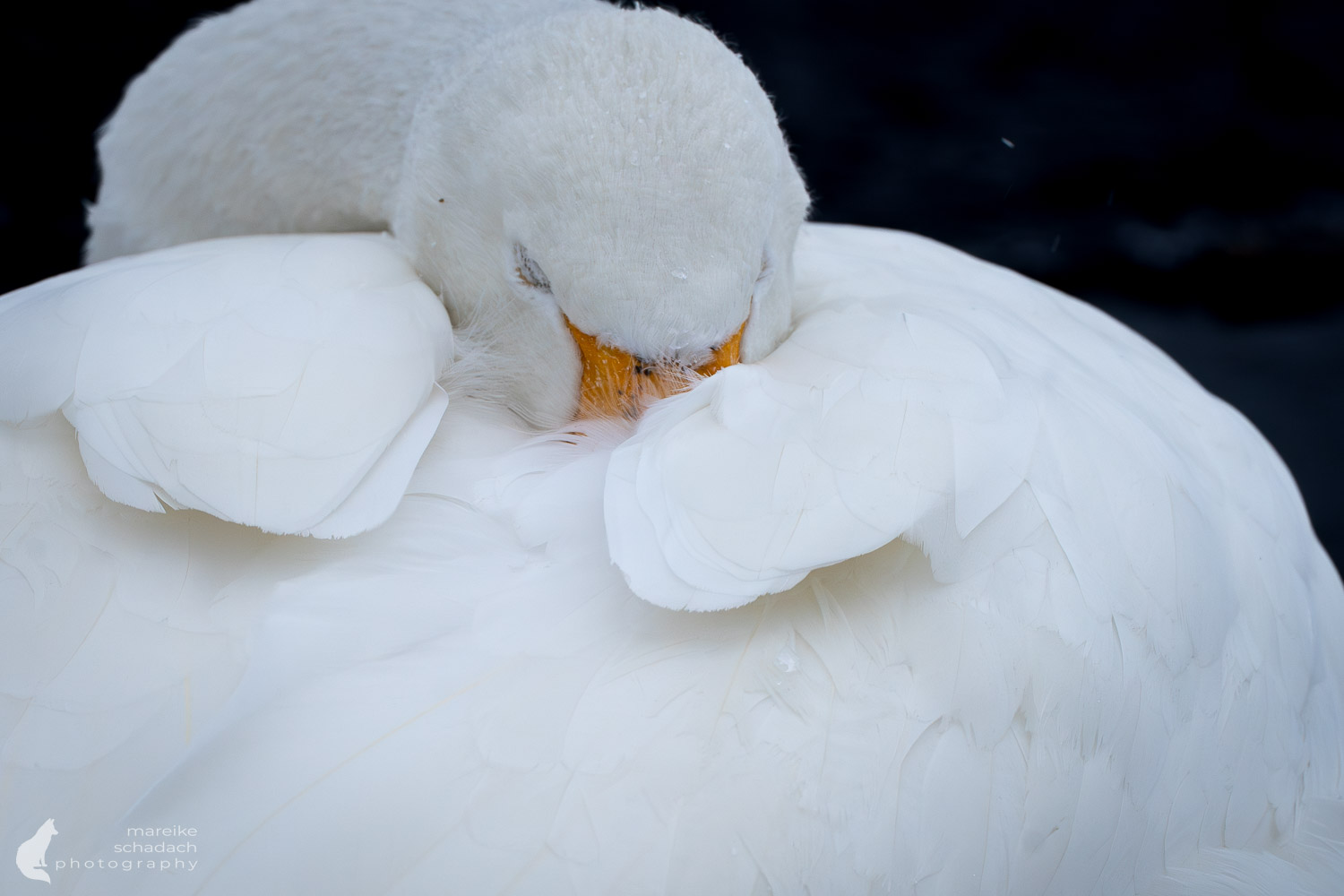
Lake Kussharo in eastern Hokkaido serves as an important wintering ground for whooper swans (Cygnus cygnus). Due to geothermal activity, some areas along the shore remain ice-free even during severe frosts, allowing the birds to find food and rest there. Every year, several hundred to over a thousand birds spend the cold season at the lake before returning to their breeding grounds in Siberia in the spring. The swans feed primarily on aquatic plants, but in areas developed for tourism, they also accept food from visitors. Their presence makes Lake Kussharo one of the most famous winter bird-watching spots in Japan. For visitors, there is a rest area here with a restaurant and souvenir shop. Another good spot for observing whooper swans is at Lake Tofutsu near the Hakucho Park Visitor Center.
One Last Look in the Evening
As I stand on the shore of Lake Kussharo in the evening, I say goodbye to the swans and to Hokkaido’s wild nature. Tomorrow I’ll head back to Kushiro, and the day after that, via Tokyo, back to Berlin. A flock of swans flies past me, their calls echoing through the crisp winter air. Behind me, steam rises from the hot springs. The greatest threat to many wild animals in Hokkaido is the loss of their habitat. Agriculture, urbanization, and climate change are rapidly altering ecosystems. At the same time, interest in wildlife tourism is growing, which can lead to disturbances when visitors approach the animals without consideration. Conservation efforts focus on designating protected areas and implementing regulated feeding programs.
Kushiro, Notsuke, Shiretoko, Kussharo: These are places that are not just landscapes, but tell stories about the coexistence of humans and animals—about conservationists who carry out feeding programs, about fishermen who make their living from the sea, about nature tourists and wildlife photographers who share their experiences and bring Hokkaido’s wildlife to life for the world.
The Responsibility of Photographers and Nature Tourists
As a wildlife photographer, you bear a special responsibility for the protection of wild animals. Any disturbance can affect the animals’ behavior—whether it’s a startled crane abandoning its brood or a stressed deer wasting energy it desperately needs for the winter. You must always maintain a sufficient distance so as not to interfere with the animals’ natural behavior. Slowing down and being patient are crucial here: those who remain calm and do not startle the animals will be rewarded with authentic, natural shots.
It is equally important to follow the rules of the nature reserves. Trails and marked photo spots exist for a reason—they are placed to minimize disturbance to wildlife. Wildlife photography in Hokkaido is a unique experience that yields breathtaking images and unforgettable encounters. But to preserve this beauty, photographers must act as ambassadors for nature: with respect, knowledge, and an awareness of animal conservation.
Book Recommendations for Hokkaido and Wildlife Photography
You want to know where the journey goes? Then I can recommend these books*.
You can order the books with a click on the pictures on Amazon. If you buy a product via an affiliate link, I get a small commission, and you help me to keep filling Fernweh-Motive with interesting articles. The product will not be more expensive for you, and you will do me a huge favor.


Do you want to know when there are new articles on my blog? Then follow me on Facebook, Pinterest or Instagram. I would also be very happy if you share my article with your friends.
Recommendations for further Reading
Do you love wildlife watching as much as I do? Then you’ll definitely be interested in my article Birdwatching for Beginners - with Binoculars in Search of Happiness and my article Storks, Cranes & Co - Birdwatching around the "Stork Village" Linum.