Indonesia When you travel, you have experiences—often things you never could have imagined. Things you won’t find in any travel guide, but that you’ll remember for the rest of your life. For me, one such journey was the kayaking trip in Indonesia’s island paradise of Misool, which took us past bizarre limestone islands and secluded sandy beaches, deep into the jungle and sea caves. I’ll show you a natural paradise both above and below the water, tell you about the hospitality and helpfulness of the locals, and explain how one of my worst nightmares actually came true.
Unassigned, unpaid advertising. The article contains affiliate links.
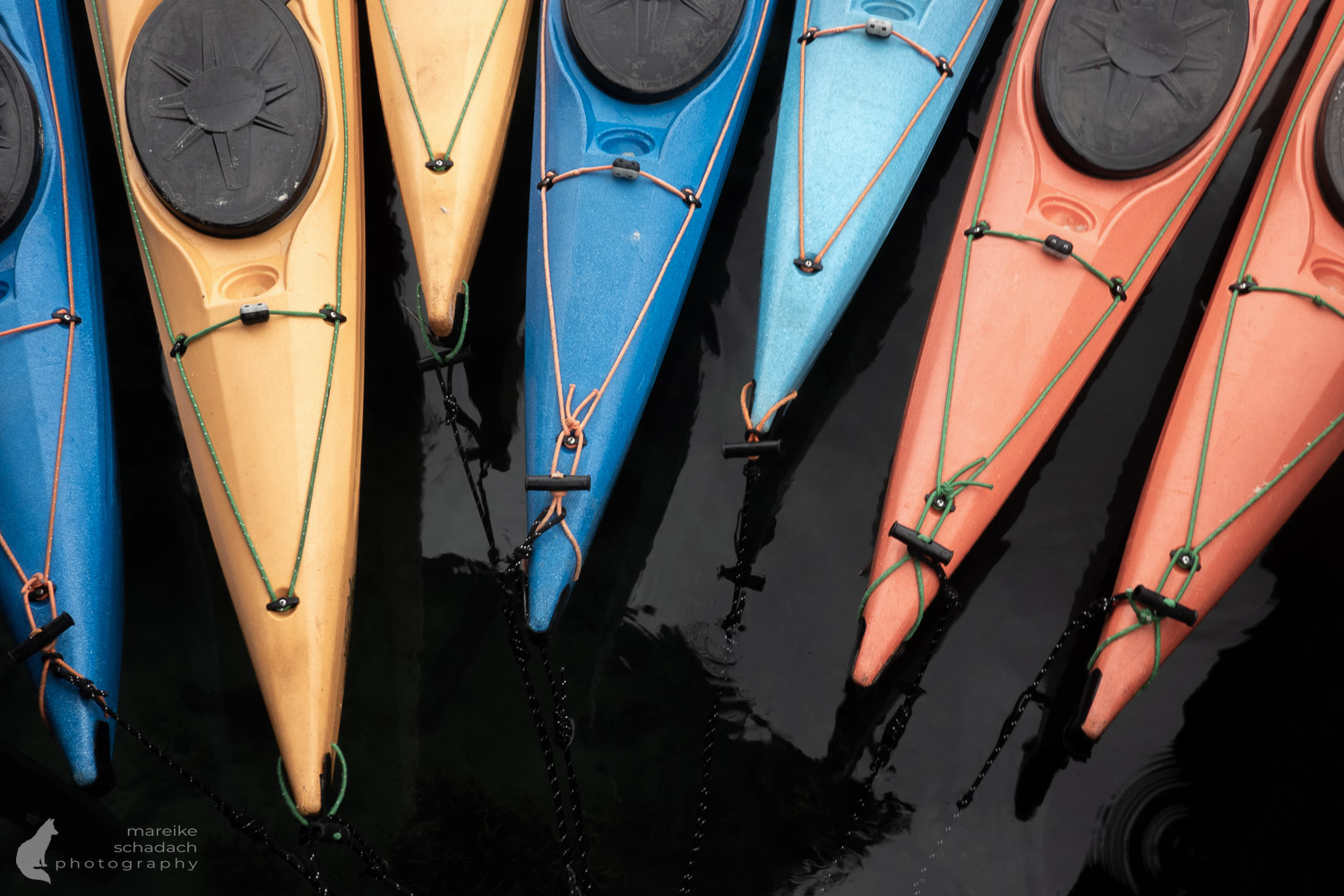
Misool, Indonesia's Archipelago: A Dream of Turquoise, Blue, and Green
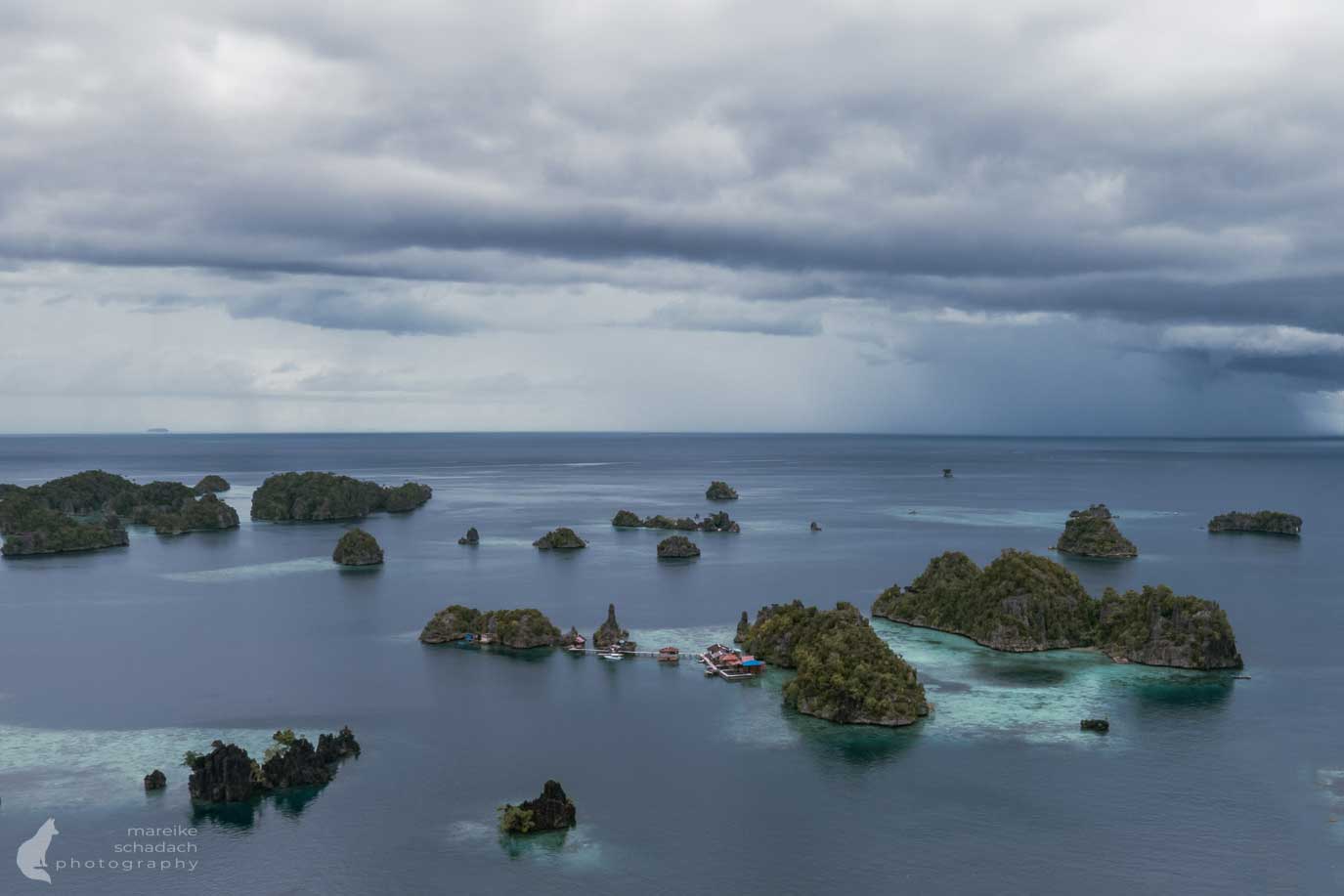
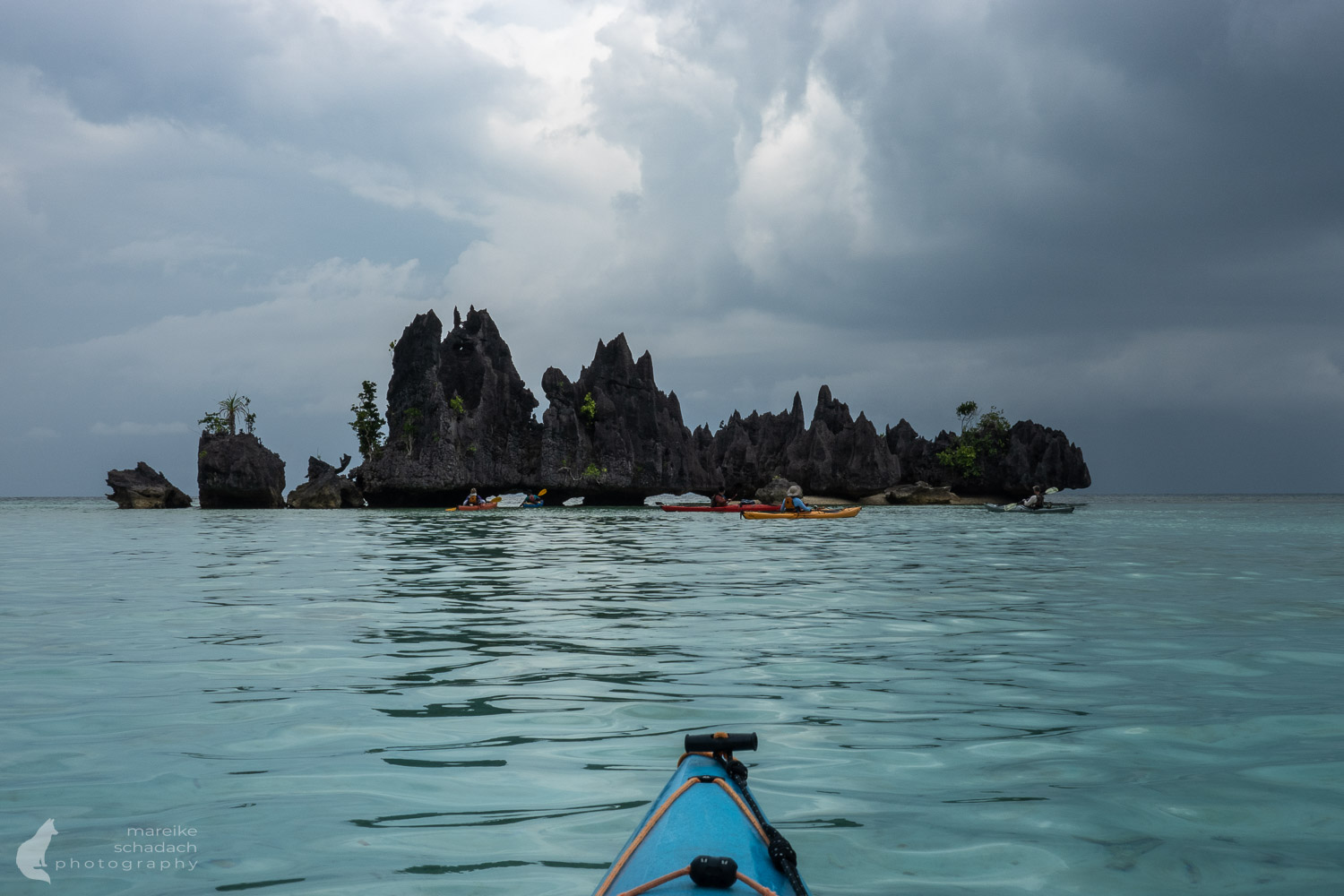
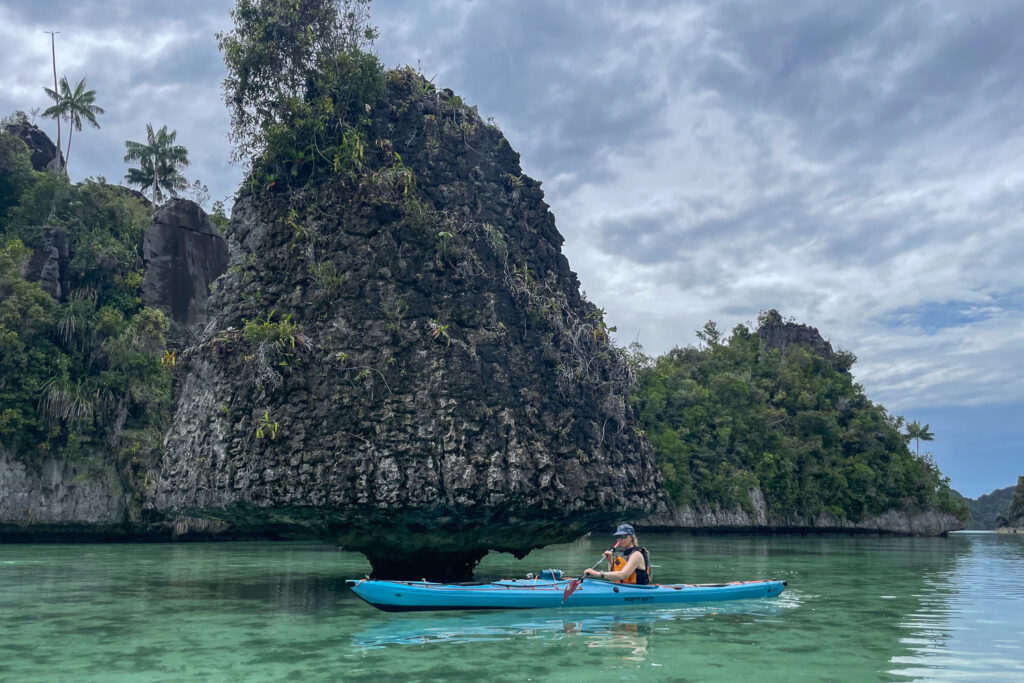
The Misool archipelago is part of Raja Ampat and is known for its many small islands rising from the turquoise waters. From the very first paddle strokes, we find ourselves in a scene that seems surreal: limestone cliffs overgrown with tropical greenery, hidden beaches, crystal-clear water, and a rich underwater world visible right beneath our kayaks. The coral reefs here are among the most biodiverse in the world and are home to colorful fish, including rays and sharks, as well as dolphins and sea turtles. The biodiversity and warm waters make Raja Ampat one of the world’s best diving destinations.
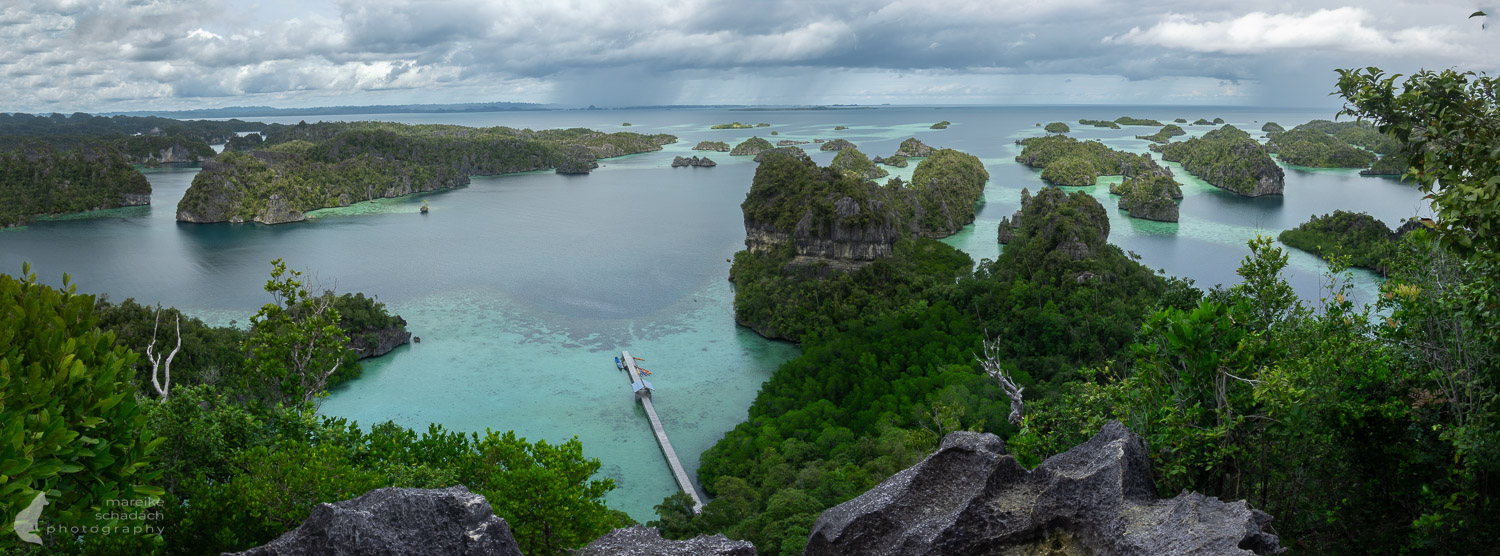
In May 2007, the Raja Ampat government designated a network of seven Marine Protected Areas as a Marine Protected Area (MPA). Today, there are 10 MPAs, which together cover nearly 35,000 square kilometers and about 45% of Raja Ampat’s coral reefs and mangroves. Misool forms the heart of a 1,220-square-kilometer marine protected area. There is just one dive resort and nine homestays here. It is remote, secluded, and not quite as littered as the rest of Indonesia’s beaches.
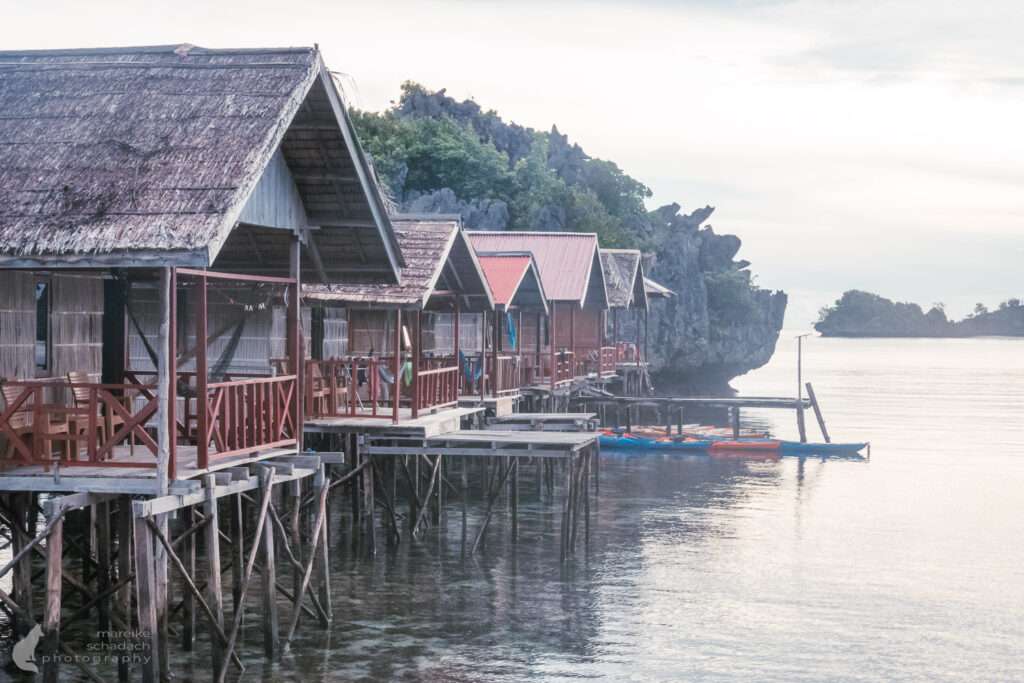
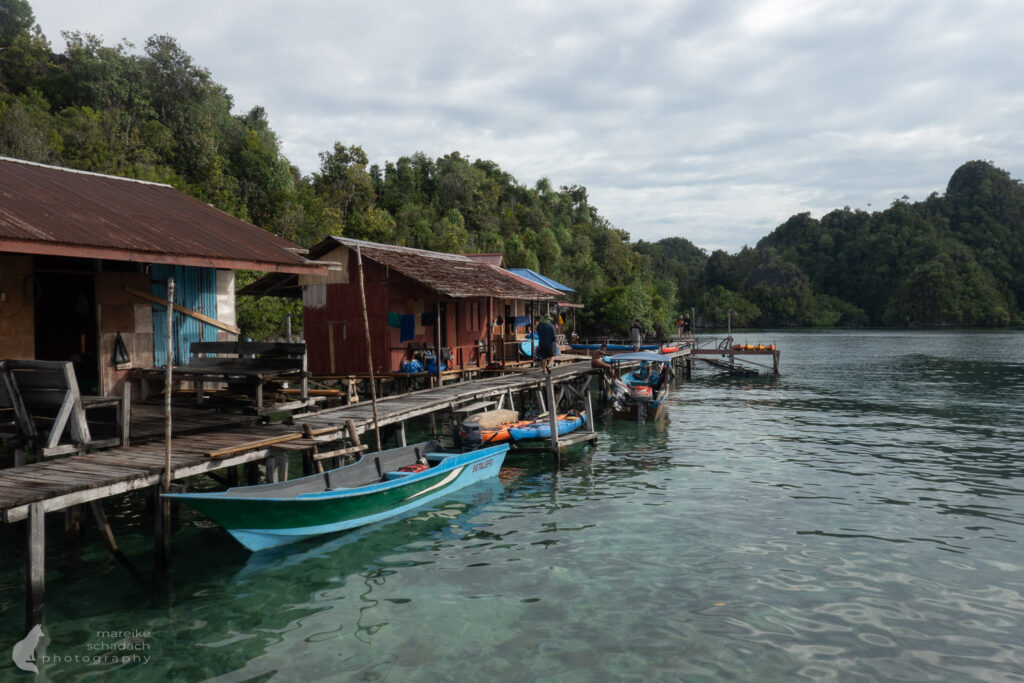
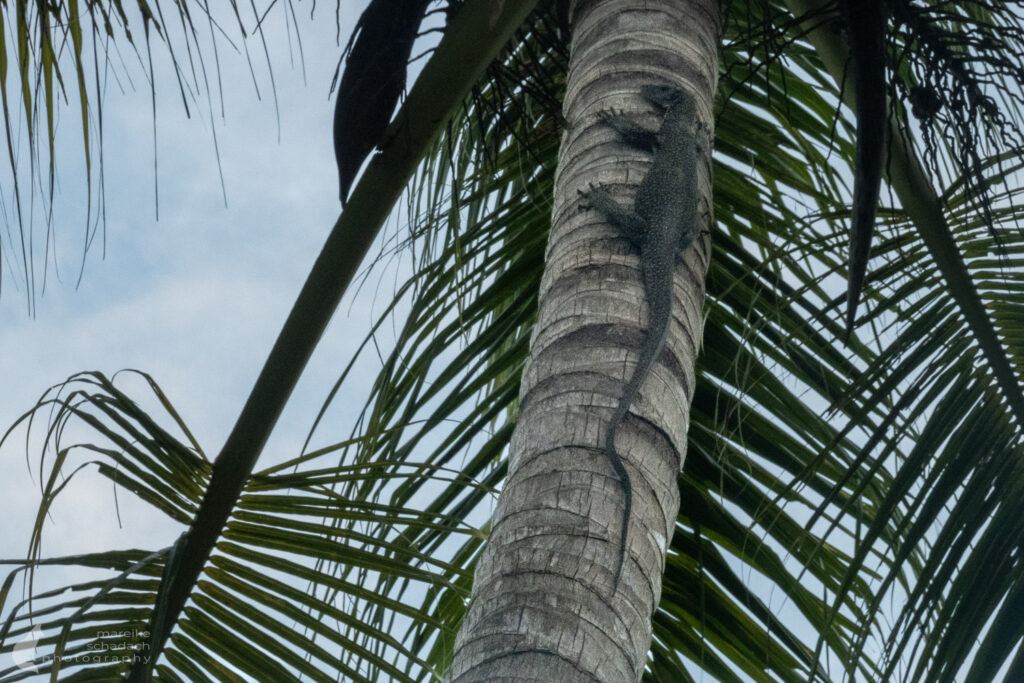
Limestone islands rising out of the water like mushrooms define the landscape. The shores are often steep, and there are caves and secluded beaches. The underwater coral reefs are largely intact. However, even here, some areas show signs of coral bleaching, serving as a reminder of global species extinction. In addition to the small islands, there are larger islands—referred to as the “mainland”—with mangroves and dense jungle. Crocodiles, wild boars, and forest kangaroos live here.
Out and about in a Sea Kayak in Misool — The Joys and Sorrows of Paddling
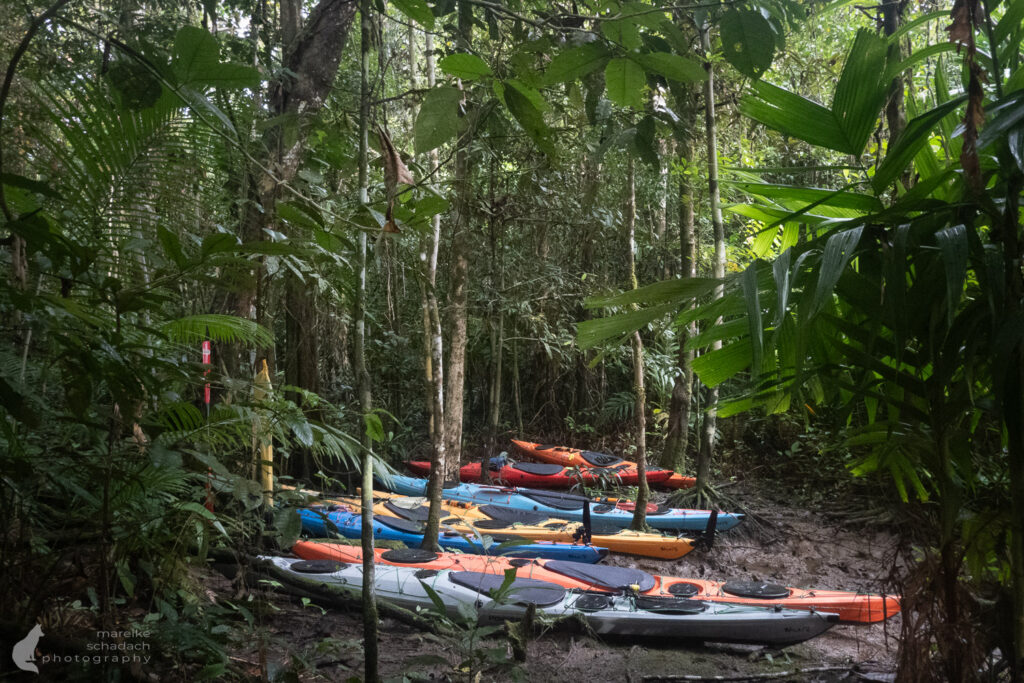
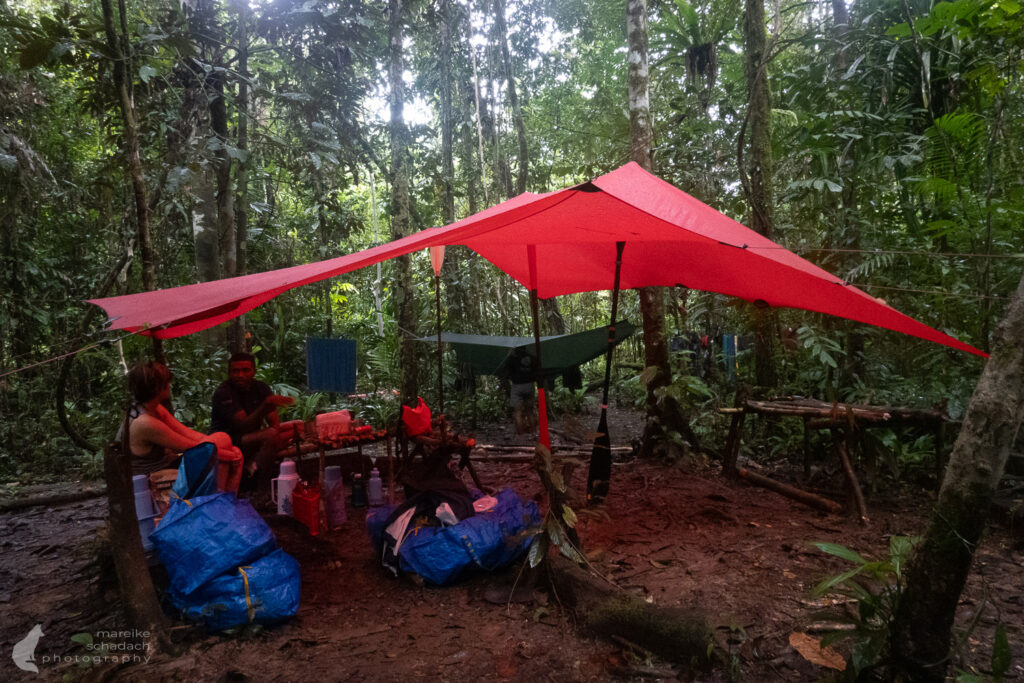
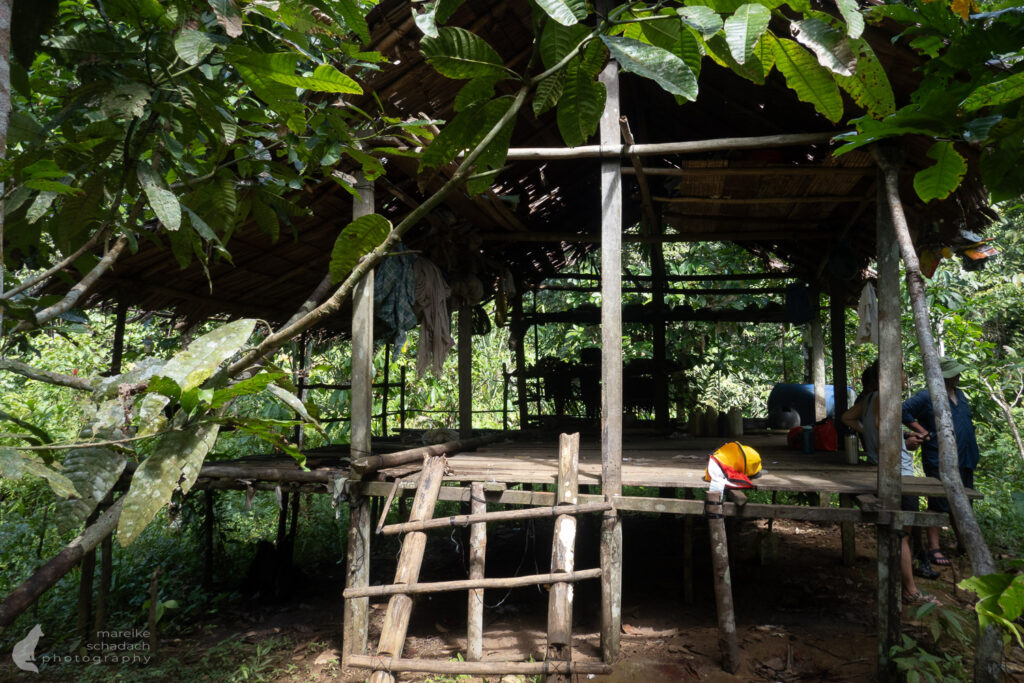
We spent ten days kayaking in Misool. Two guides from Millekul Adventures, Gilang and Amos guided our small group of eight people through Misool’s archipelago, into the jungle, and back. We slept in tents, at homestays, or sometimes just under the open sky on a covered platform next to a huge sea cave with stalactites. Our daily stretches ranged from nine to 23 kilometers. We started with short daily stretches, and as our arms got used to paddling, our paddling stretches grew longer.
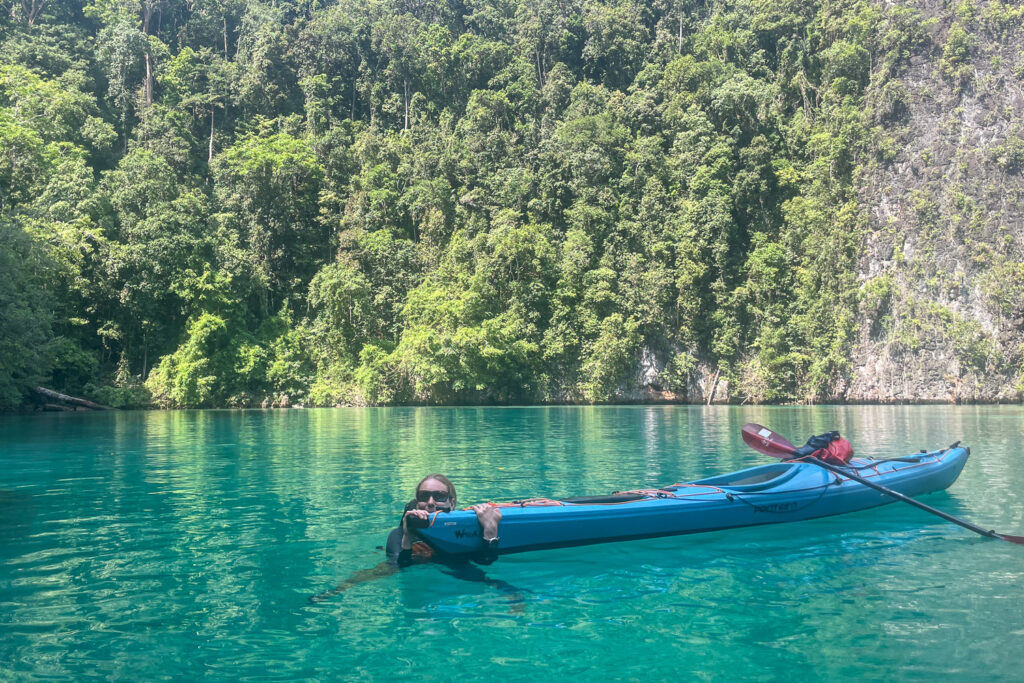
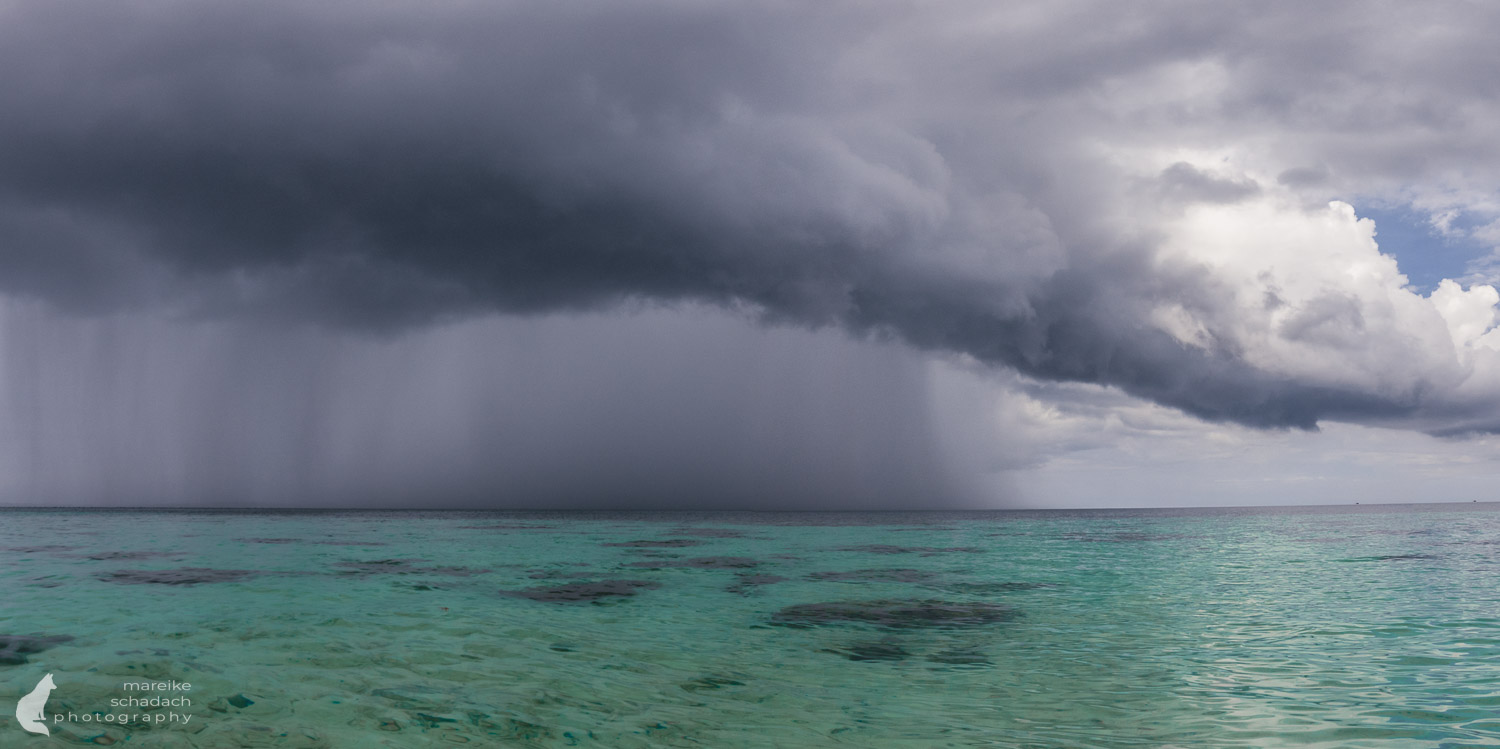
On the very first day, the intense heat and humidity already had me feeling completely drained. Luckily, there was usually a light or moderate breeze out on the open water, and anyone who got too hot could quickly jump out of the kayak into the water to cool off. After all, we hadn’t practiced re-entering the kayak so extensively at the start of the tour for nothing. Nothing stayed dry here anyway. Saltwater, sweat, and—almost every afternoon—downpours that really washed us out. My fingers swelled up and soon looked like the bark of an old oak tree.
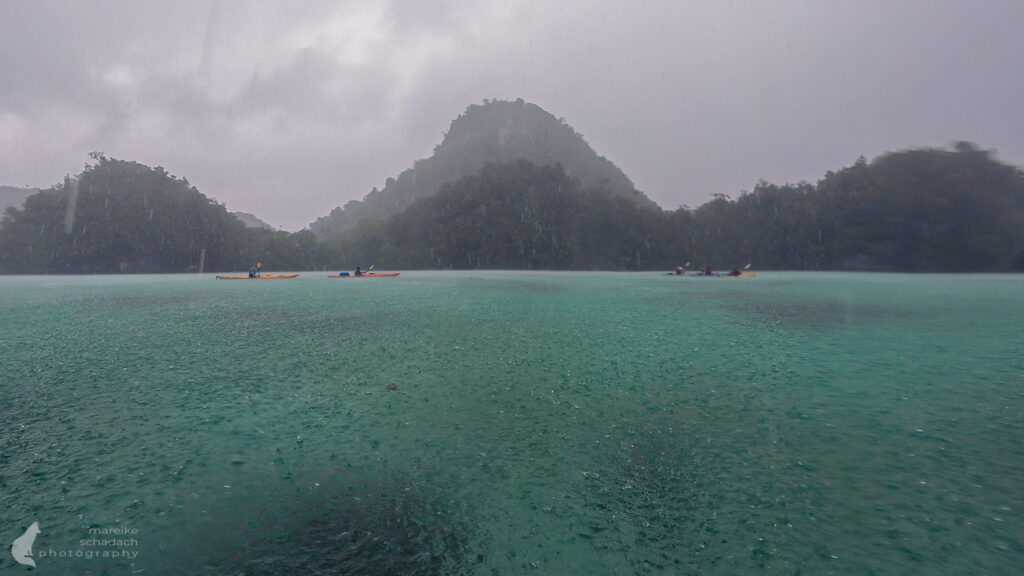
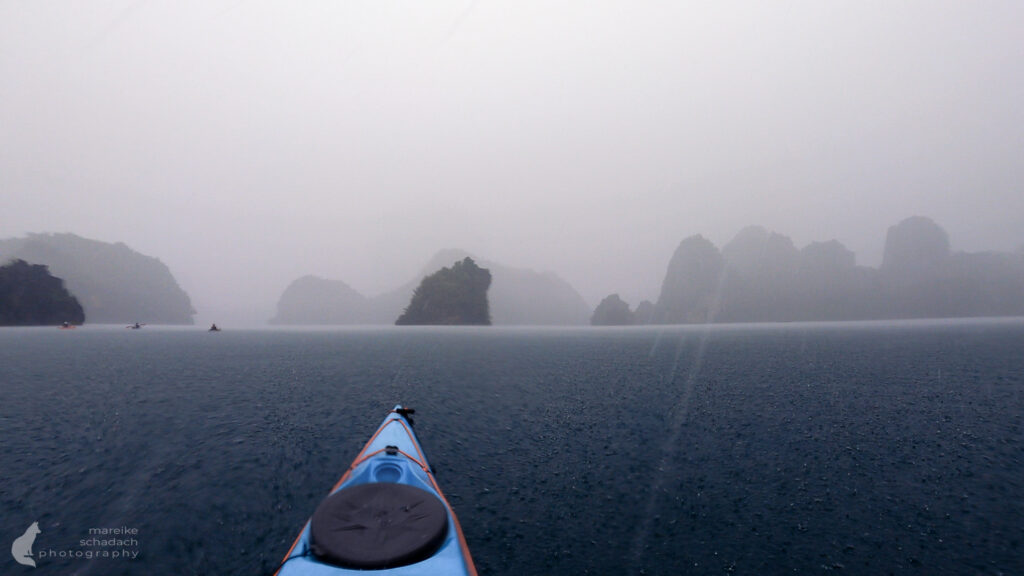
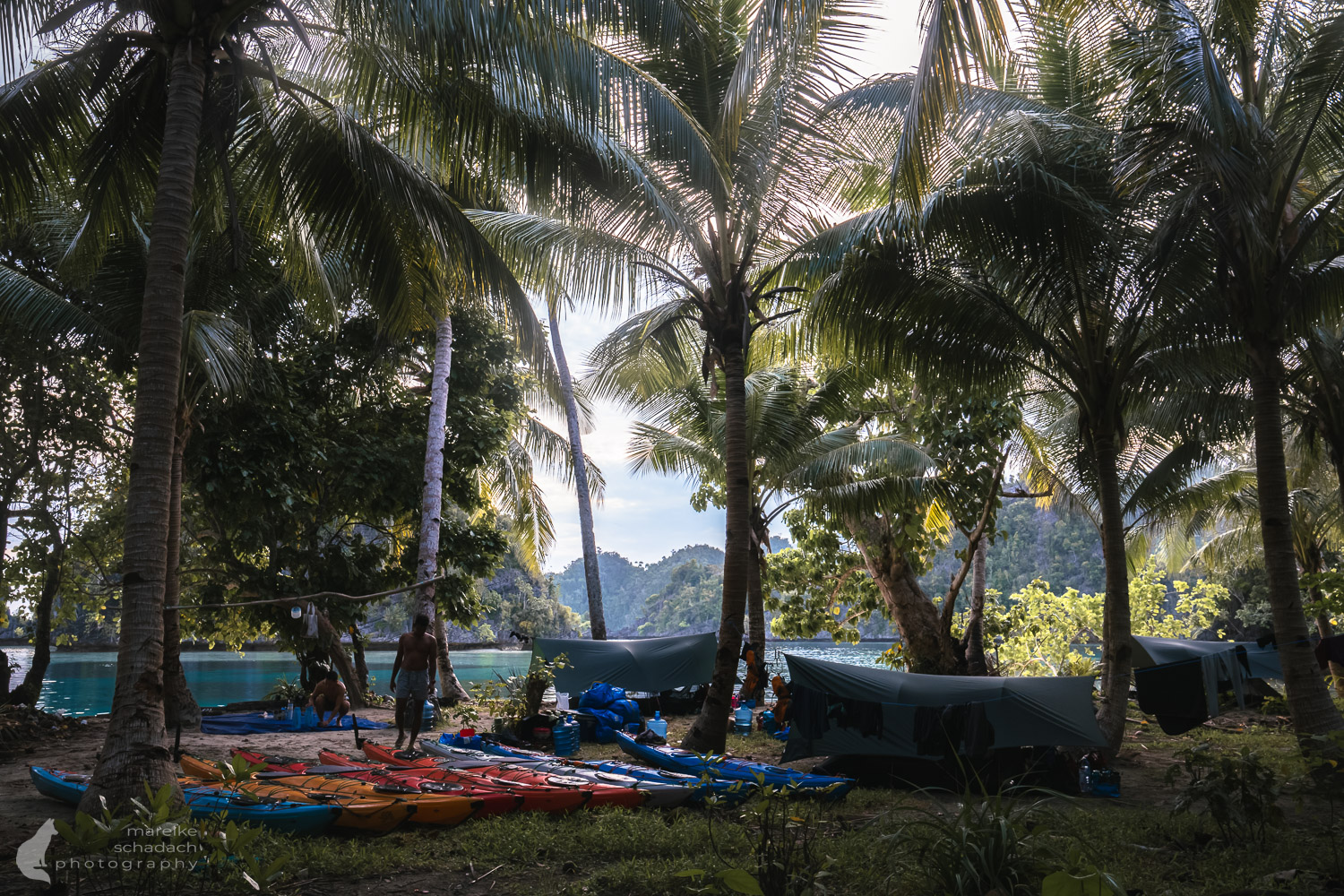
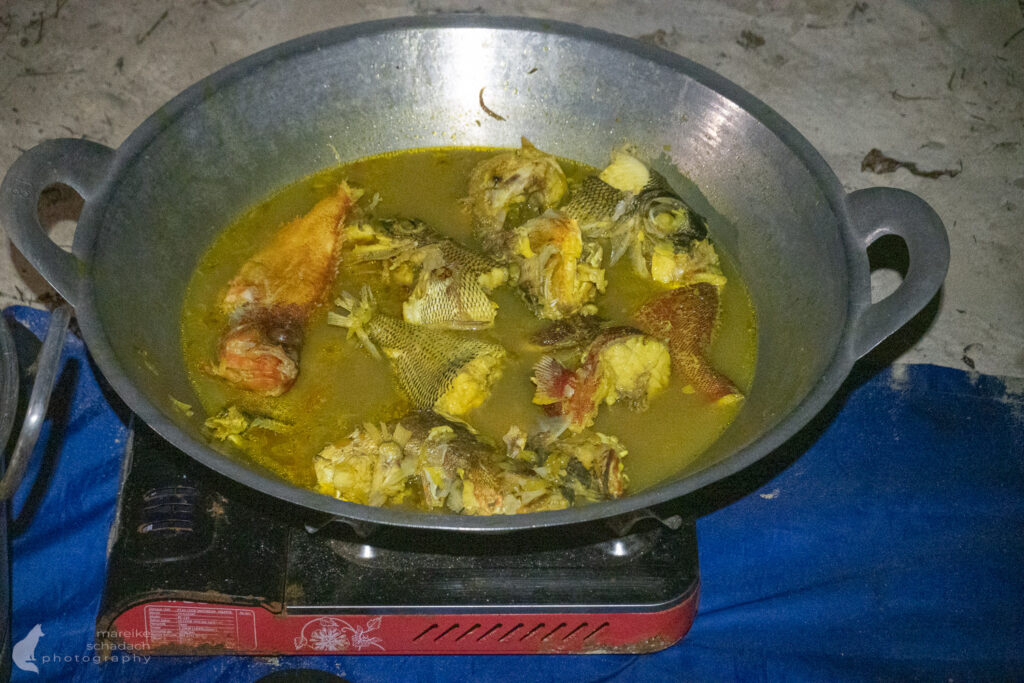
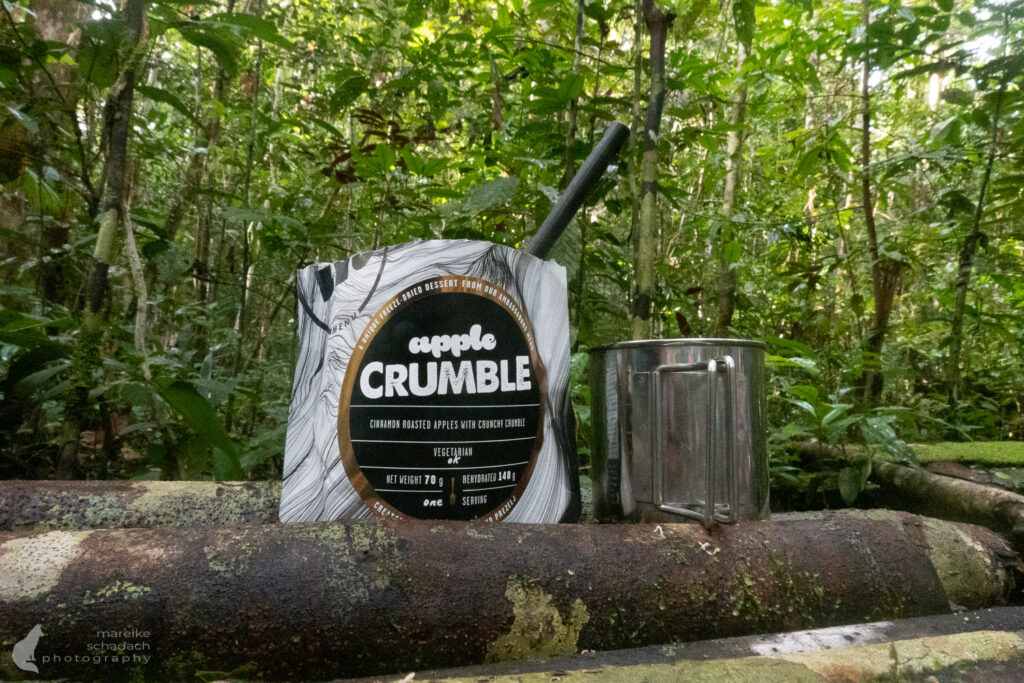
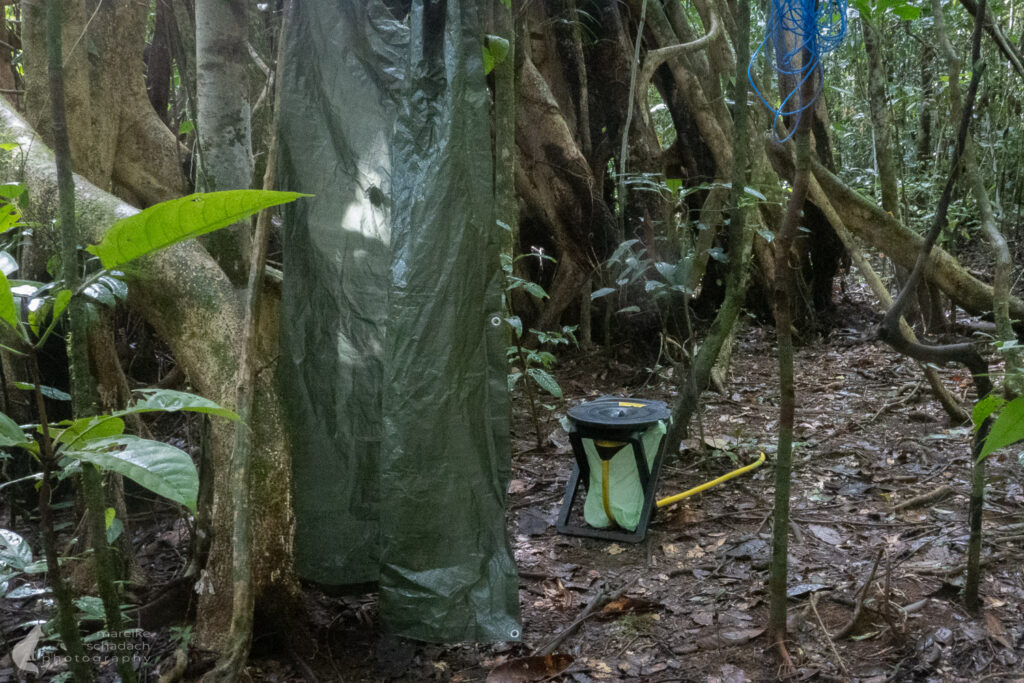
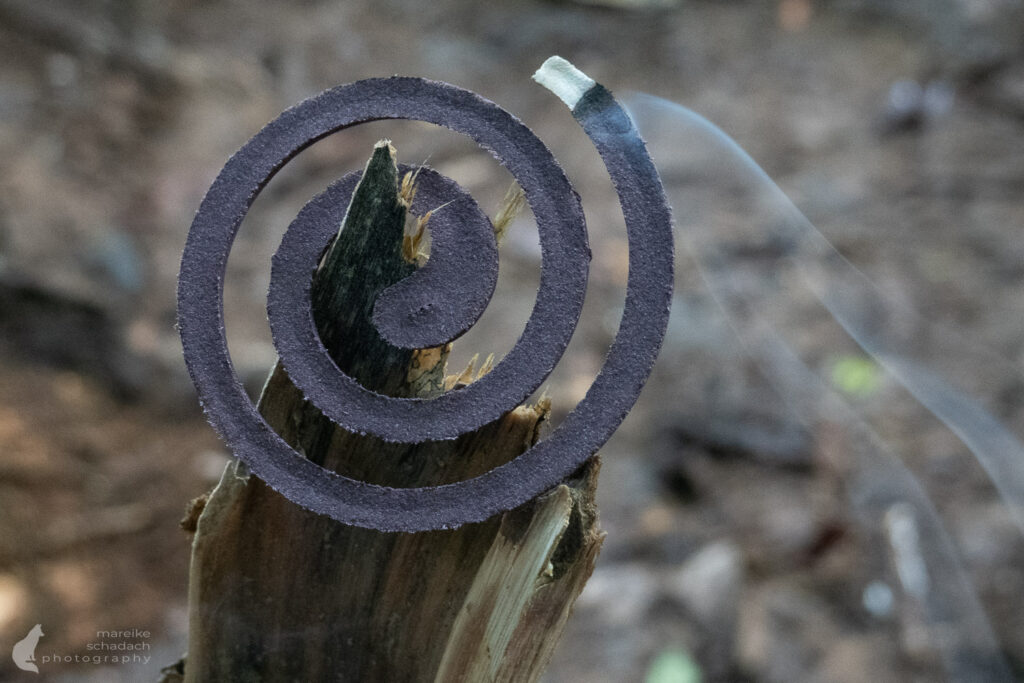
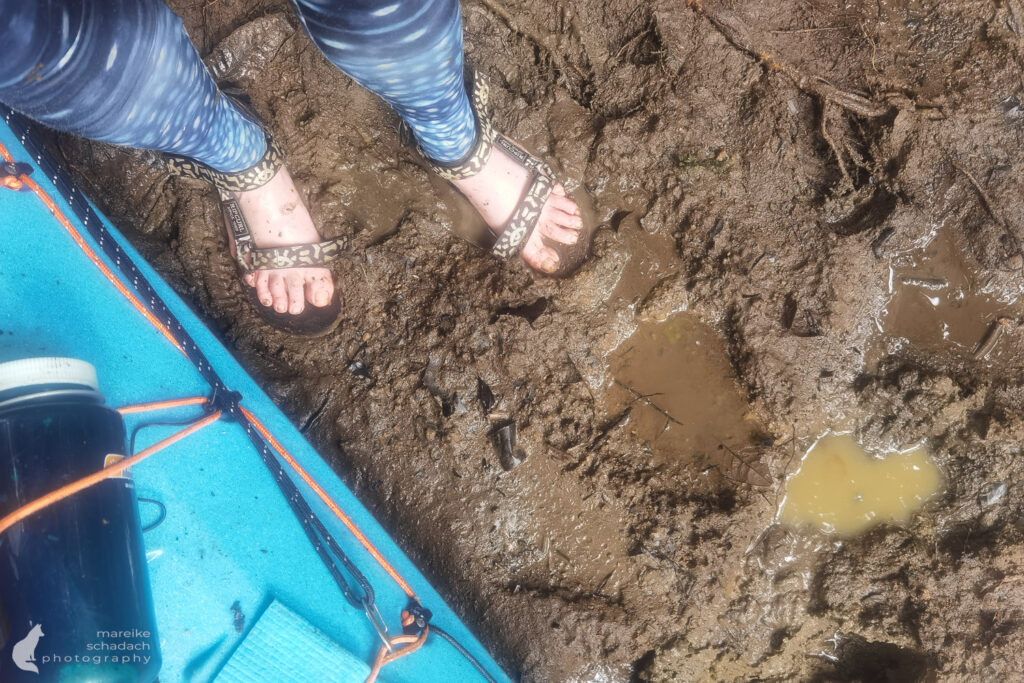
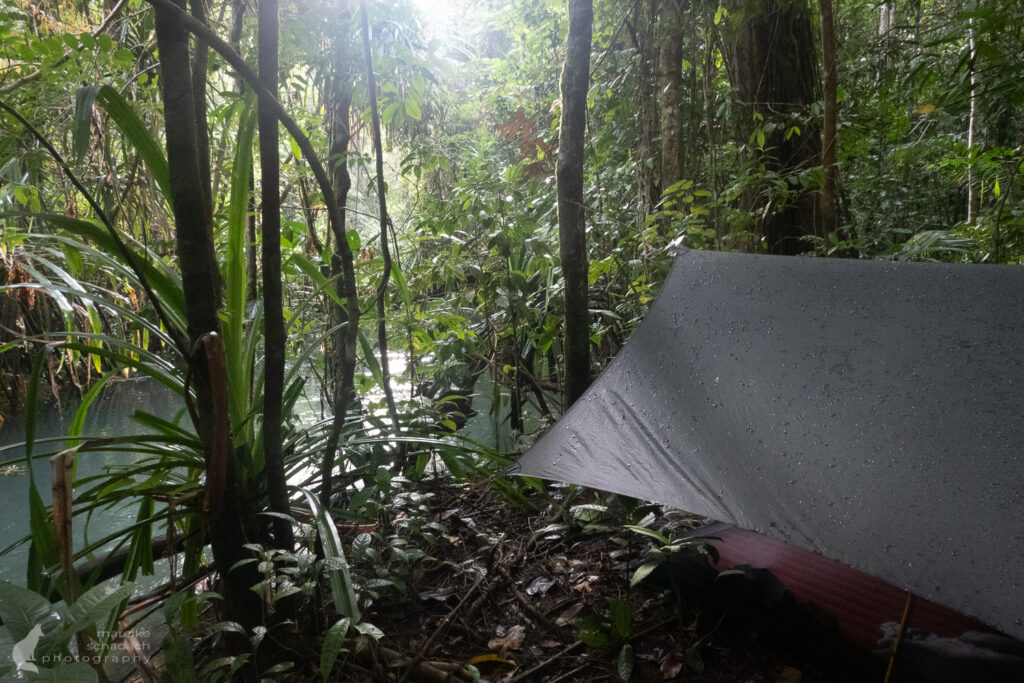
I had no idea that things in the jungle would get even tougher: no wind and no refreshing dip in the river, because a crocodile might be lurking in the mangroves. The humidity hung in the air in the form of fine mist droplets. You could see the humidity especially clearly in the evening by the light of our flashlights. The sandy beach turned into a mud bath, and we had to share our outhouse with even more flying and crawling insects. Even the toilet paper—despite being in a waterproof bag—was soon soaked through and unusable.
TIP:
Carefully close the zipper on the tent. Even the biggest spider can find the tiniest opening.
You can easily patch holes in the mesh with tape or band-aids.
Rock Labyrinths, Jungle, and a Sea Cave straight out of a Fairy Tale
Our daily life on tour can be summed up in just four words: EAT, PADDLE, EAT, SNORKEL, PADDLE, EAT, SLEEP. Sounds pretty monotonous, doesn’t it? Let me go into a little more detail:
Agility Training at the Kayak Playground
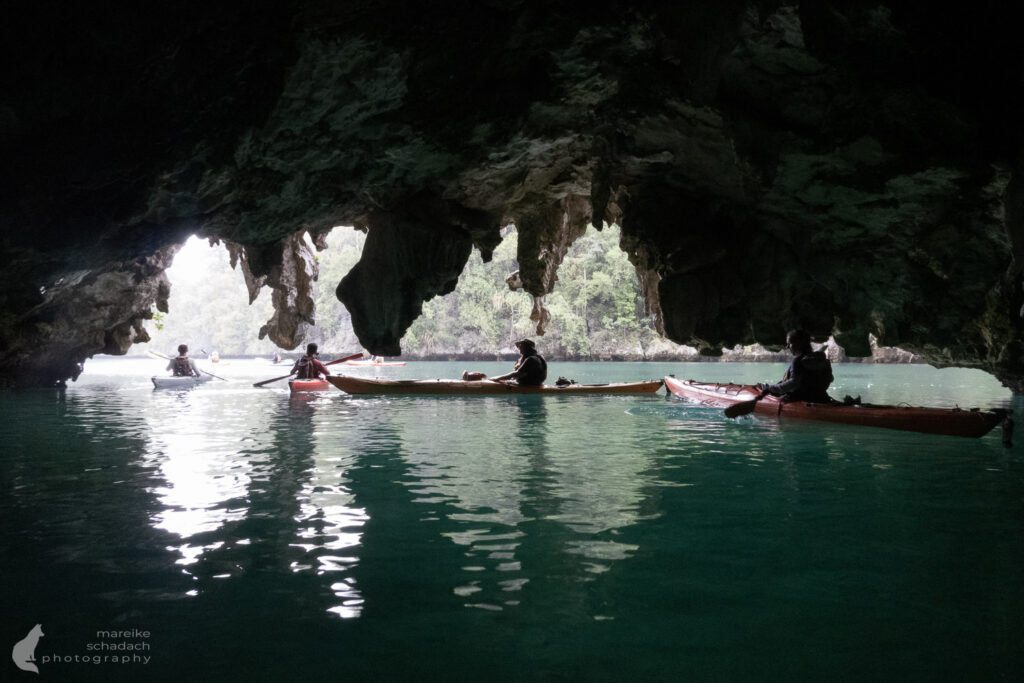
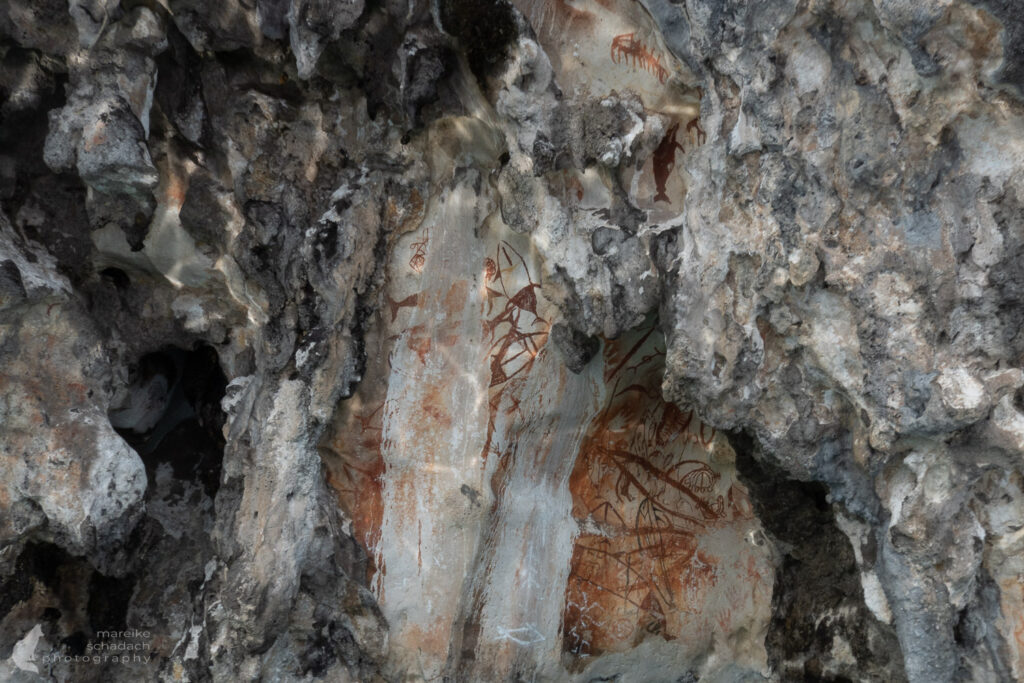
Our Swedish single kayaks were super maneuverable. We took advantage of that at the kayak playground and practiced our agility in narrow passages between limestone cliffs or paddled under arches. Our guide, Gilang, showed us rock paintings dating back about 4,000 years, and every now and then we spotted turtles or dolphins in front of our kayaks. It never got boring. Sometimes one participant or another provided extra entertainment by capsizing: Here, in the Kayak Playground, the first headlamp took a dip (the “pouch” wasn’t closed properly, and water seeped in). The contacts corroded from the saltwater faster than we could blink.
Blue River in the Misool Jungle
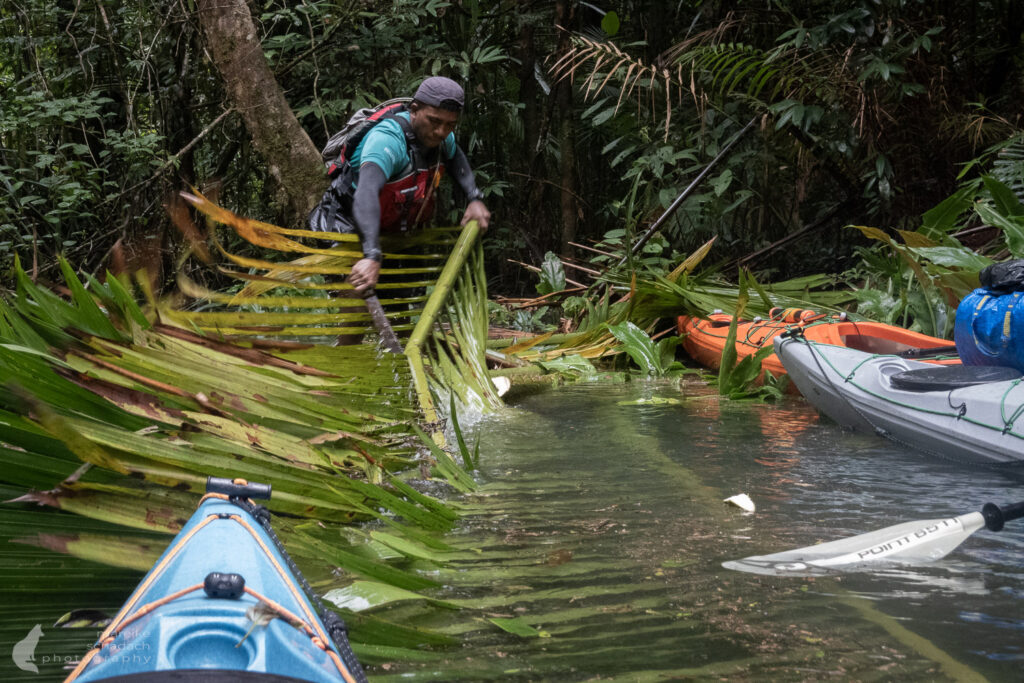
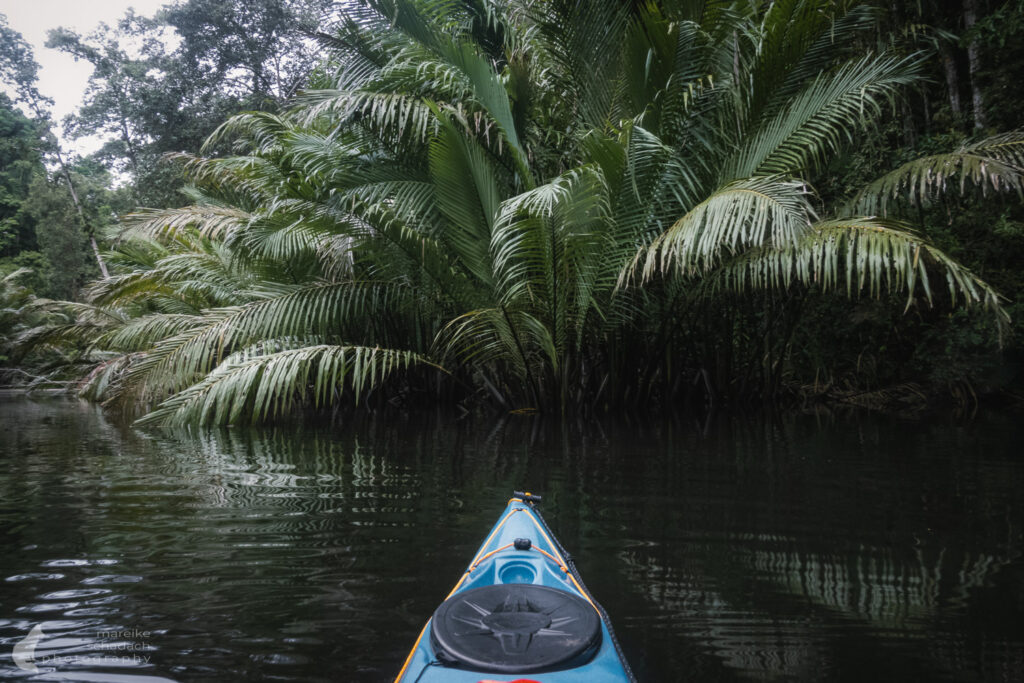
We finally ventured deeper into the jungle via the Blue River. At first, we paddled through mangrove forests; later, the river narrowed, and our guide, Amos, had to clear our path of fallen palm trees with his machete. The water was cooler here in the jungle, and we refilled our water bags at a freshwater spring. I never in a million years would have thought I’d drink water from a jungle river without boiling it first or treating it with some harsh chemical. But it agreed with all of us just fine.
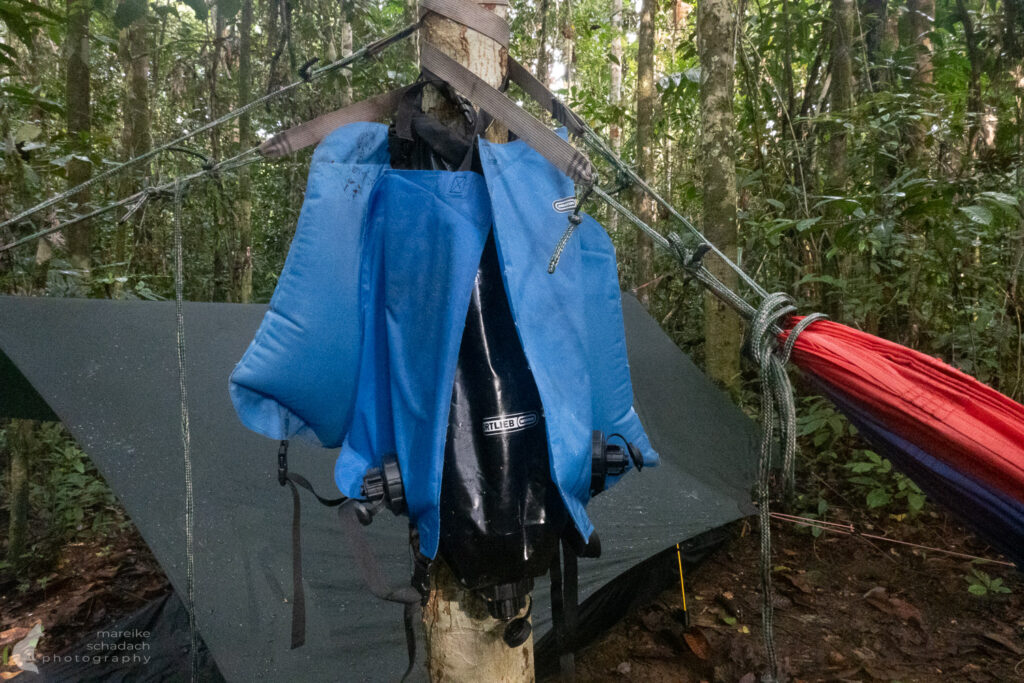
TIP:
Your feet need to dry out every now and then, too. That’s hard to do when you’re constantly in the water or wearing wet paddle shoes or sandals. Even though no one likes to talk about it: athlete’s foot is a real risk here! It’s best to pack some athlete’s foot cream in your first-aid kit. Your first-aid kit should also include a wound disinfectant spray and a wound ointment for scrapes and chafing, which are bound to happen.
Cave Paddling at the End of the Year
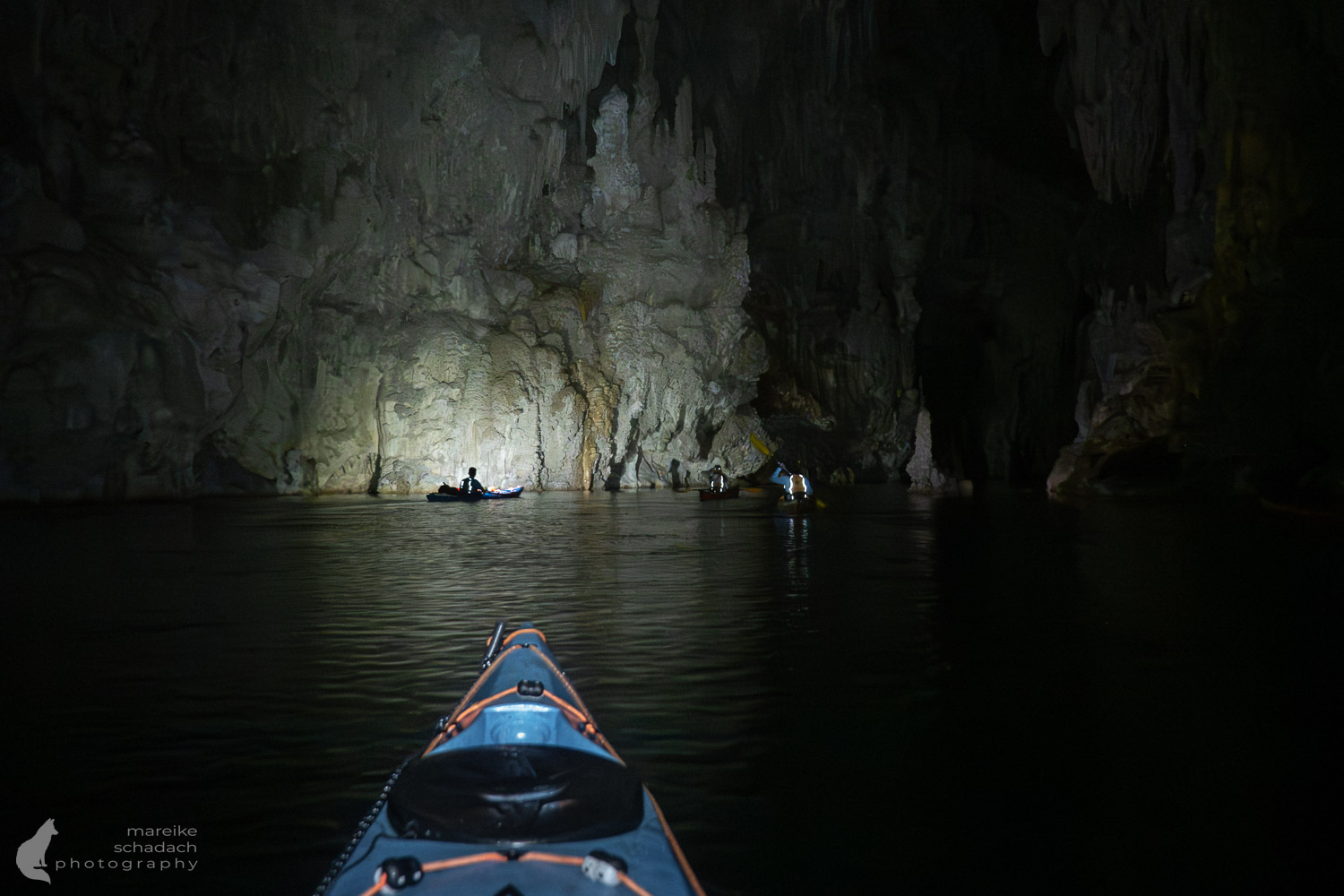
Gilang had saved one of the many highlights of our kayaking trip in Misool for New Year’s Eve: We paddled into a huge sea cave and couldn’t stop marveling at it. By the light of our headlamps, we saw stalagmites and stalactites emerging from the darkness like ghosts. We were all thrilled. In high spirits, we landed at the nearby covered wooden platform, which was to be our sleeping spot for New Year’s Eve. After two nights in a tent in the middle of the jungle, it was a welcome prospect. We enjoyed a festive meal of packaged food, nuts, salty snacks, and fruit. Everyone drank the beer they’d been saving for this evening and enjoyed the coolness that came with the evening darkness. Meanwhile, our own little fireworks display began in the sea: bioluminescent plankton glowed blue like thousands of tiny stars and captivated us for the rest of the evening. The evening didn’t last too late, though—we slept right through the New Year’s countdown.
Here on the platform next to the cave, our second headlamp took a dip in the water during a daring leap. But we were able to quickly clean and dry the contacts on this headlamp, so it continued to work.
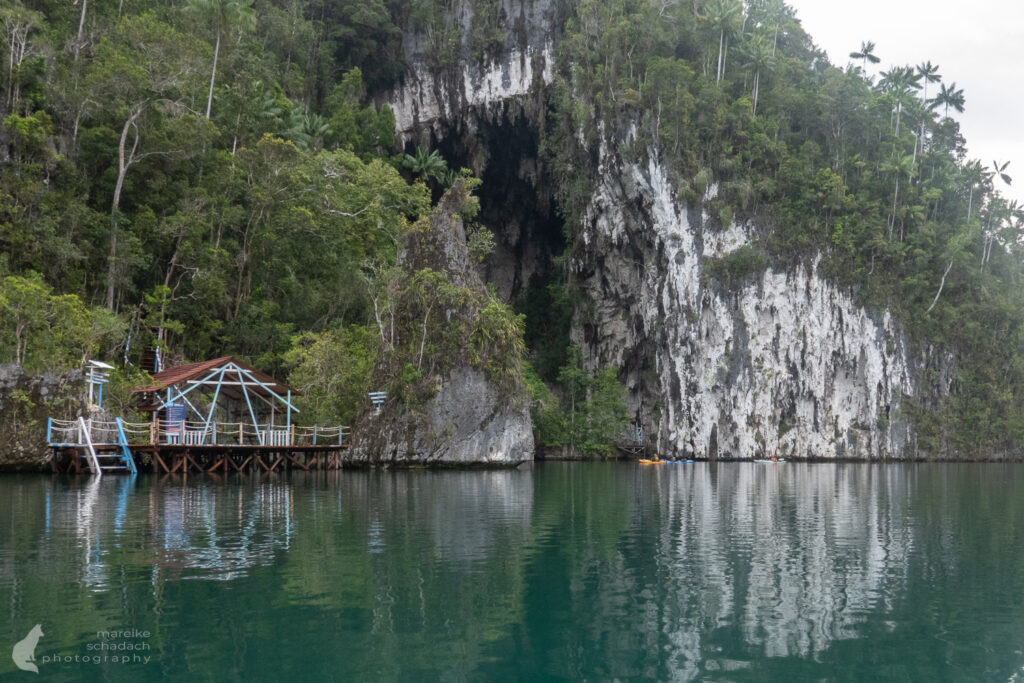
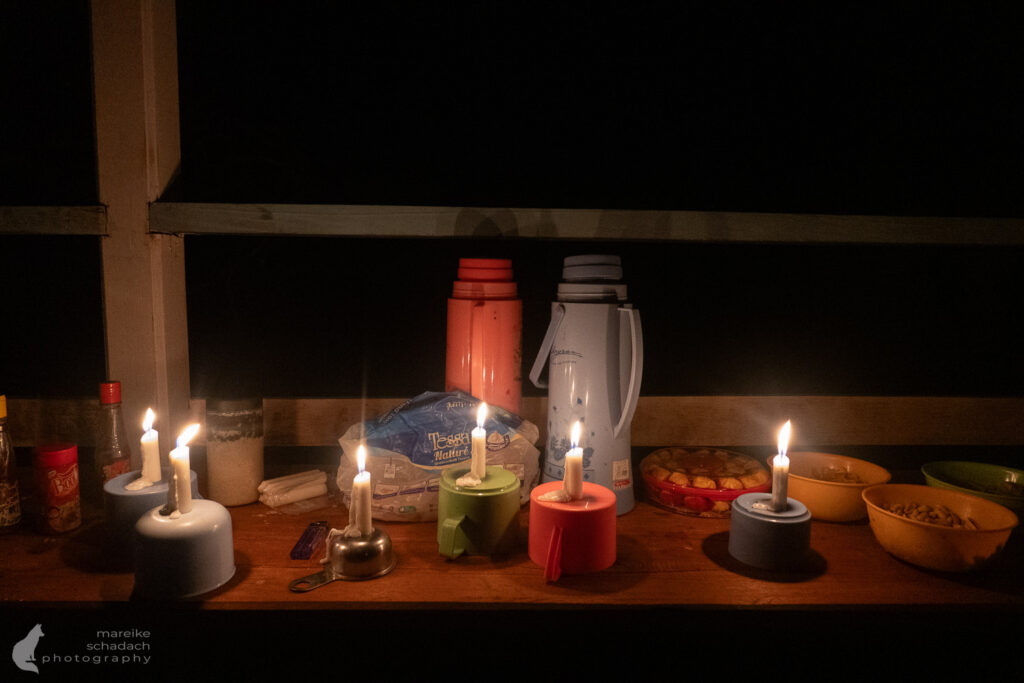
Tidal ranges of up to 2 meters sometimes turned us into acrobats as we got in and out of the kayaks and loaded them. Everyone pitched in, and as a team we managed to navigate even the more challenging sections. In the last few days, however, a bit of friendly competition broke out within the team: We competed to see who could collect the most trash, since, unfortunately, plastic bottles and other trash kept floating to the surface.
The Underwater World—Corals, Sharks, and 1,001 Colorful Fish
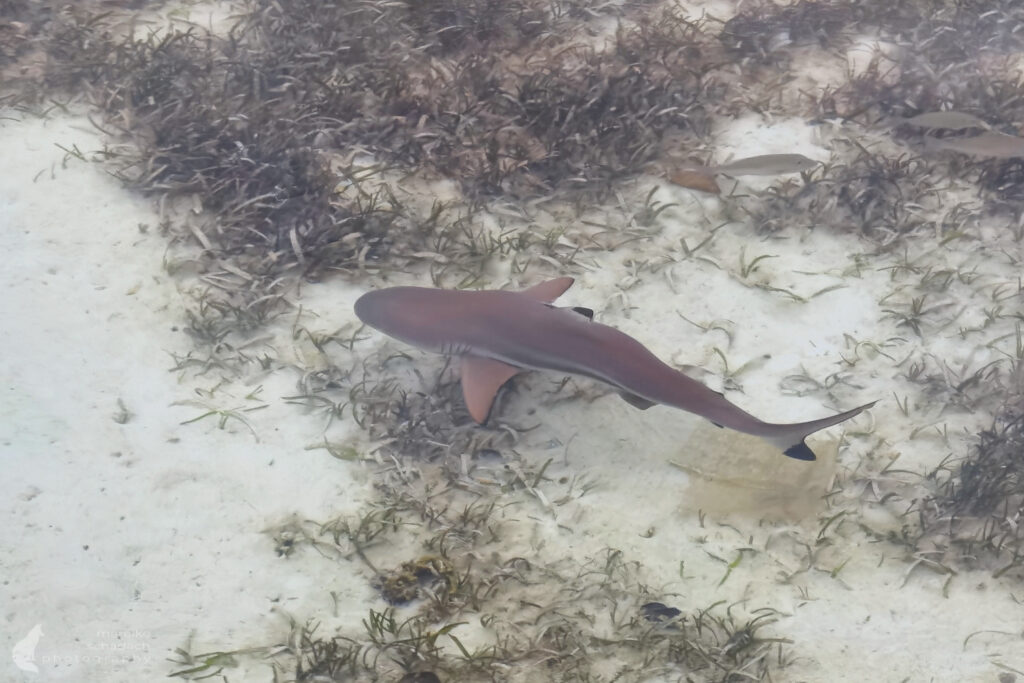
Shark! Five letters were enough to make eight people jump up from the breakfast table as if stung by a tarantula. Each of us wanted to see the shark and leaned boldly over the railing of the restaurant platform. Right below us was a coral reef. We saw a small reef shark as well as various schooling fish, napoleon fish, pufferfish, pipefish, lionfish, turtles, and many other fish whose names I unfortunately still don’t know.
If you’re in Misool, you’re guaranteed not to stay out of the water for long. Every day we went snorkeling several times and were surprised again and again. Blue, green, red, orange, and yellow corals alternated, and 1,001 fish swam around us. Moments like these made it easy for me to forget that every time I went in the saltwater, my long hair dried out even more and became tangled.
TIP:
Humidity is a challenge for any camera and can often cause it to stop working. Make sure the camera is always well-packed. There are small, waterproof deck pouches available for paddling that are very handy. Silica gel packets also help keep the camera dry. Another good option is a waterproof phone case or GoPro.
The Golden Jellyfish of the Hidden Lake Lenmakana
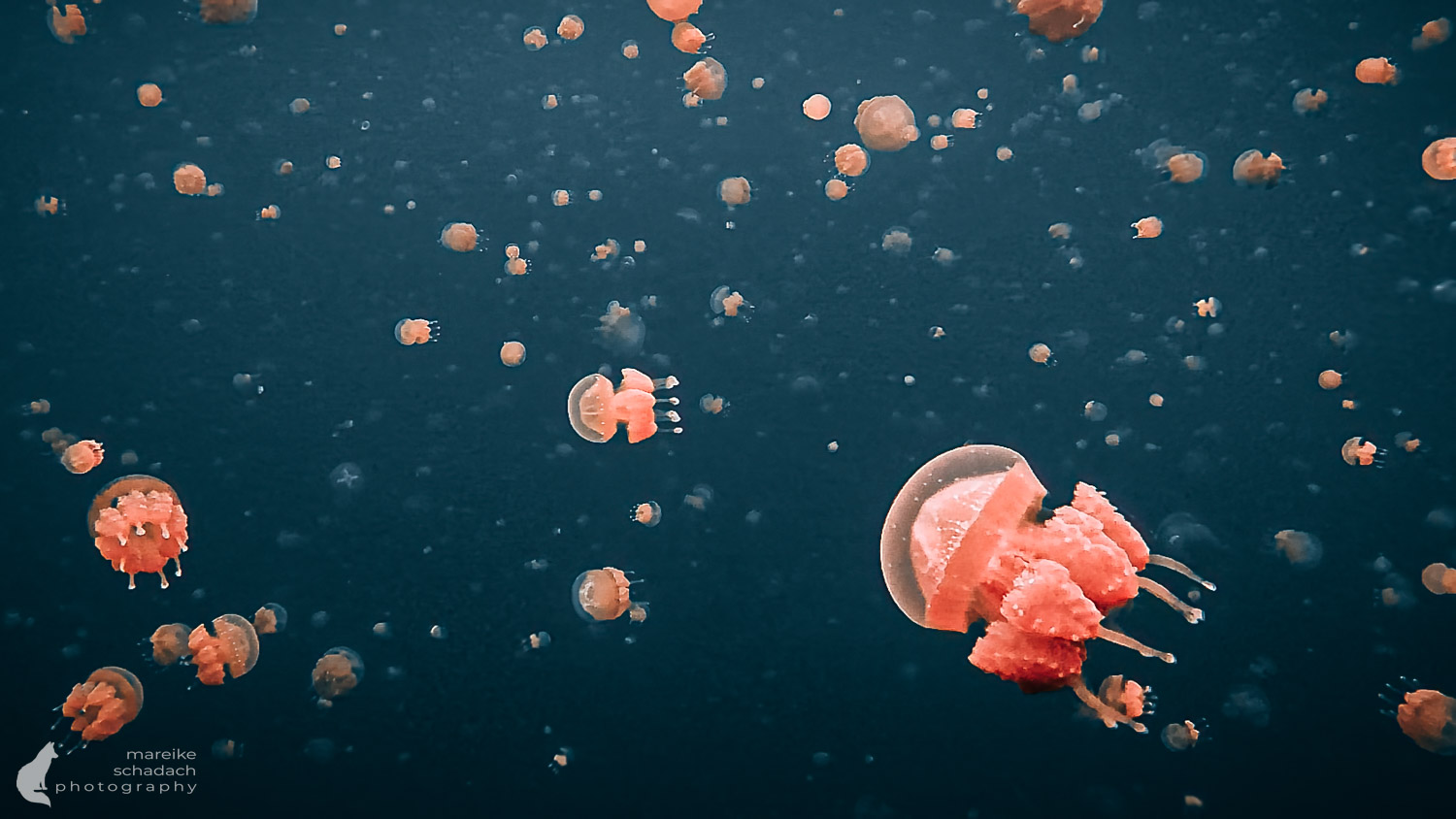
Jellyfish are beautiful to look at, but they should generally be approached with caution. Some species, such as the sea wasp, are even deadly. The venom of a single sea wasp would be enough to kill 250 people. So who would willingly swim in a lake filled with thousands of jellyfish? Yet that was exactly what I had been looking forward to for a long time: our visit to Jellyfish Lake Lenmakana.
To reach Quallensee, you have to climb a short stretch up a steep limestone cliff. The steep wooden ladders, with rungs spaced far apart—as if for giants—present a challenge, but the arduous climb is well worth it.
The saltwater lake was cut off from the sea about 12,000 years ago and is approximately 18 meters deep. The jellyfish of the species Mastigias papua trapped in the lake have proliferated in large numbers, and since they have no natural predators in the lake, their venomous tentacles have atrophied over time.
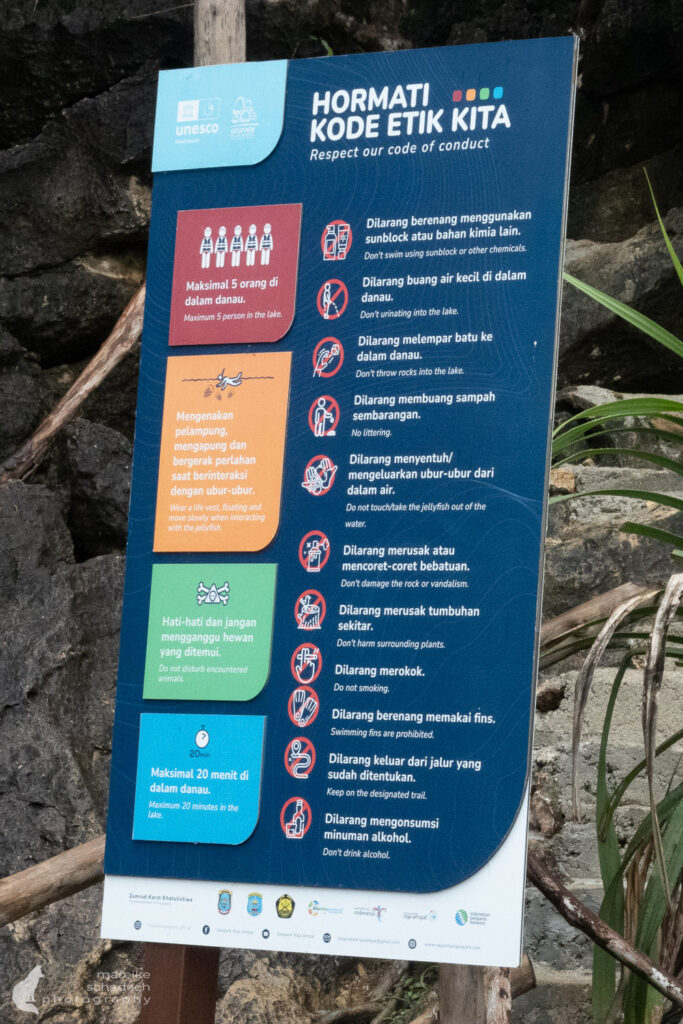
Rules for Snorkeling in Jellyfish Lake
Visiting a jellyfish lake is a privilege that requires visitors to act responsibly. After all, we humans pose a threat to these delicate creatures. That’s why our guide, Gilang, explained to us how we should behave in the water. The most important rules are:
- No fins or sudden movements
- Do not touch jellyfish or lift them out of the water
- Do not urinate in the water
- Do not apply sunscreen or insect repellent beforehand
- Do not dive
As I floated almost motionless on the surface of the lake, the jellyfish swam around me. All I had to do was open my eyes, hold my GoPro in front of me, and marvel at the beauty of each and every one of them.
Fun fact: In 2007, scientists discovered a jellyfish fossil that is over 505 million years old. When did the dinosaurs live? That was about 245 to 66 million years ago. So jellyfish were already around more than 260 million years before the dinosaurs.
Saltwater, UV rays, and humidity are sure to cause tangles in your hair
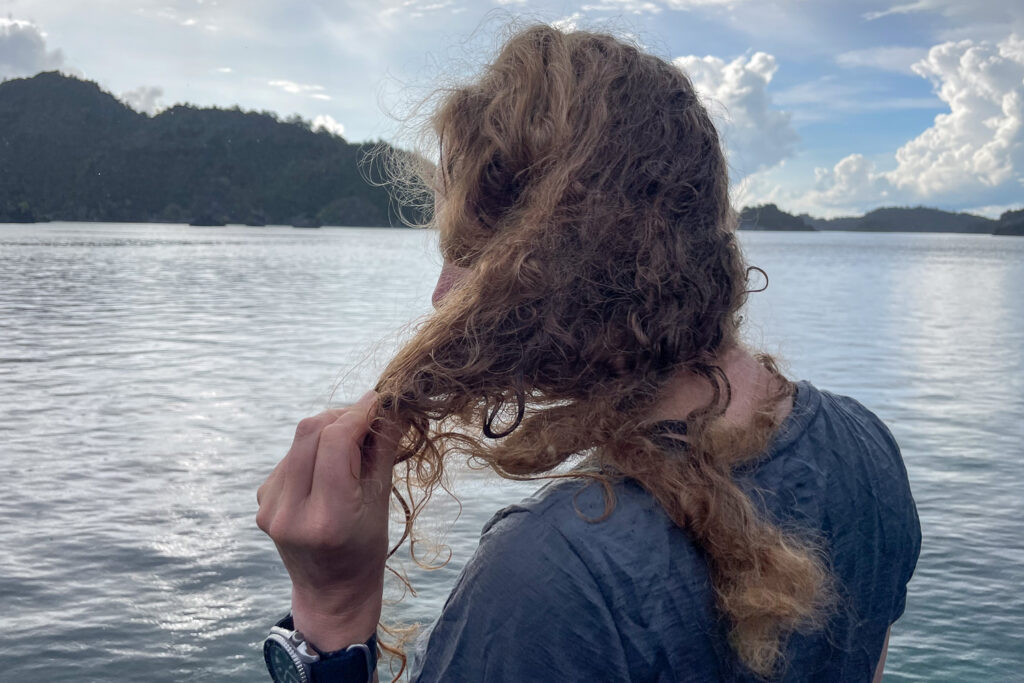
I’d already hinted at this a bit at the beginning… Long hair and trekking trips are always a bit of a challenge. When I was out on my treks in Sweden, I’d just braid my hair, wash it when needed, and after the trek I could brush it out again with plenty of conditioner without any major problems. It worked even after seven or eight days. I thought I could do the same thing here in Indonesia. But that didn’t work out: The humidity made my hair frizzy in the braid, the sun and the salt dried it out, and knots formed that even a shark would have struggled to get through. For the sake of the coral, I hadn’t packed any conditioner, and to conserve our precious freshwater, I didn’t rinse my hair after every snorkeling session. Of course, I also didn’t have any hair oil or anything similar with me to protect my hair.
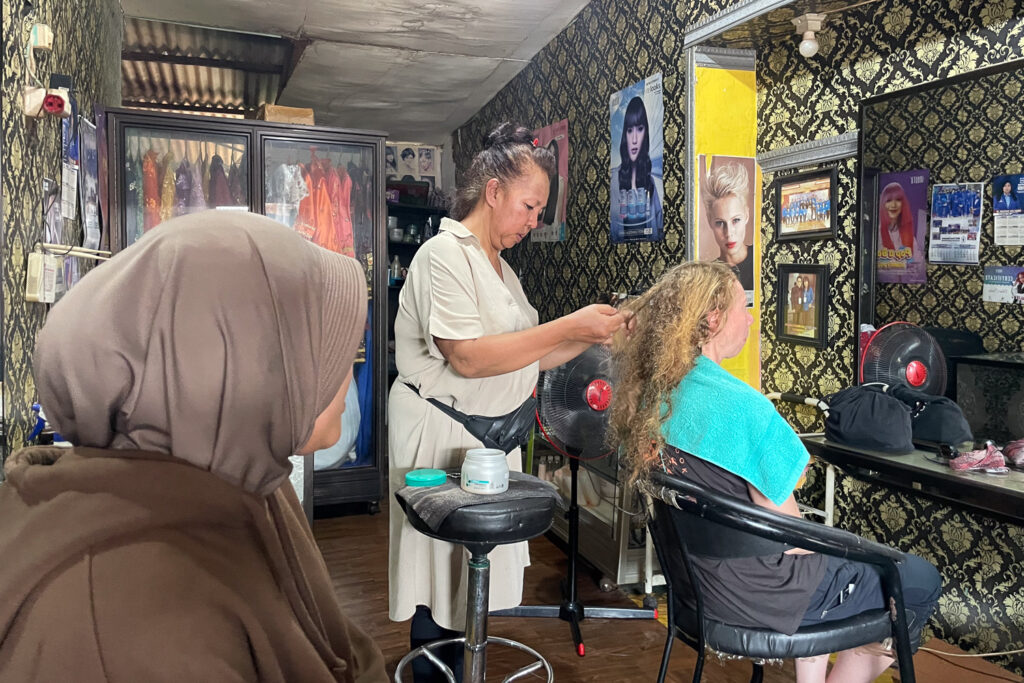
After stocking up on conditioner, detangler, and hair oil following the kayaking trip, I spent about three hours in the hotel bathroom. To no avail. Chitra’s mother—a colleague of our guides at Millekul Adventures—had more success. Her mother had made time to welcome me to her hair salon. Her daughter accompanied me to interpret. I was her first customer from abroad, as she told me afterward. She was nervous about it. For three hours, she worked on my hair. Every now and then, other customers or family members would come into the shop, sit down, chat, and marvel at my hair knots.
In the end, the stylist’s skilled hands were able to save some of my hair, and my new hairstyle didn’t turn out as short as I’d dreamed it would be a few days before the paddle tour! Yes, I actually dreamed that I was cutting off my long hair. For me, that was an absolute nightmare. Maybe that should have been a warning sign… In the end, though, it was a priceless experience to be helped so patiently and wholeheartedly in a foreign country by people who didn’t even know me. We can all learn from this hospitality and willingness to help.
Book Recommendations for Indonesia
You want to know where the journey goes? Then I can recommend these books*.
You can order the books with a click on the pictures on Amazon. If you buy a product via an affiliate link, I get a small commission, and you help me to keep filling Fernweh-Motive with interesting articles. The product will not be more expensive for you, and you will do me a huge favor.


Do you want to know when there are new articles on my blog? Then follow me on Facebook, Pinterest or Instagram. I would also be very happy if you share my article with your friends.
Recommendations for further Reading
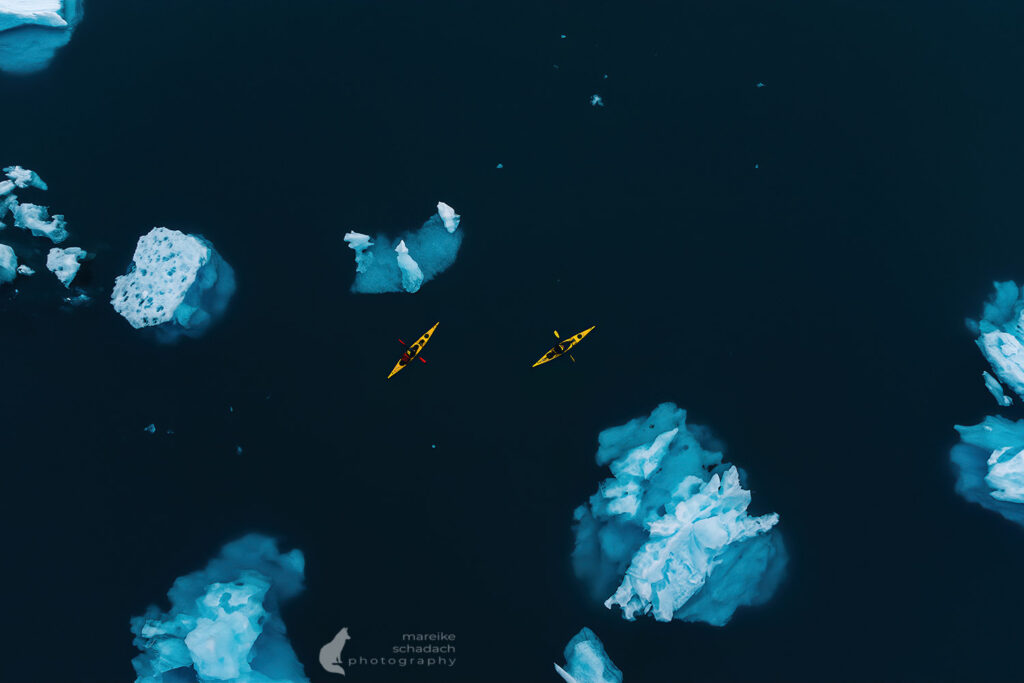
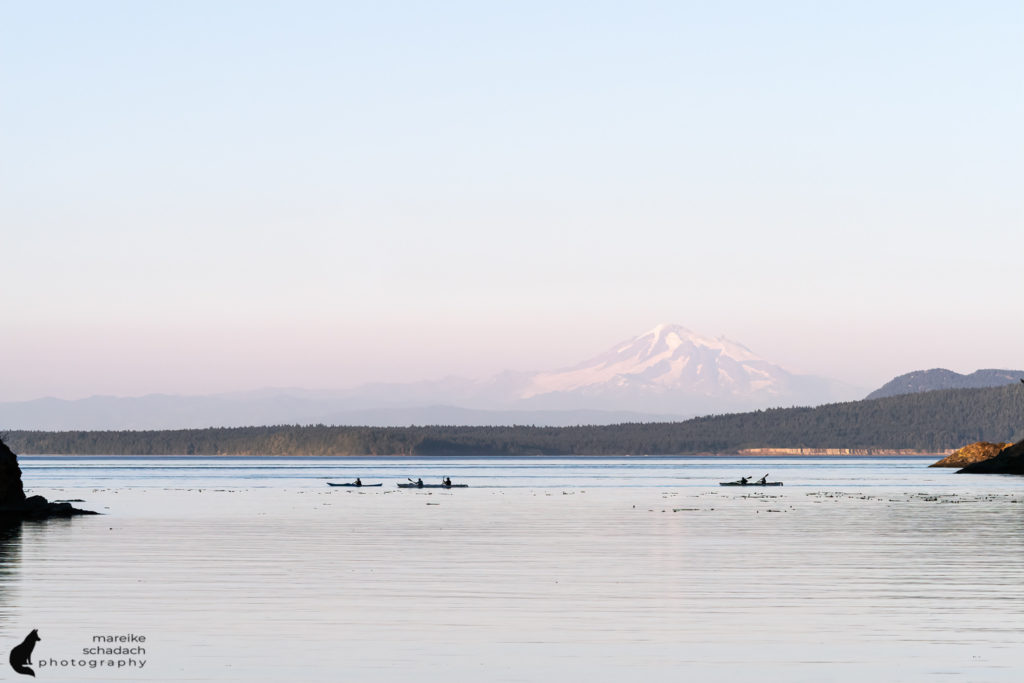
Do you love long paddle trips as much as I do? Then you'll definitely be interested in my articles Greenland Kayak Tour - Paddling in a Sea of Icebergs and Kayak Tour at the Orcas of the San Juan Islands.