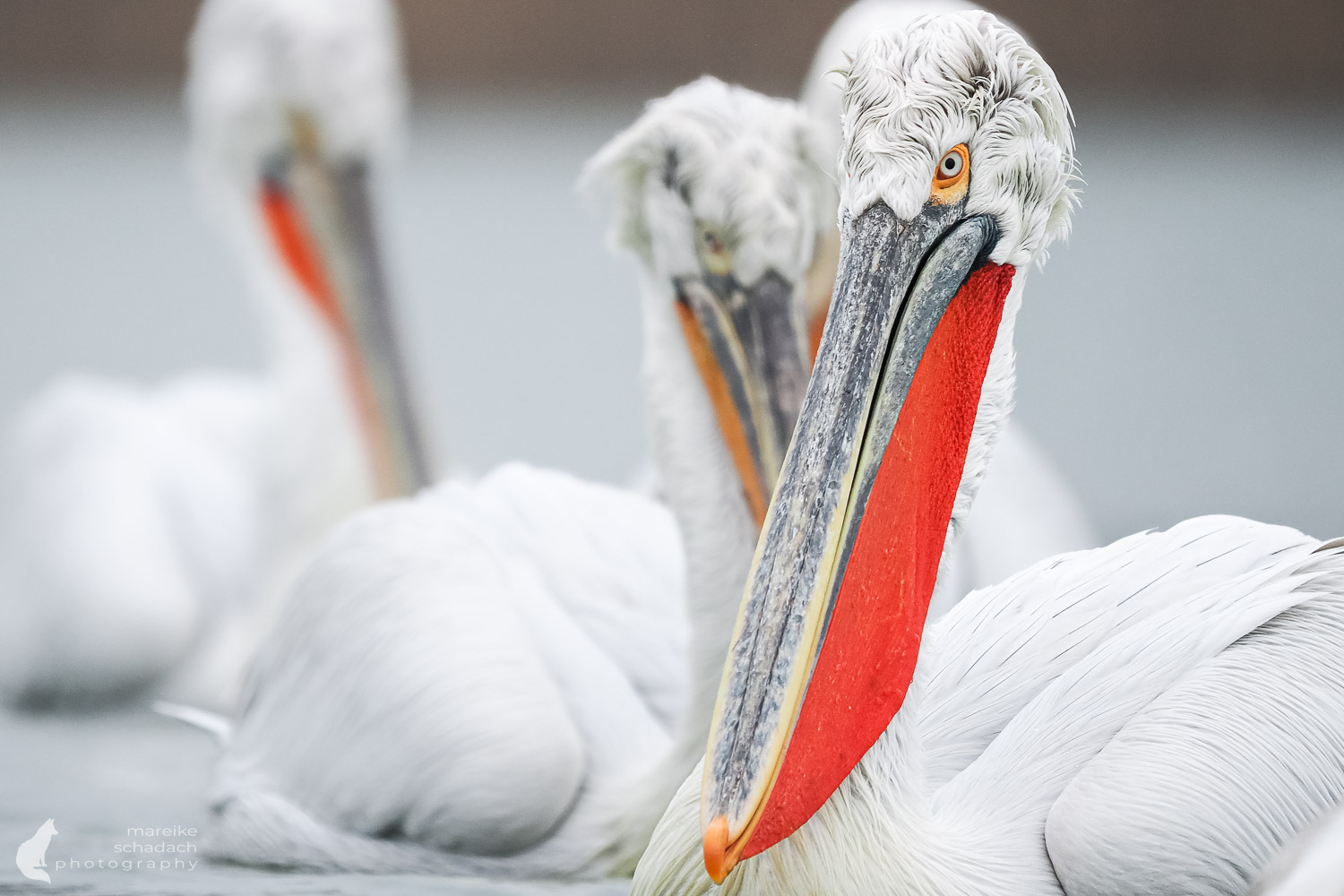
Romania. The Danube Delta is known to many nature lovers as a birdwatching paradise. Many birdwatchers come here during the migration season or to observe the summer breeding season. However, the Danube Delta is hardly known as a winter destination. But it is precisely at this time of year that the mighty Dalmatian pelicans and Pallas's gulls show off their beautiful breeding plumage. The sparse winter vegetation also makes the animals easy to spot on the riverbanks. In addition to the Dalmatian pelicans, it was the chance to see golden jackals, raccoon dogs, and wildcats that drew me to this remote region.
Unassigned, unpaid advertising. The article contains affiliate links.

The Water begins at the End of the Road
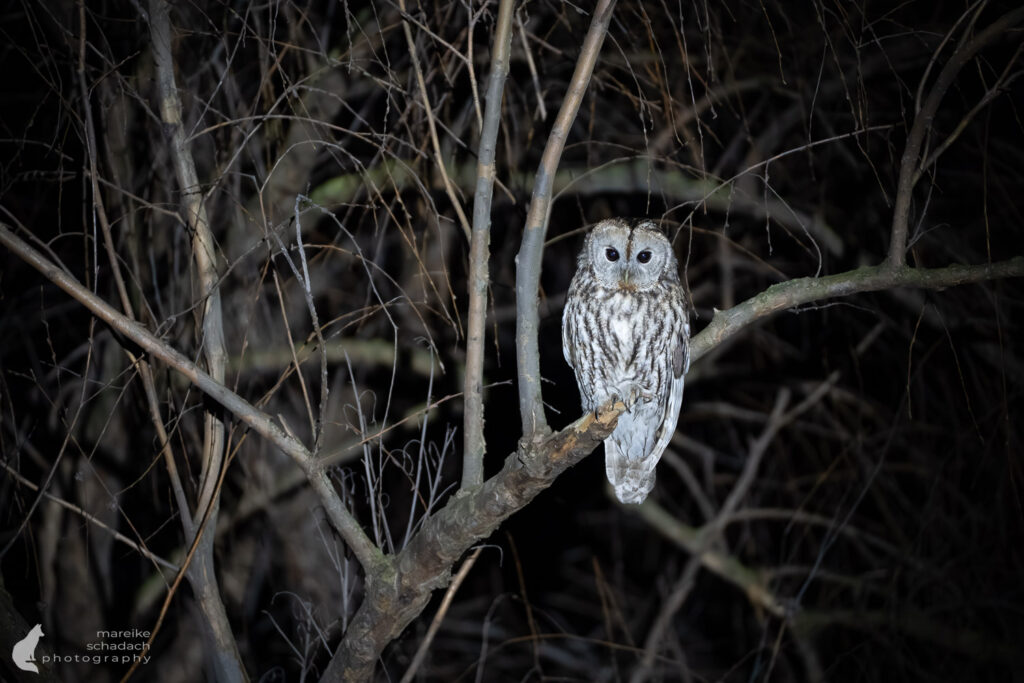
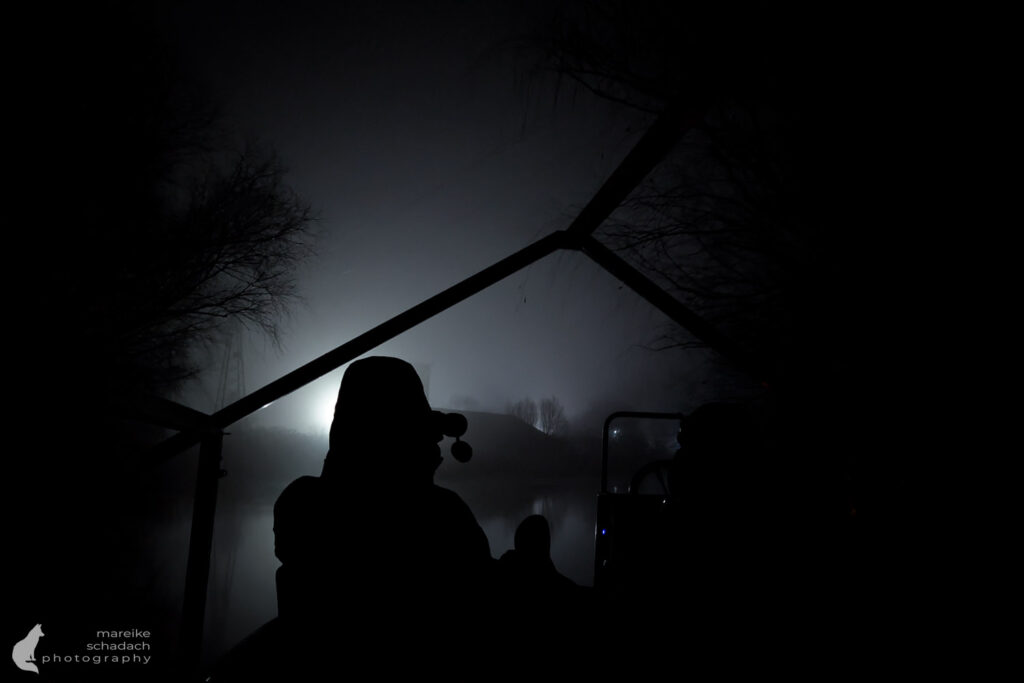
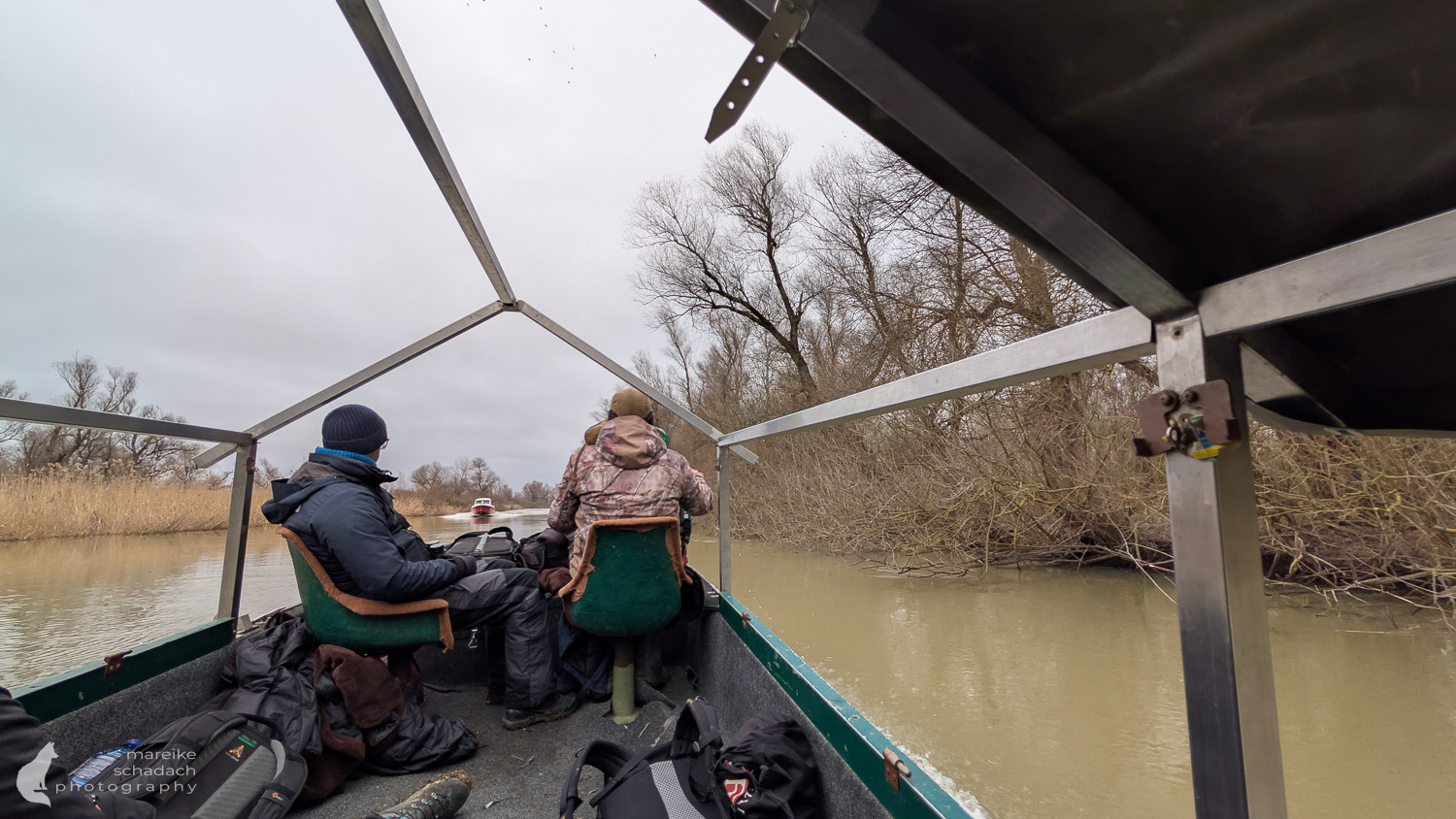
The evening in Tulcea feels like a transition between two worlds. From the city, also known as the “Gateway to the Danube Delta,” the only way to continue is by boat. We hoist our luggage into the small boat at the jetty. There is no one else at the harbor except us. It is raining. Everyone finds a place on the beanbags in the boat, pulls warm lambskin overshoes over their boots, and wraps themselves in the blankets provided. We get our cameras ready by the light of our headlamps. It is shortly before eight o'clock in the evening. Soon after we set off, all the lights of the city have disappeared, and only the red/green side lights of our boat bring some light into the darkness. Our guide scans the banks with night vision goggles for crepuscular and nocturnal animals. I, too, stare intently into the dark landscape and imagine I can make something out. After a while, I give up and just watch our guide, seeing which direction he points the night vision device and whether he raises his hand with the flashlight. Within the first hour of our boat trip to the village of Mila 23, we see two minks, two raccoon dogs, a tawny owl, and a deer.
There are only four of us, an unusually small group for a photography trip, accompanied by our guide from the nature tour operator Sakertours and our boatman. After about three hours on the boat, we reach our destination in Mila 23.


Danube Delta Biosphere Reserve
The Danube Delta Biosphere Reserve is a vast labyrinth of water and land on the border between Romania and Ukraine. The delta consists of countless lakes, canals, and islands at the end of the approximately 2,860 km long Danube River. Covering 5,800 square kilometers, it is the largest contiguous wetland and reed bed in Europe. The area is known as an Eldorado for birdwatchers, with 312 recorded bird species. Countless fish and mammal species find refuge in this mosaic of water and land, which has been designated a UNESCO Biosphere Reserve and World Natural Heritage Site since 1991. The delta is also one of the last refuges for the European mink, the wildcat, the freshwater otter, and the globally endangered monk seal. Around 13,000 people live in small villages that can only be reached by boat. The main economic activities in the biosphere reserve are fishing, hunting, reed harvesting, livestock farming, subsistence farming, and tourism.
Mila 23 and Life in Winter in the Danube Delta
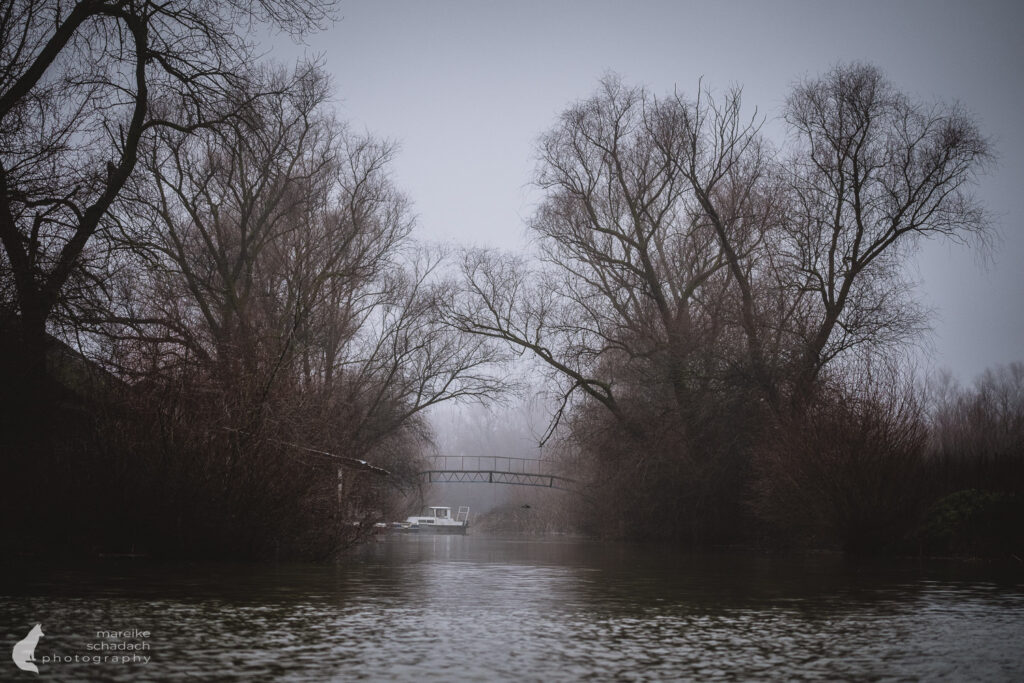
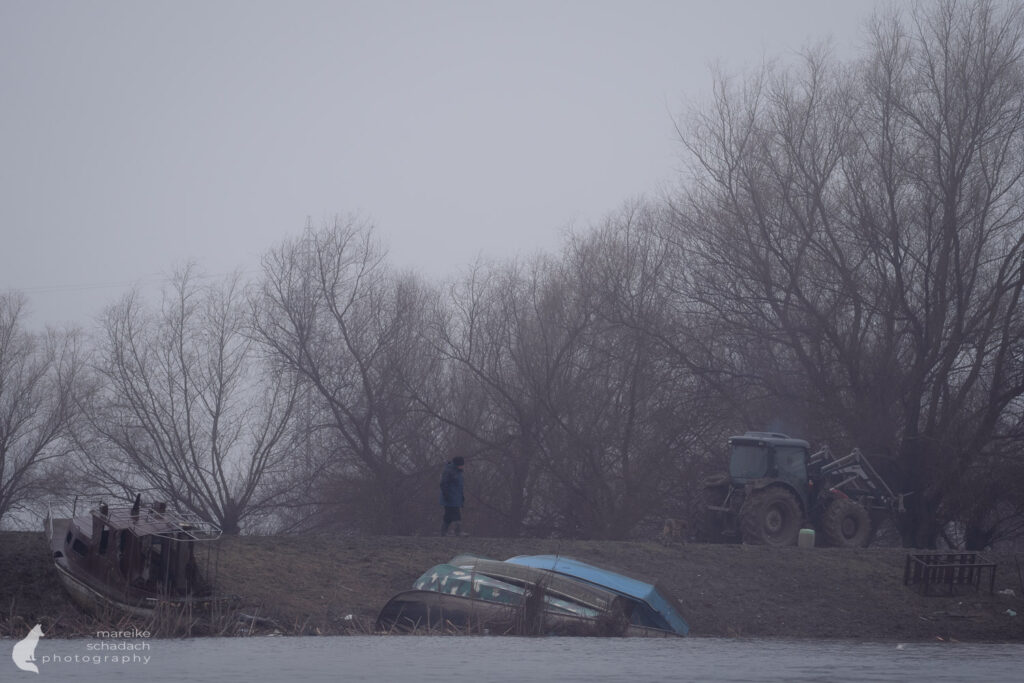
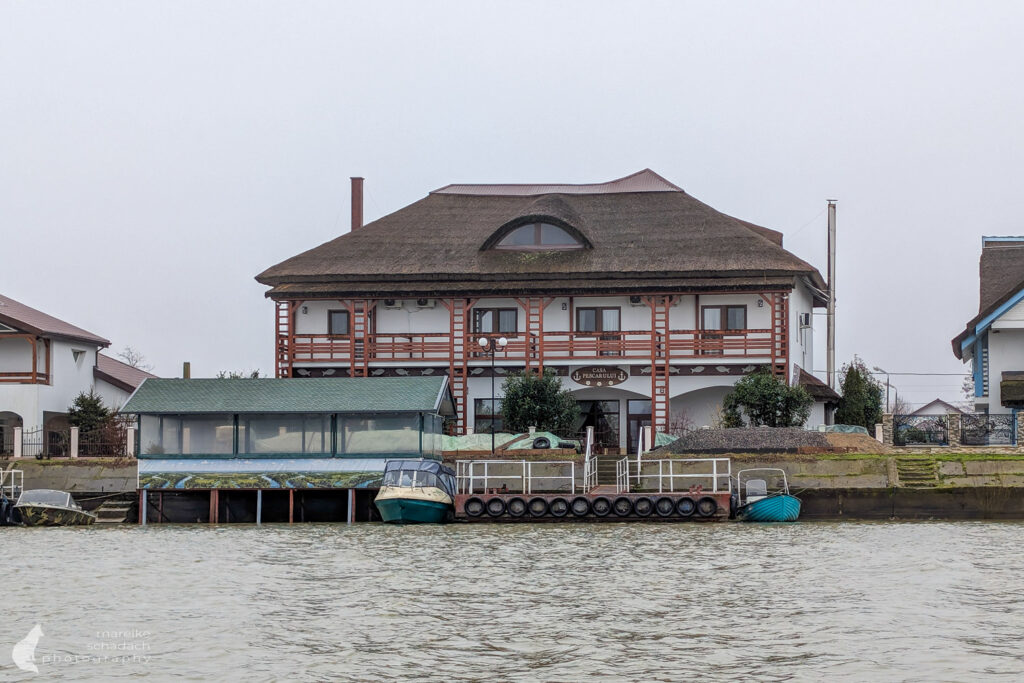
The small village of Mila 23 on the edge of one of the many canals looks more like a collection of boats than a settlement. There are no roads here, only wooden walkways, boats in front of the houses, and a few narrow paths. Many residents of the village, as well as the delta as a whole, belong to the Lipovan community, descendants of Russian Old Believers who found refuge here in the 18th century. Our guesthouse is family-run and impresses us over the following days with excellent local cuisine, which, as expected, offers plenty of fish from the waters on the doorstep.
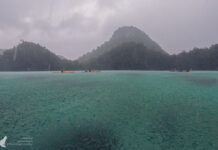
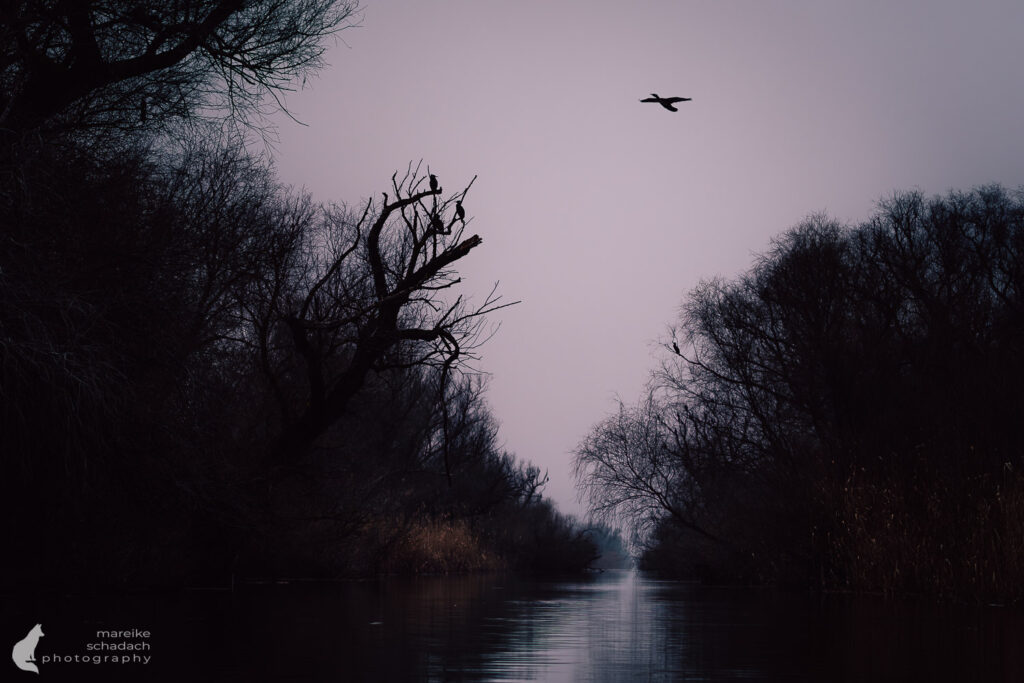
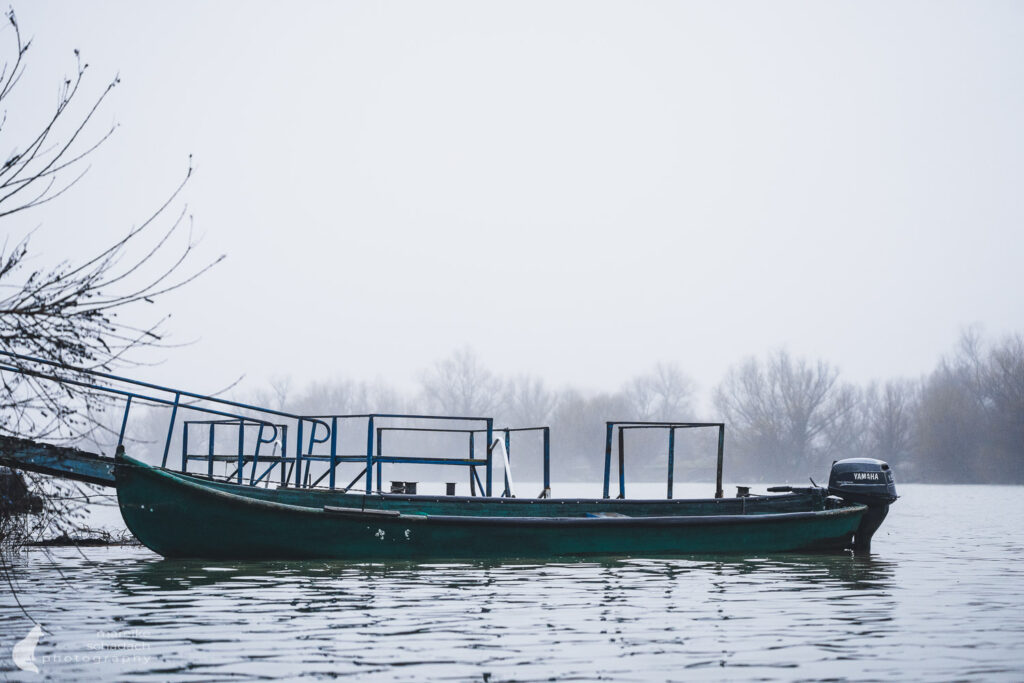
In the weeks leading up to our trip, I had checked the weather forecast every day. What could I expect in winter in the Danube Delta? The forecast temperatures ranged from minus fourteen to plus fourteen degrees Celsius, with snow, ice, and true spring weather. Just the week before, there was snow on the ground, and the waterways were partially frozen. But now, at the beginning of February, the thermometer shows a few degrees above zero, the snow has disappeared, the ice has melted, and instead heavy clouds hang over the river and a fine drizzle alternates with heavy showers. Not the conditions photographers dream of, but perhaps exactly those that give a photo that certain atmosphere.
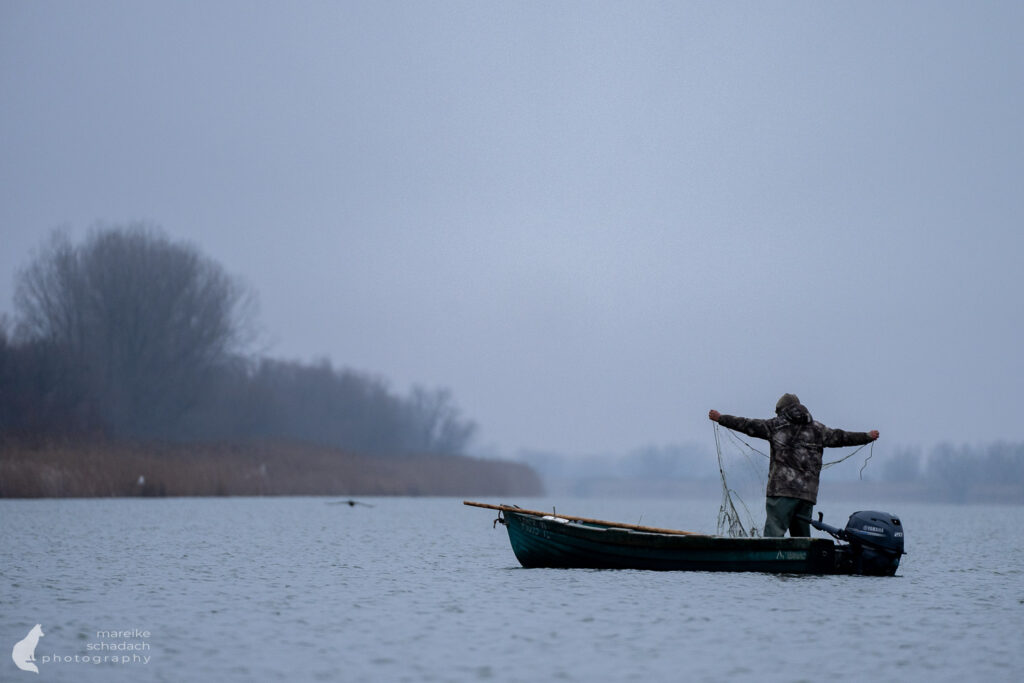
Winter is the off-season here in the Danube Delta. Most hotels and tourist attractions are closed, and visitors don't start arriving until April, when migratory birds stop over and the breeding season begins. But now the delta belongs almost exclusively to the locals and the animals. It is precisely this tranquility that makes it so appealing.
Golden Jackals from the Photo Hide
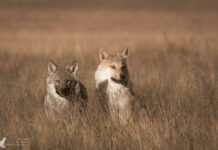
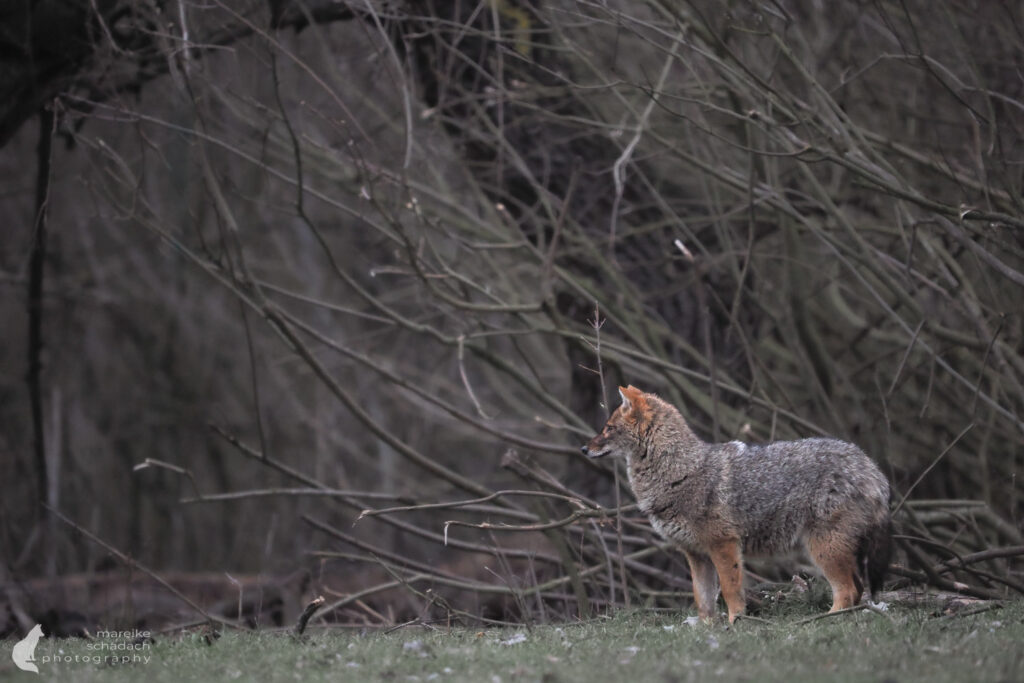
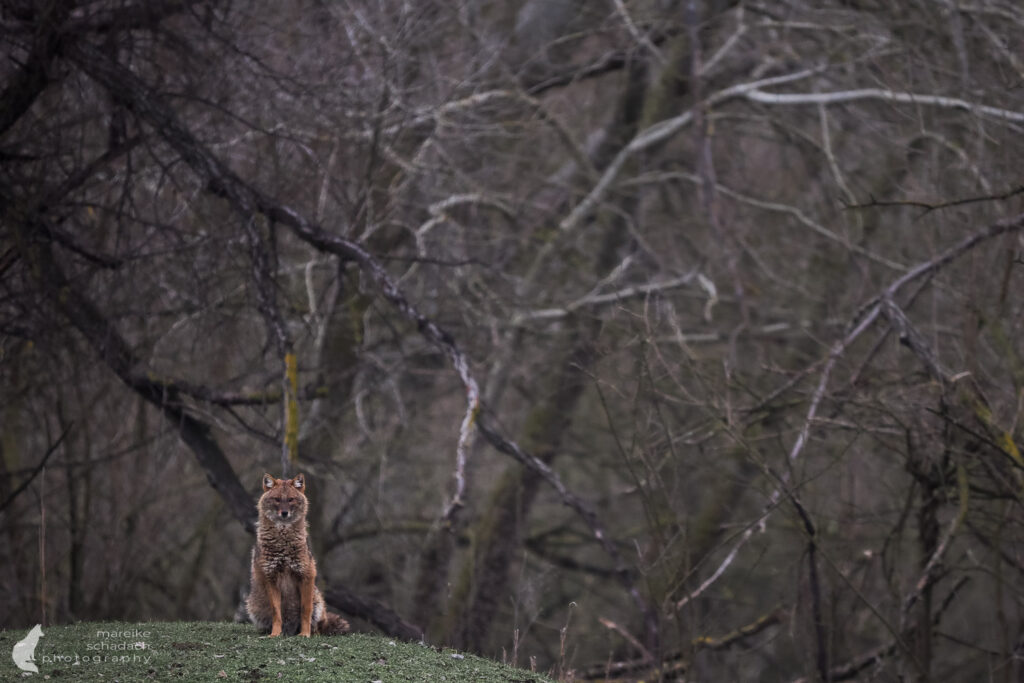
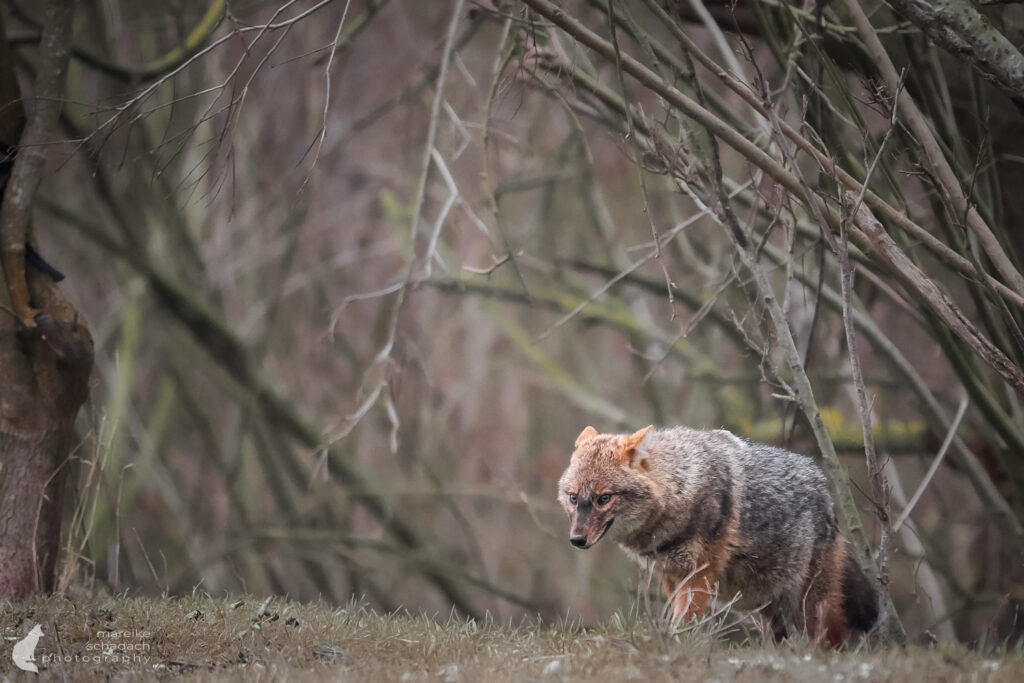
On two of the three days, our small photography group splits up. Two of us take the boat and search for water birds, while the other two move into a small photo hide at the edge of the reed belt. I can hardly wait to get into the hide and eagerly set up my camera. We are in luck: after just half an hour, two golden jackals appear, looking beautiful in their thick winter coats. They look like a cross between a fox and a small wolf. Golden jackals have spread rapidly in recent decades, as there is plenty of food and cover in the delta.
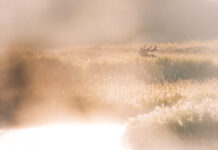
We are able to observe the five animals for over an hour. They are extremely shy in the open meadow and keep looking around in all directions, even up into the air. Probably not without reason. Two of the jackals have clearly visible old injuries, either from fights or traps: a partially severed tail, a partially missing front paw, an injured eye, and a bent ear testify to the enormous resilience and strength of these wild animals.
From our hiding place, we can observe other animals, including buzzards, a marsh harrier, gray herons, hooded crows, magpies, a gray woodpecker, and two pheasants.


Boat Trip in Rain and Fog
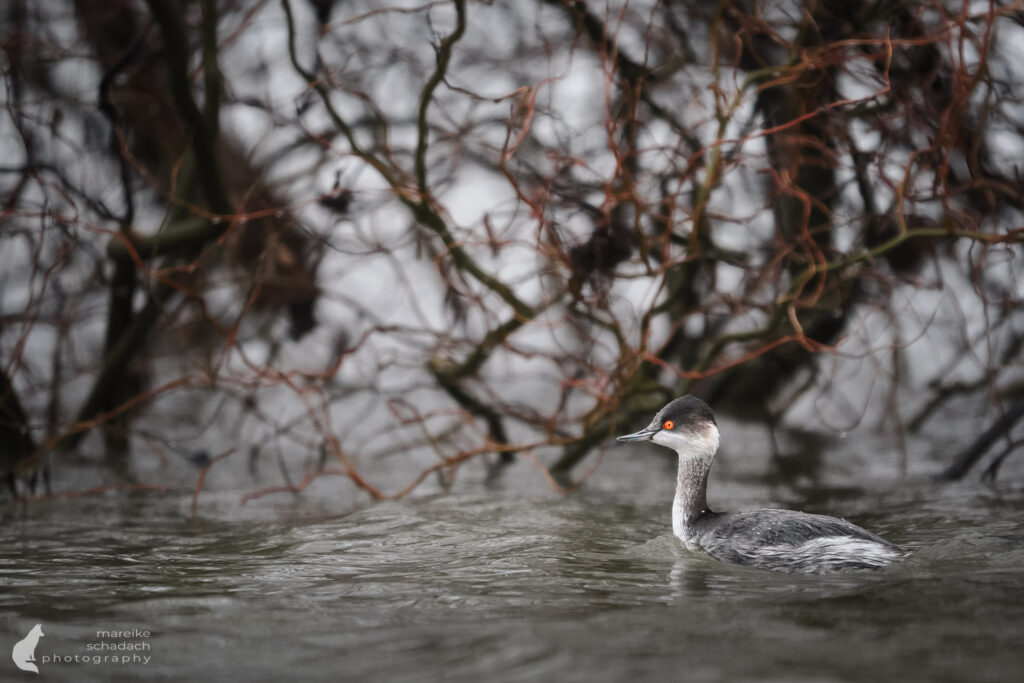
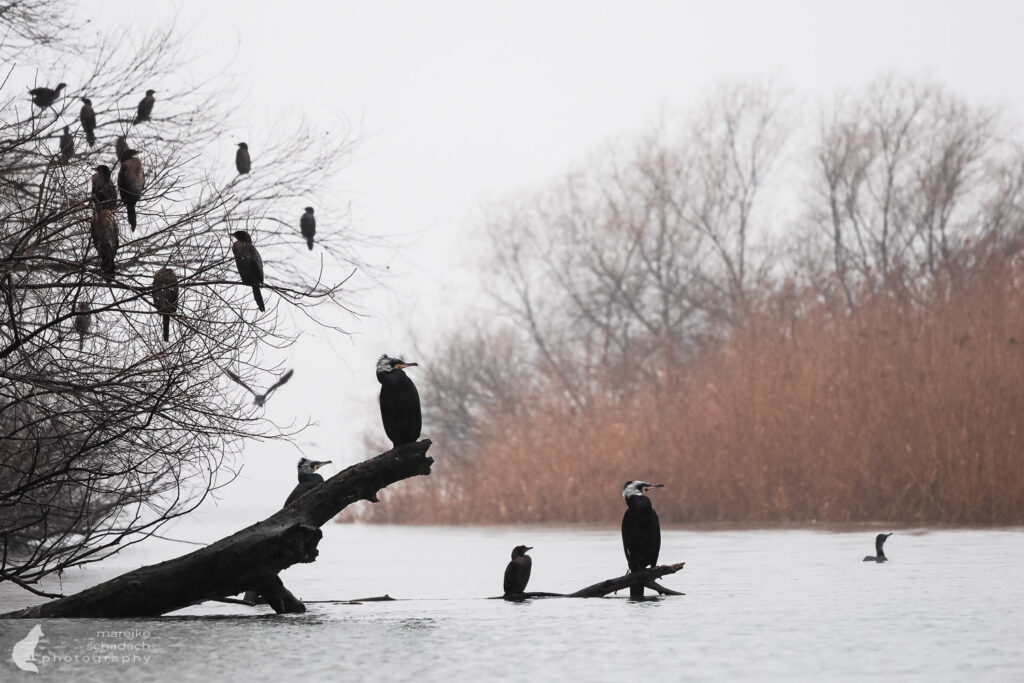
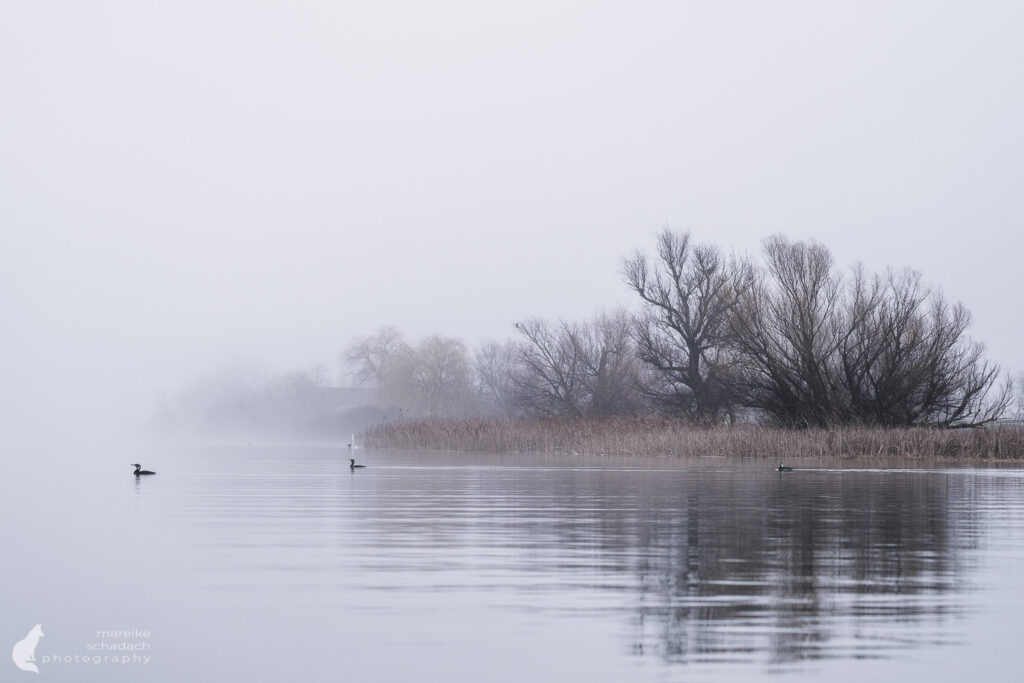
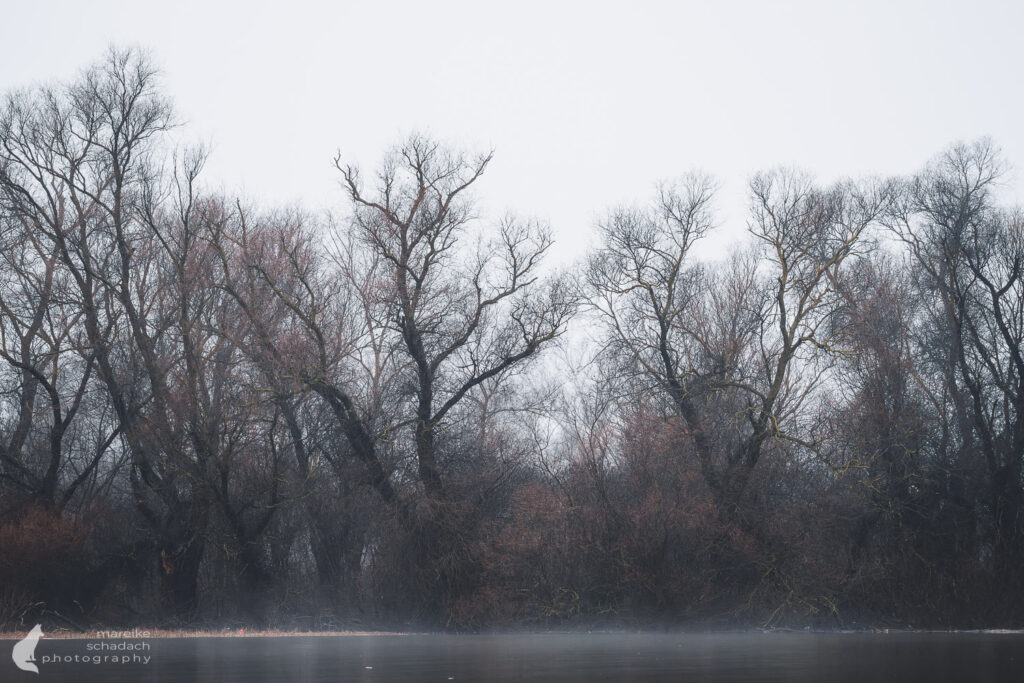
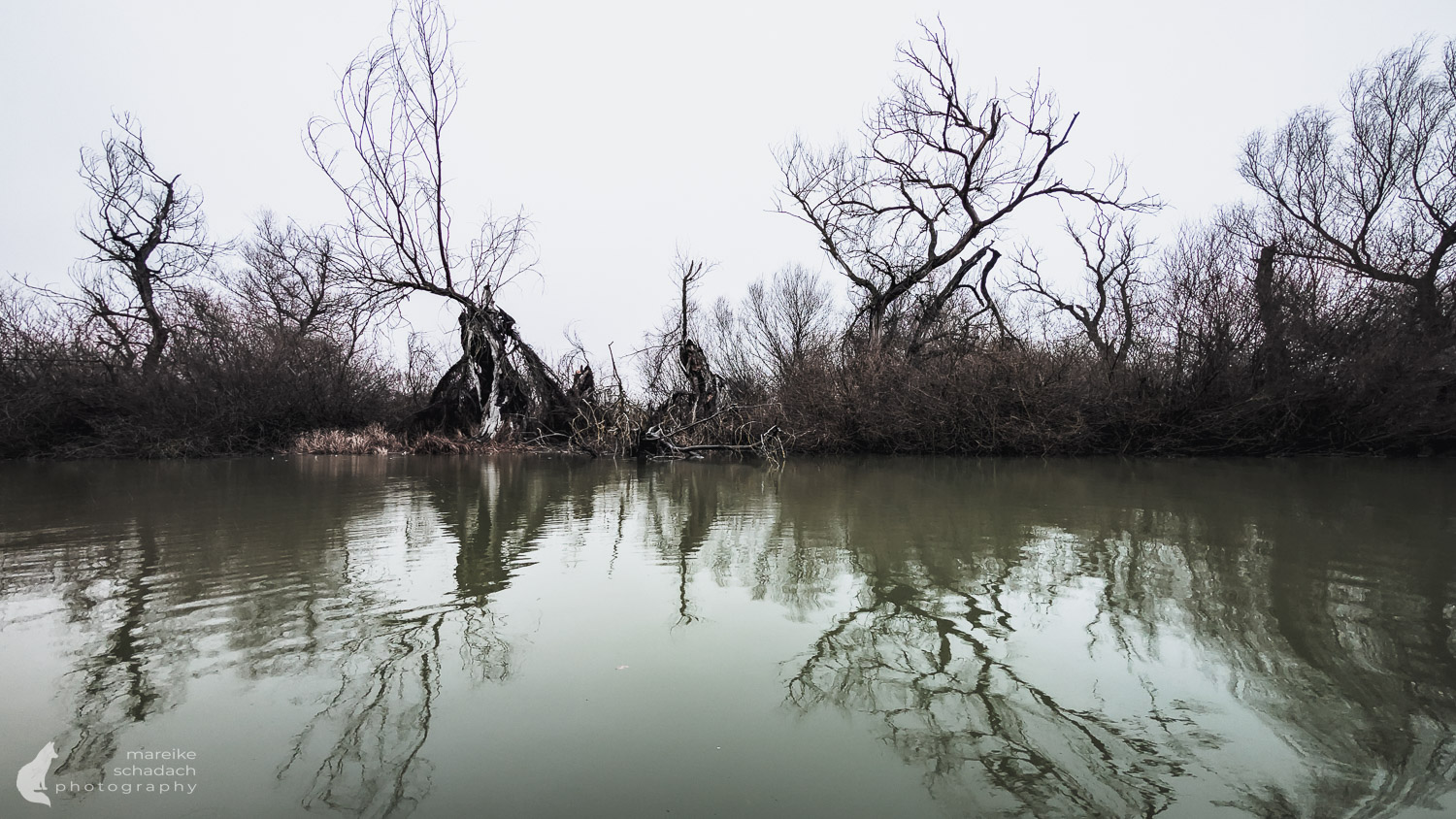
Our second day begins before sunrise again with strong coffee and a richly laid breakfast table. It is raining outside, and even after sunrise, it seems as if it will not get light today. We pull the tarpaulin over the boat and wrap ourselves in blankets. The further we go, the wider the river becomes, and then it divides into branches that branch out again until it seems impossible to find our way, and only walls of reeds pass by on the left and right. As the boat chugs slowly through the gray water, we keep an eye out for birds. First, we spot a little grebe, then pygmy cormorants, gray herons, coots, and great crested grebes. Later in the afternoon, the rain stops, and a veil of fog descends over the water.
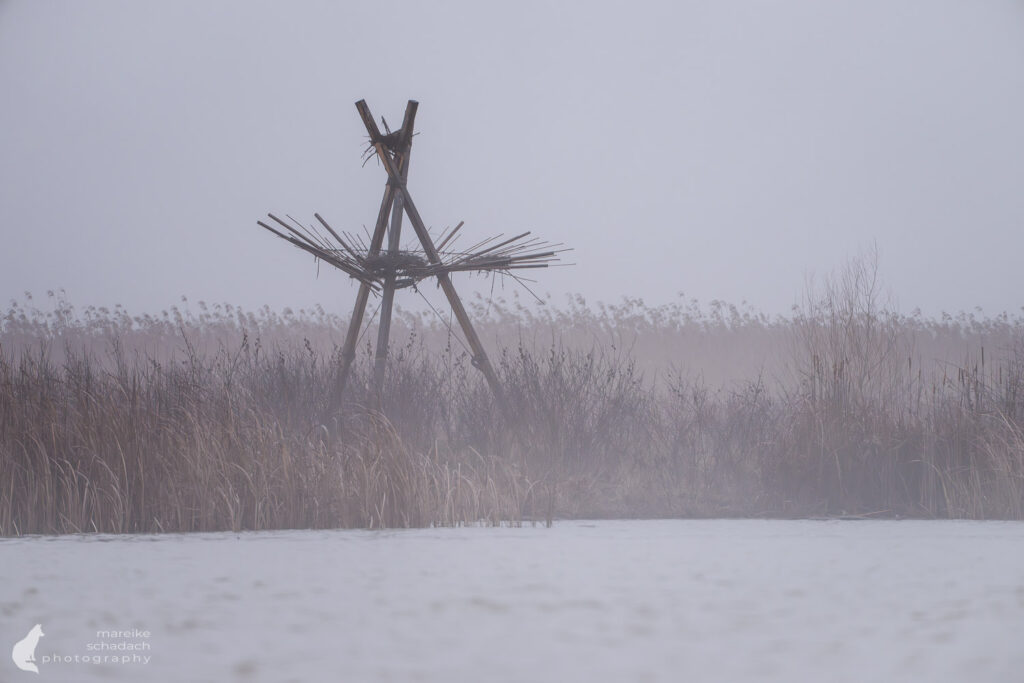
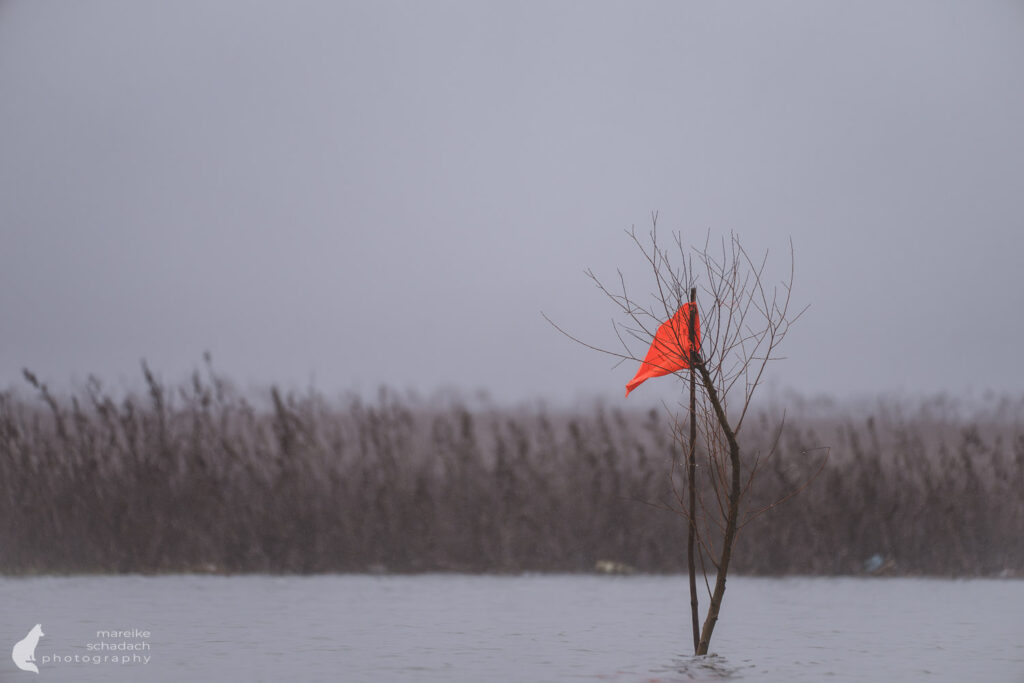
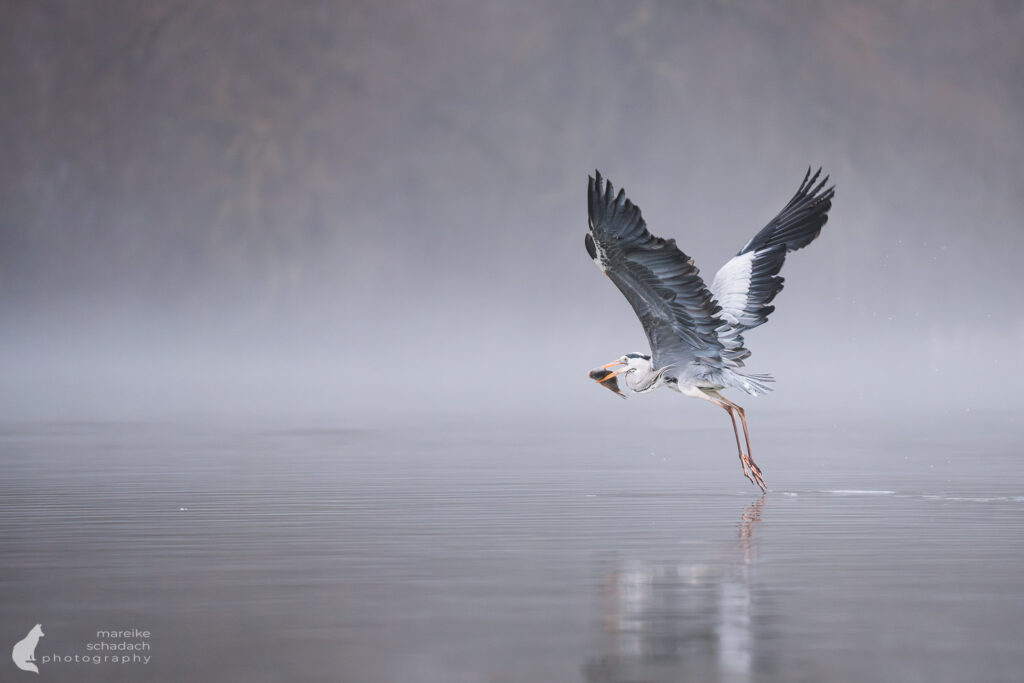
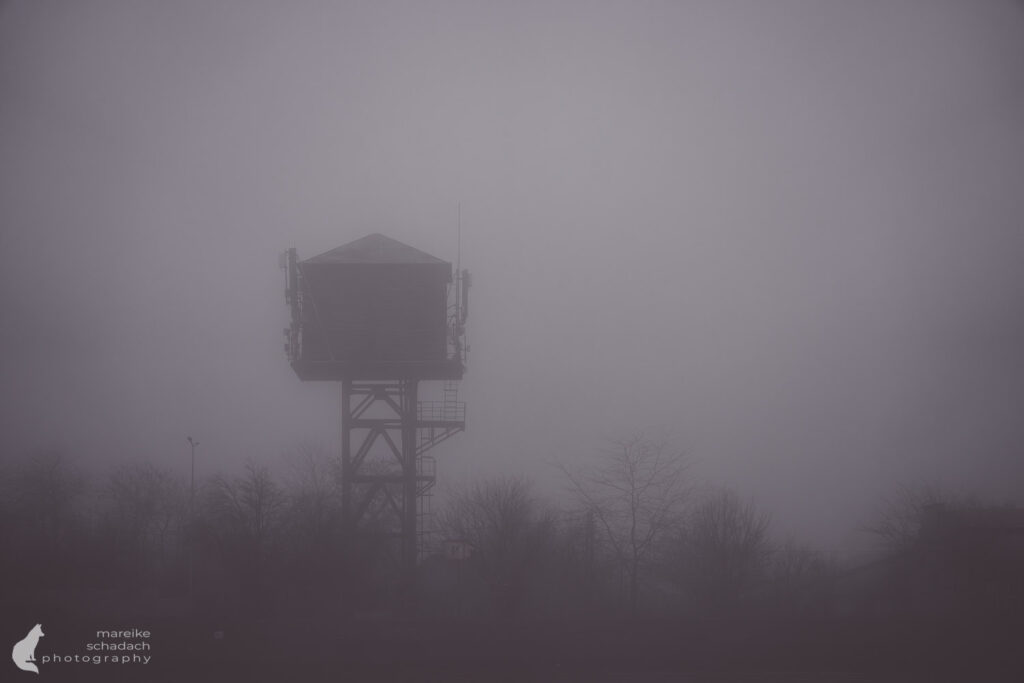
Our return trip to our accommodation is a real blind flight in the fog. Sometimes we can barely see fifty meters ahead, and we can only move slowly. Great white egrets emerge like white ghosts from the gray soup, gray herons stand motionless on the shore, almost unnoticed, and great crested grebes disappear with a plop beneath the surface of the water. Although everything is damp and the light is dim, this is precisely when very atmospheric images emerge, with landscapes that resemble paintings rather than photographs.
Pelicans in their Breeding Plumage
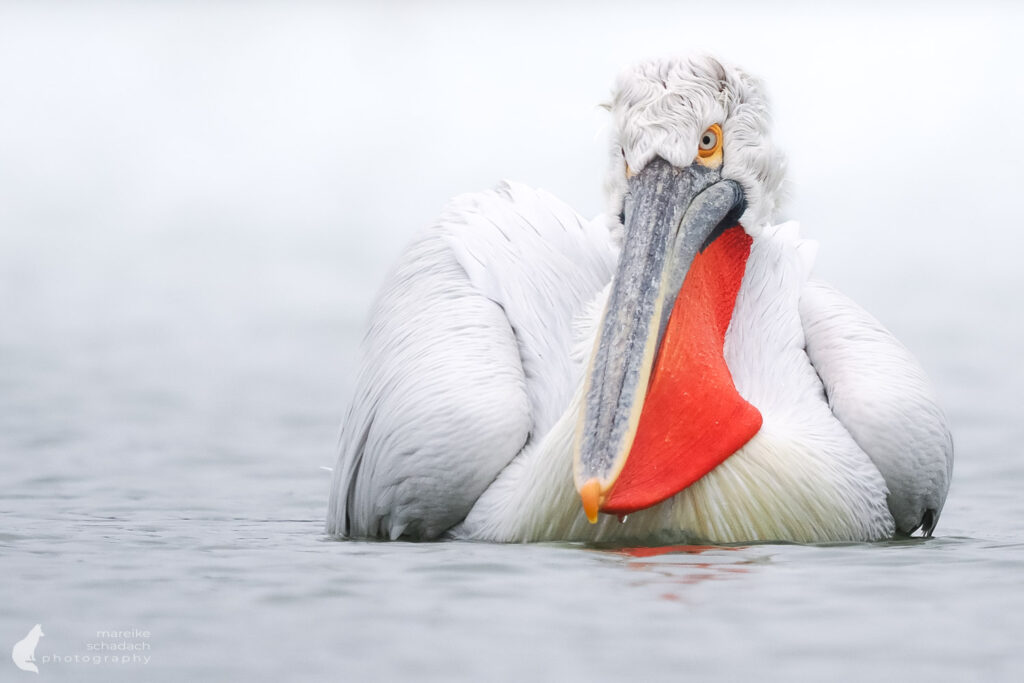
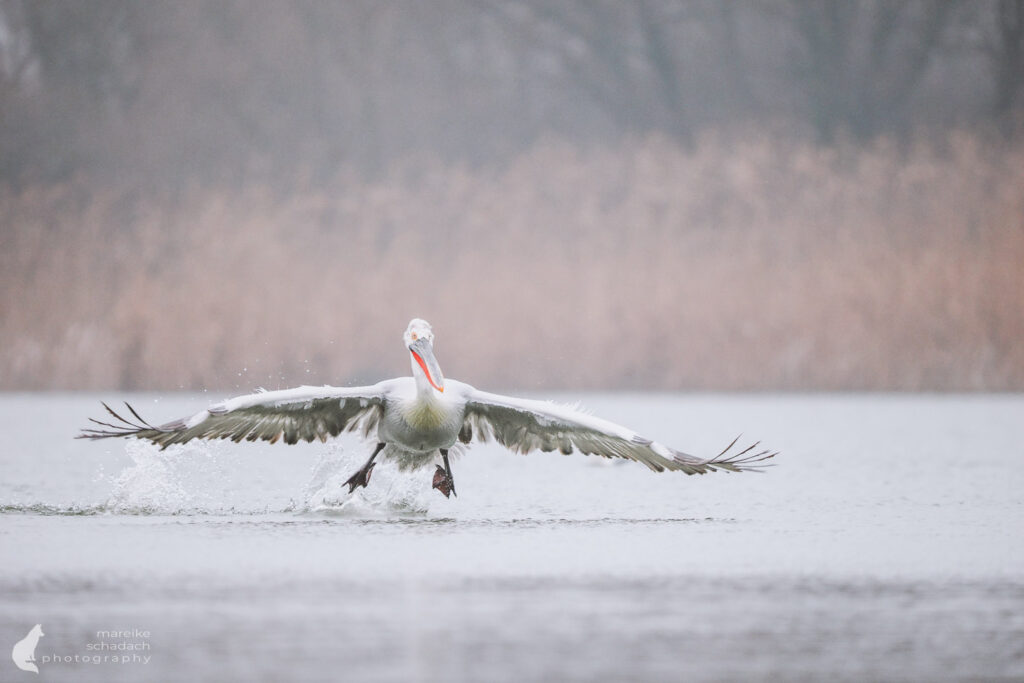
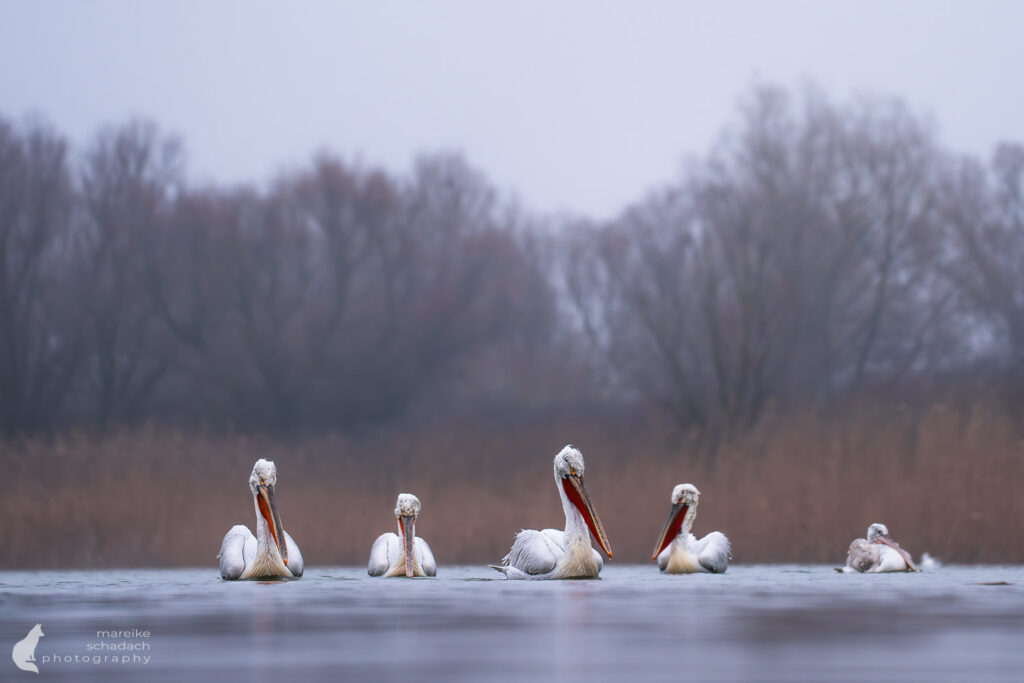
Our last day is devoted entirely to the Dalmatian pelicans. Right at the start of the trip, we already see several young birds. After a short stop, we continue on our way, searching for the adult birds, whose shaggy head feathers and bright orange throat pouches look almost exotic in their breeding plumage. On a larger lake, we finally discover the silhouettes of several pelicans, huge birds with a wingspan of up to three meters.
With several thousand breeding pairs, the Danube Delta is home to one of the most important colonies in Europe, accounting for a significant proportion of the world's population. They remain in the area throughout the year. In spring, the Dalmatian pelicans are joined by pink pelicans, which breed in large colonies in the Danube Delta.
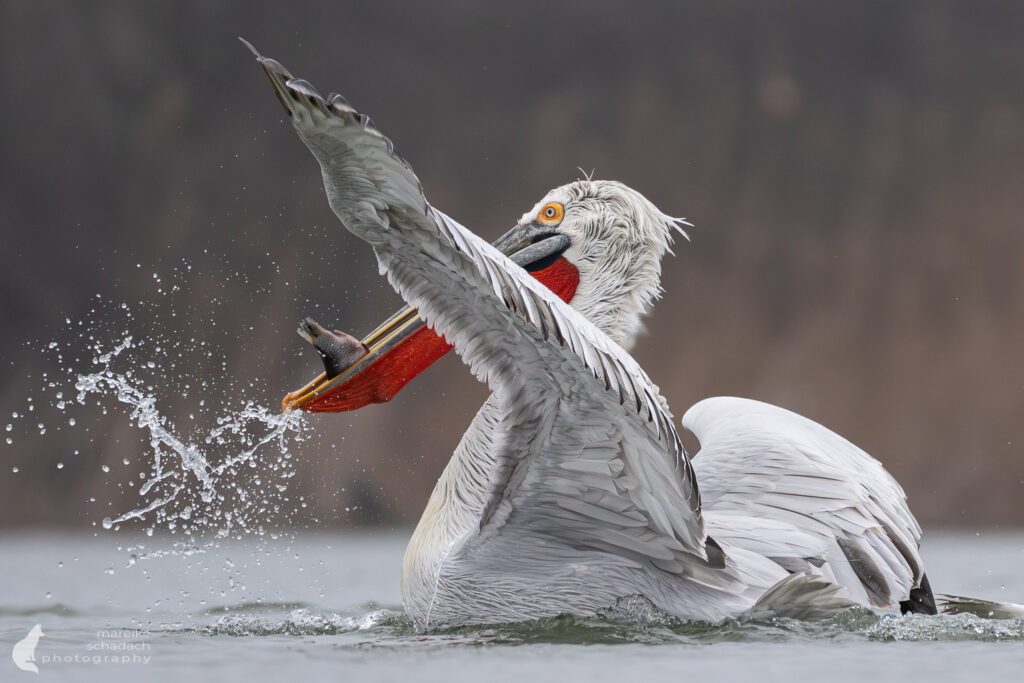
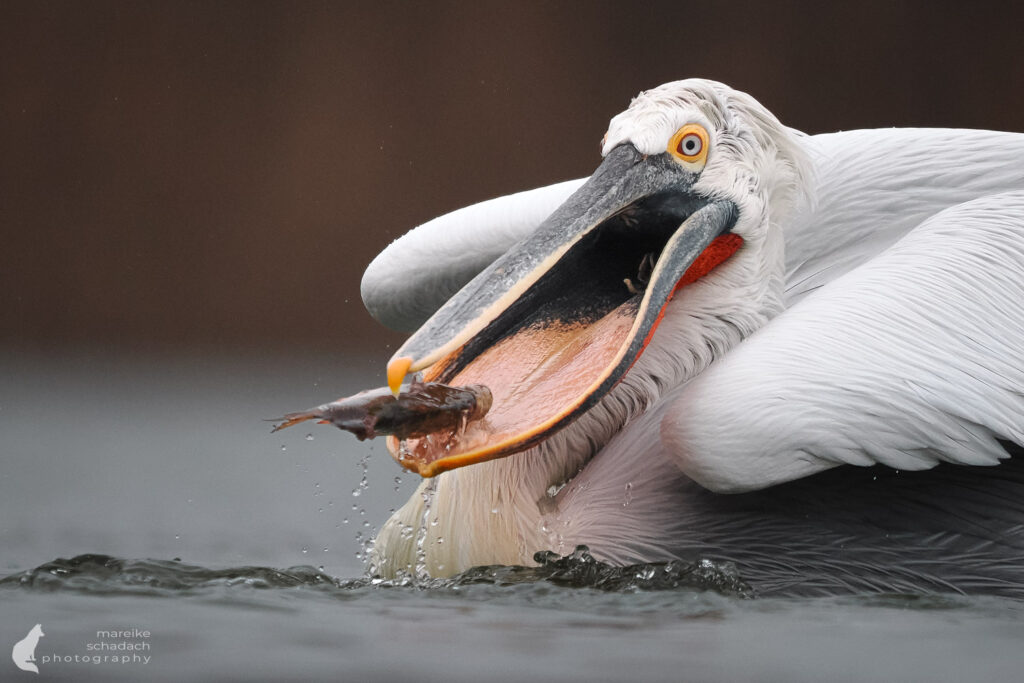
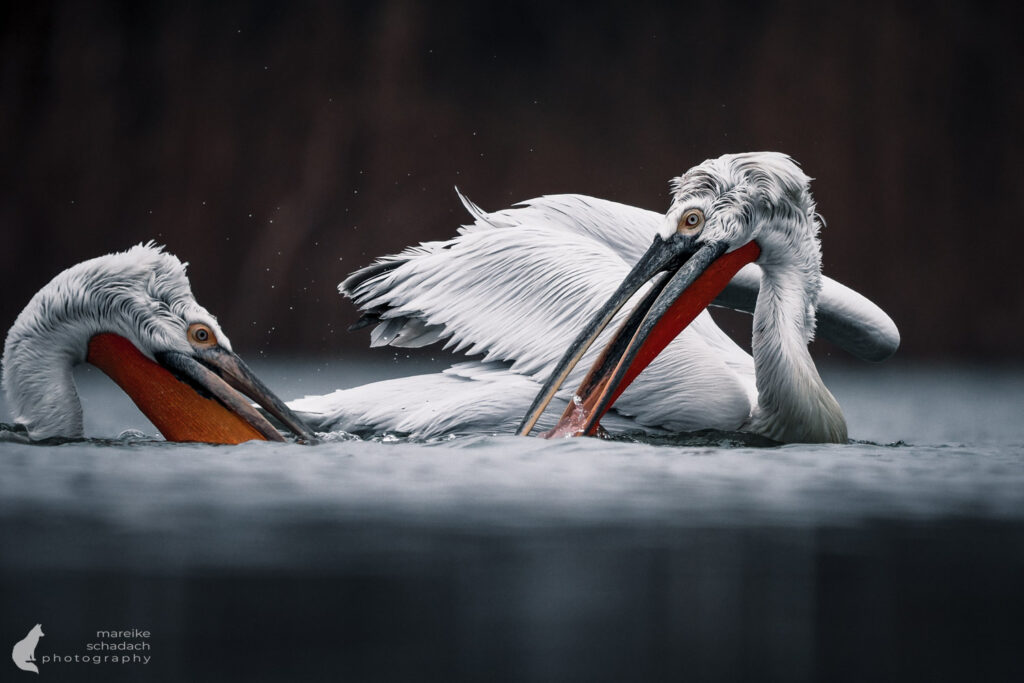
We brought the pelicans some fish, which gave us the opportunity to watch the animals feeding. The pelicans use their throat pouches as nets to scoop up fish and water. The water is then drained before the fish is swallowed. The throat pouch is extremely stretchy and can hold ten to twelve liters of water.



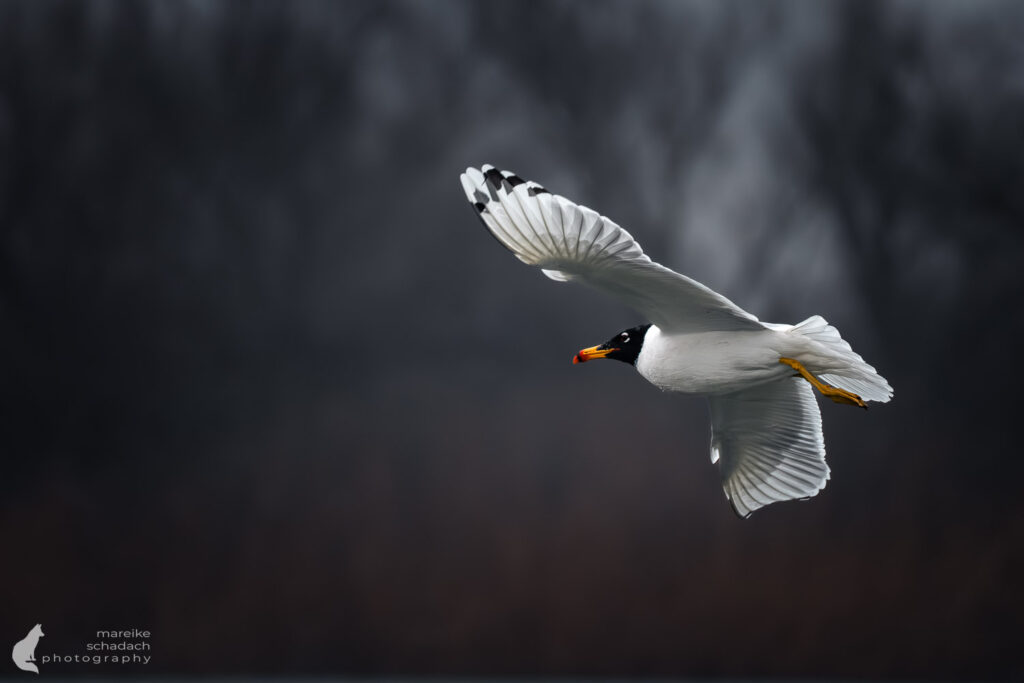
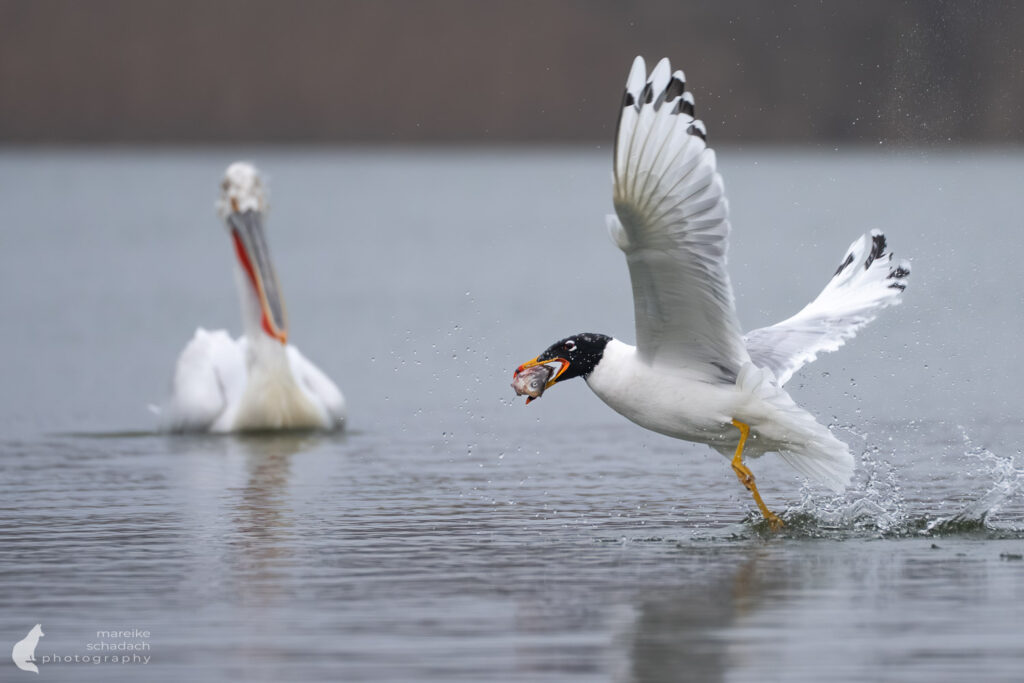
The Pallas's gull is named after the German naturalist Peter Simon Pallas (1741–1811), who first described the species in 1773. It is the largest gull with a black head (in breeding plumage) and the third largest gull species worldwide. The species is mainly found in the steppe lakes of Central Asia and the coastal regions of the Caspian Sea. The population in the Danube Delta is the westernmost occurrence.

Nighttime in the Danube Delta
Wildcats
Every evening, we spend several hours searching for crepuscular and nocturnal animals. The European wildcat lives in the vast Danube Delta with its dense riparian forest and numerous refuges. The animals usually remain invisible to visitors because they are not only nocturnal but also extremely shy. Wildcats avoid open areas, preferring to stay in dense riparian forests and reed beds, where they use hiding places such as fallen tree trunks or hollow trunks to protect themselves from disturbance during the day. They only go hunting after dusk.
Three times, our guide spots a wildcat on the shore with his night vision goggles. But in the glow of the flashlight, it quickly disappears. I only see the animal balancing on a branch for a brief moment and can only photograph its rear end with my camera.
Raccoon Dogs
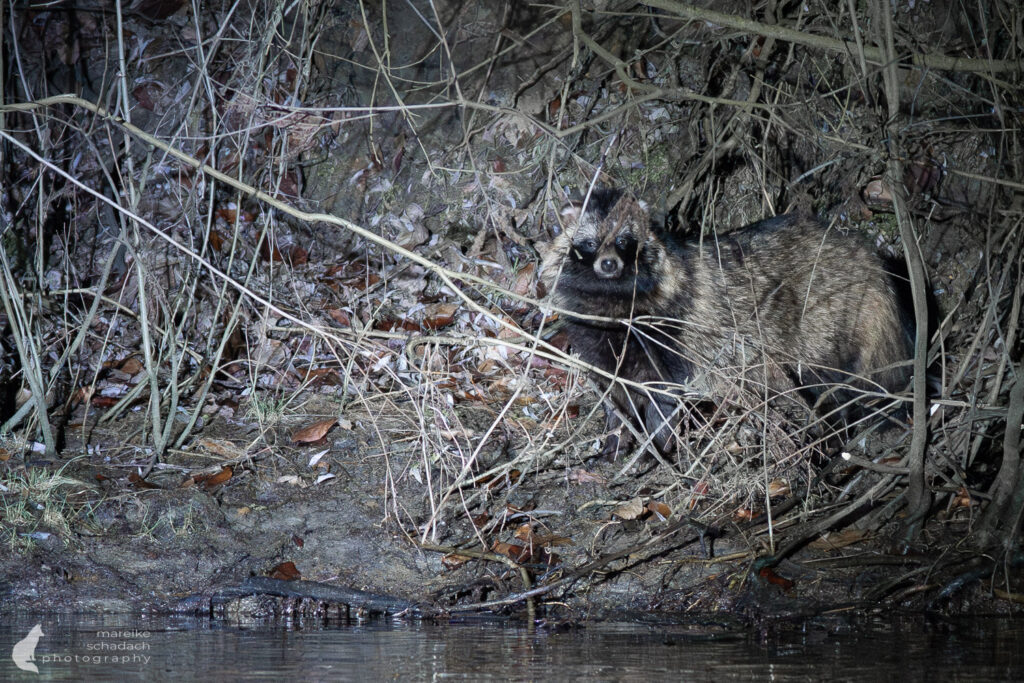
I have often heard of raccoon dogs, but never seen one. So I am all the more delighted when we spot two animals during an evening boat tour. The raccoon dog is native to East Asia. Between 1928 and the 1950s, thousands of animals were released in Russia, Belarus, and Ukraine. The aim was to establish a new fur animal species for the hunting and fur industry. The animals proved to be adaptable, fertile, and prolific. From these populations, the raccoon dog migrated independently.

Farewell to the Danube Delta
Our return trip from Mila23 to Tulcea is another night journey. After a sumptuous three-course dinner, we make ourselves comfortable in the boat again and keep our cameras at the ready. We see several nutrias in the water, tawny owls, and mice swimming in the water. During the trip, fog rolls in again, and we can only chug slowly through the canals. A typical winter in the Danube Delta. I lean back in my beanbag, listen to the water lapping against the hull, and think about how rare such places have become in Europe.

Book Recommendations for Nature Lovers
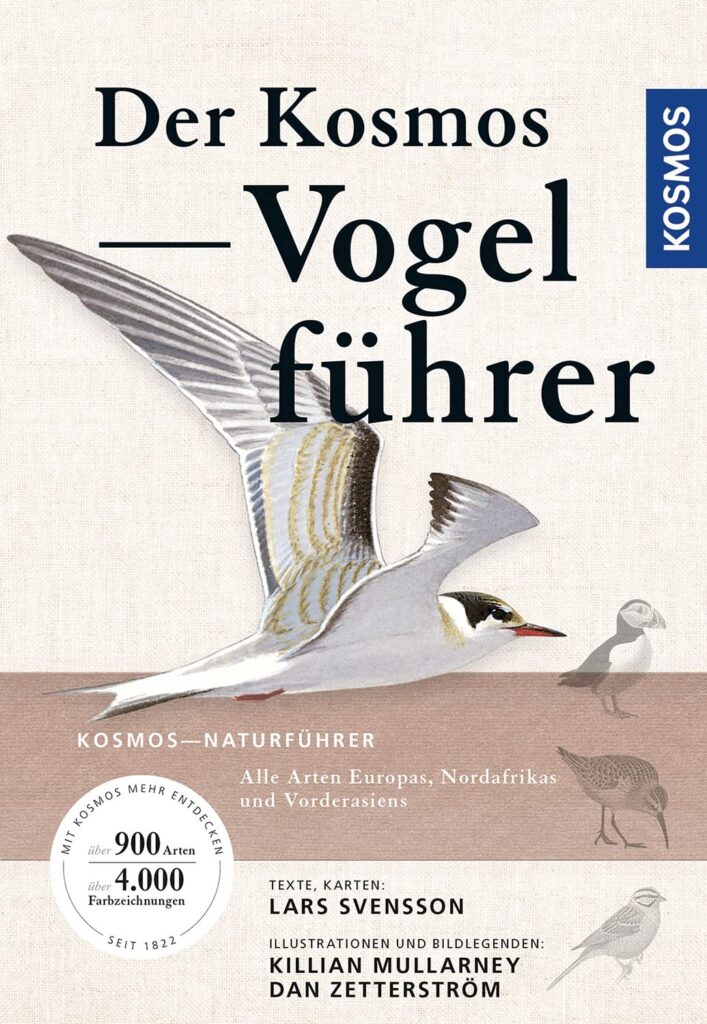
Would you like to learn more about wildlife observation? Then I have three book recommendations for you. You can order the books* from Amazon by clicking on the images. If you buy a book or another article via an affiliate link, I will receive a small commission, and you will help me to continue to fill Wanderlust Motifs with interesting articles. The product will not be more expensive for you.


Want to know when there are new articles on my blog? Then follow me on Facebook, Pinterest or Instagram. I am also very happy if you share my article with your friends.
Recommendations for further Reading
If you like the Danube Delta in winter, then you will certainly be interested in the following articles: