Finland. There are places in Europe that are so unspoiled that you might think time has stood still there. Eastern Finland is one such place. Villages are scattered far and wide, roads turn into gravel tracks and end in the forest. Here, where the forests seem endless and the border with Russia is just an imaginary line in the thicket, lies one of the few regions in Western Europe where all three large predators are regularly found: the brown bear, the wolf, and the wolverine. Humans are rare here, their presence usually short-lived—as hikers, researchers, or photographers. My journey took me to this remote region in late September, in search of animals that we in Central Europe mostly only know from old stories or negative headlines in the press. Animals that I associate with the wilderness like few others. I got much closer to them than I expected and was able to observe them from just a few meters away, hidden in specially equipped photo hides far to the east of Finland.
Unassigned, unpaid advertising. The article contains affiliate links.
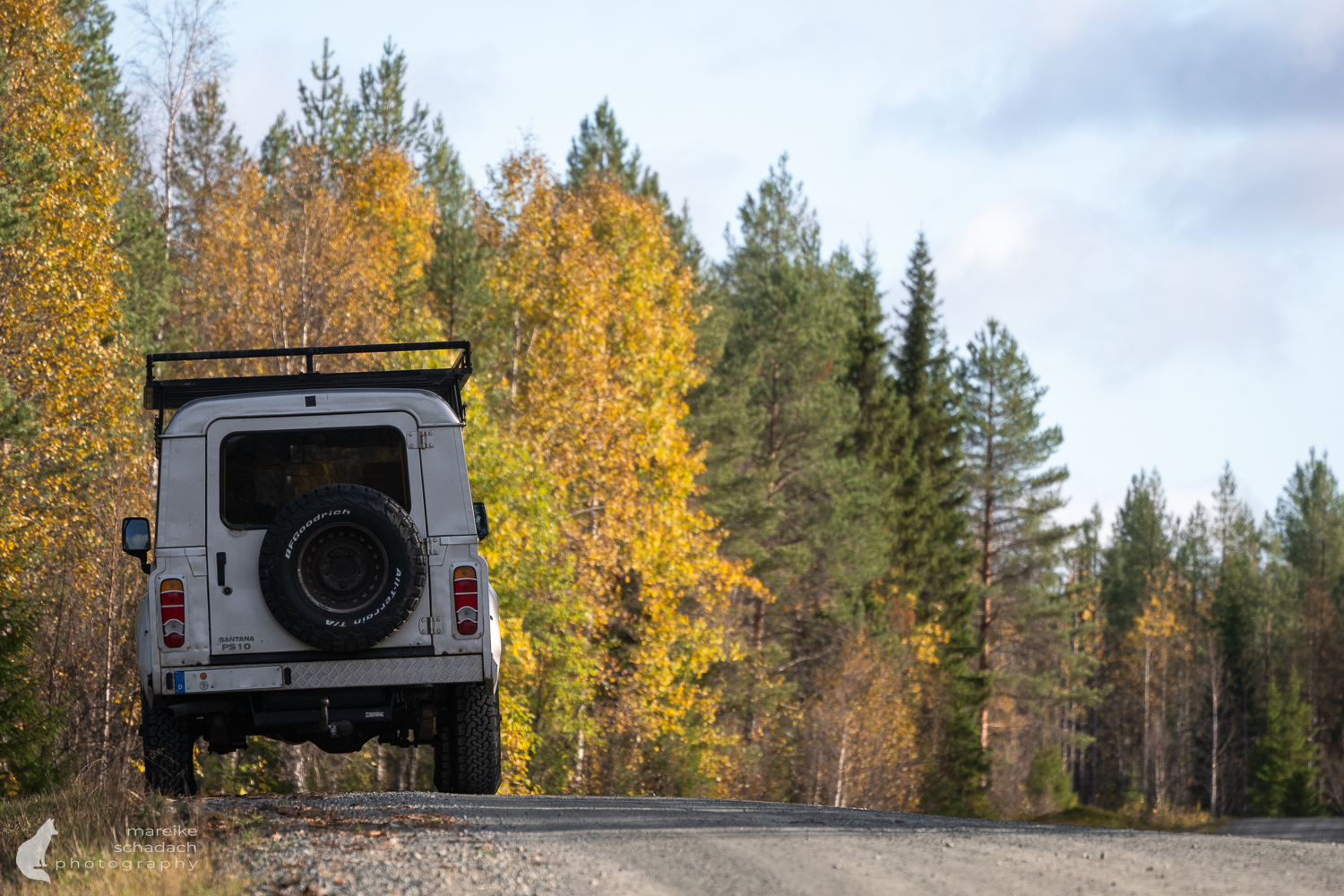

Autumn in Finland's wild Taiga
Autumn begins early in eastern Finland. As early as September, the birch trees turn golden, the nights grow long, and the northern lights appear in the clear night sky. The bears prepare for their winter hibernation and eat their fill of blueberries to build up a thick layer of fat. I, on the other hand, prepare myself with my down jacket, sleeping bag, hat, and thermos for several cold nights in photo hides at four different locations in eastern Finland. Not every hide is equipped with heating. Most are simple wooden shacks or small huts, sometimes with a bed or bunk bed, or just a soft floor mat. Each one is unique in its own way, sometimes very cozy, sometimes a real pain in the neck.

Karhu-Kuusamo – Finland's northernmost Bear Photography Hide
When I arrive at the Karhu-Kuusamo meeting point, the forest is quiet. I park my car in a small space and watch a jay in the tree opposite. I look around and only when I am sure that there is no bear behind the next tree do I get out and point my camera at the raven. But it hears the two cars approaching ahead of me and takes off. It brought me luck – from now on, it would only be half an hour before I saw my first brown bear in the wild.
My first Photo Hide for viewing Bears near Kuusamo
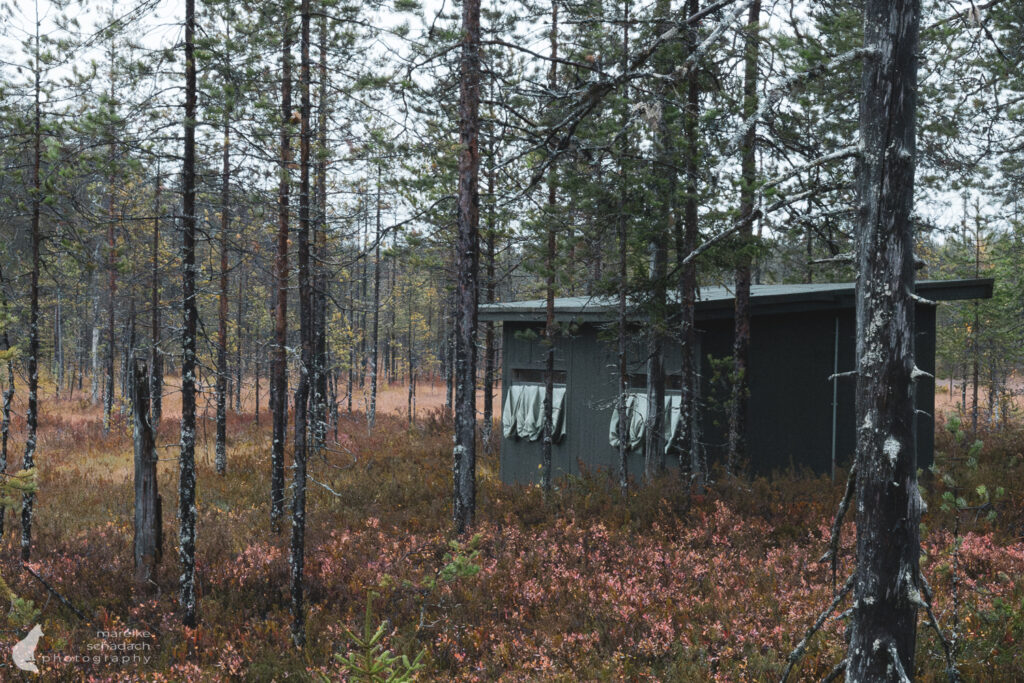
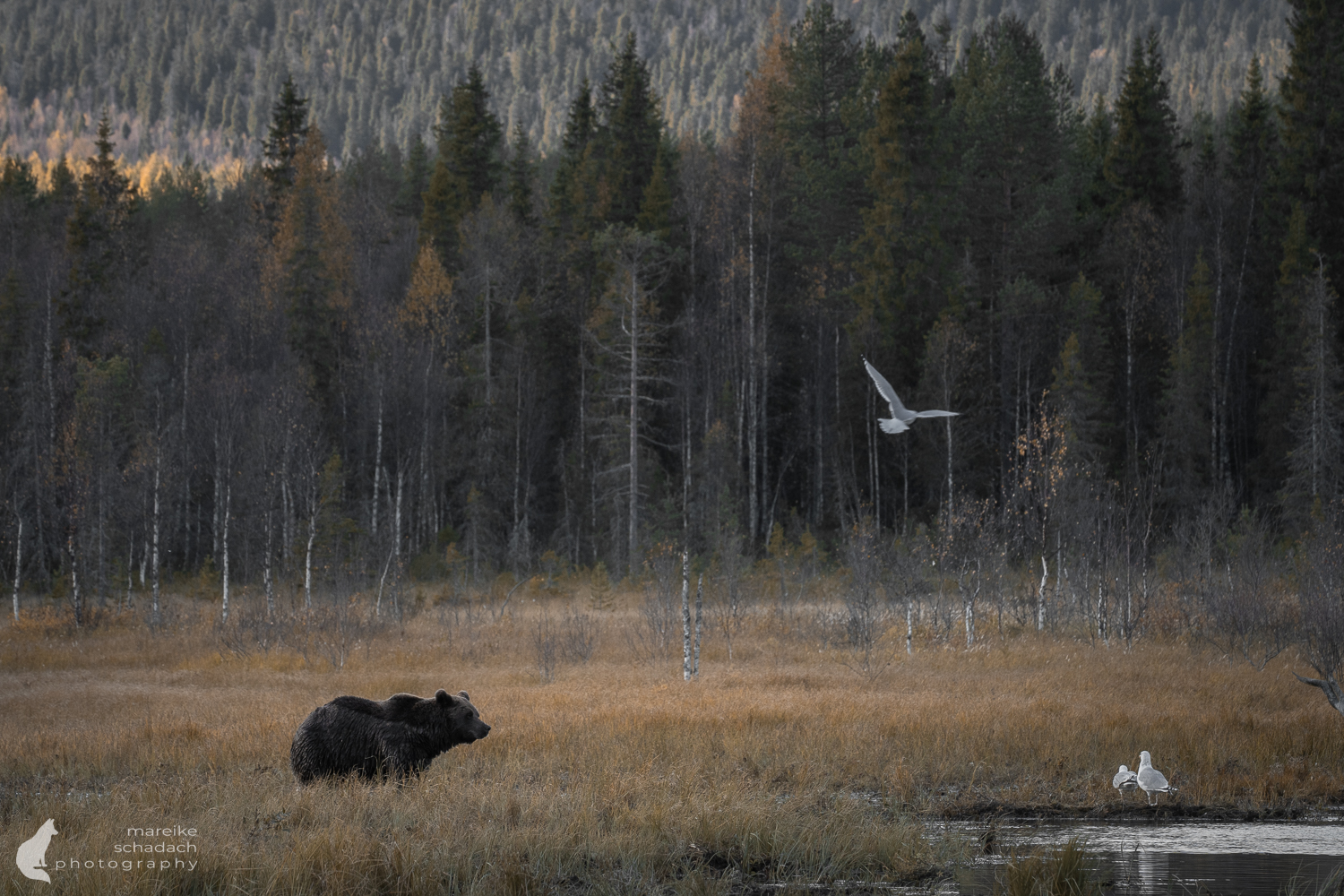
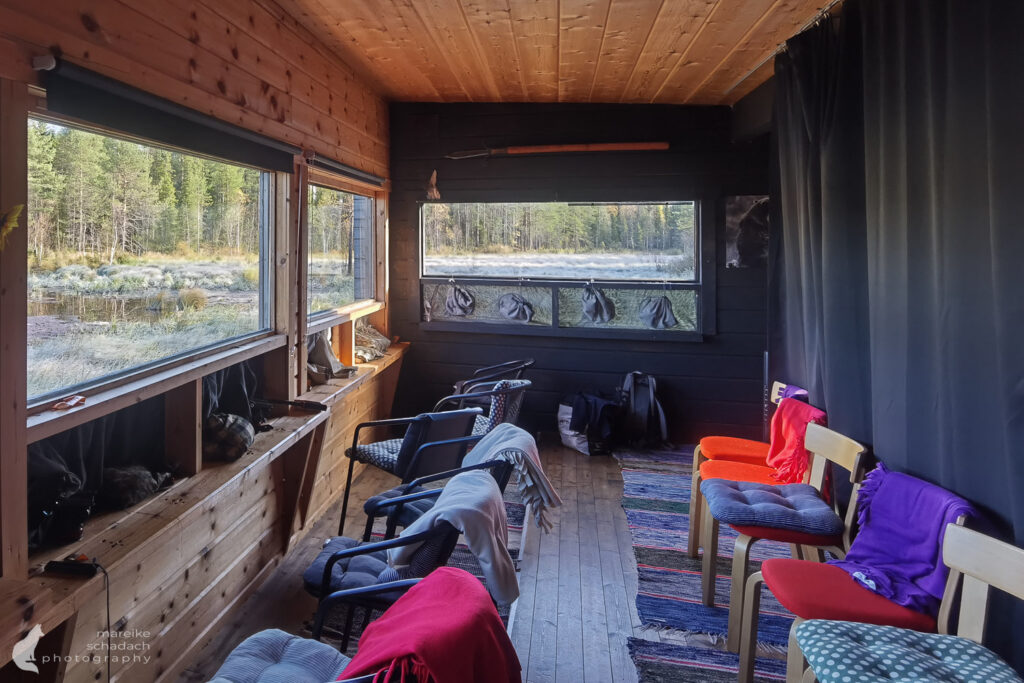
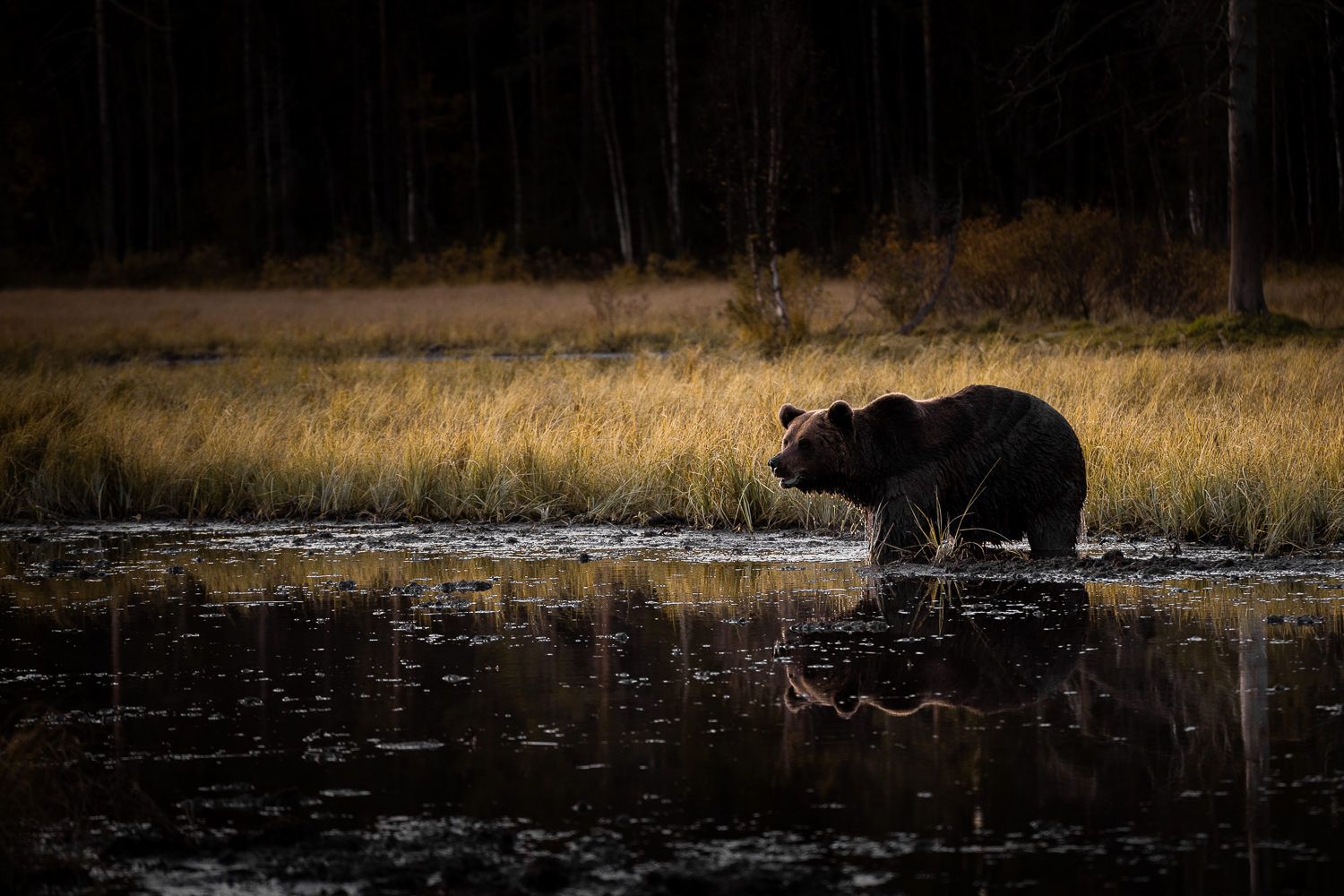
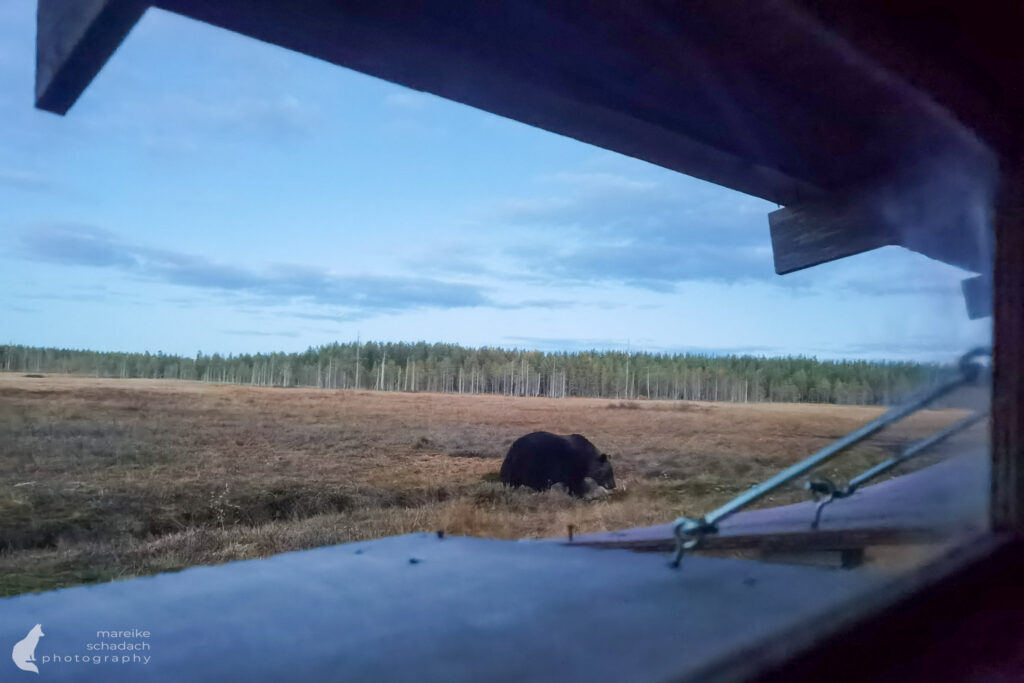
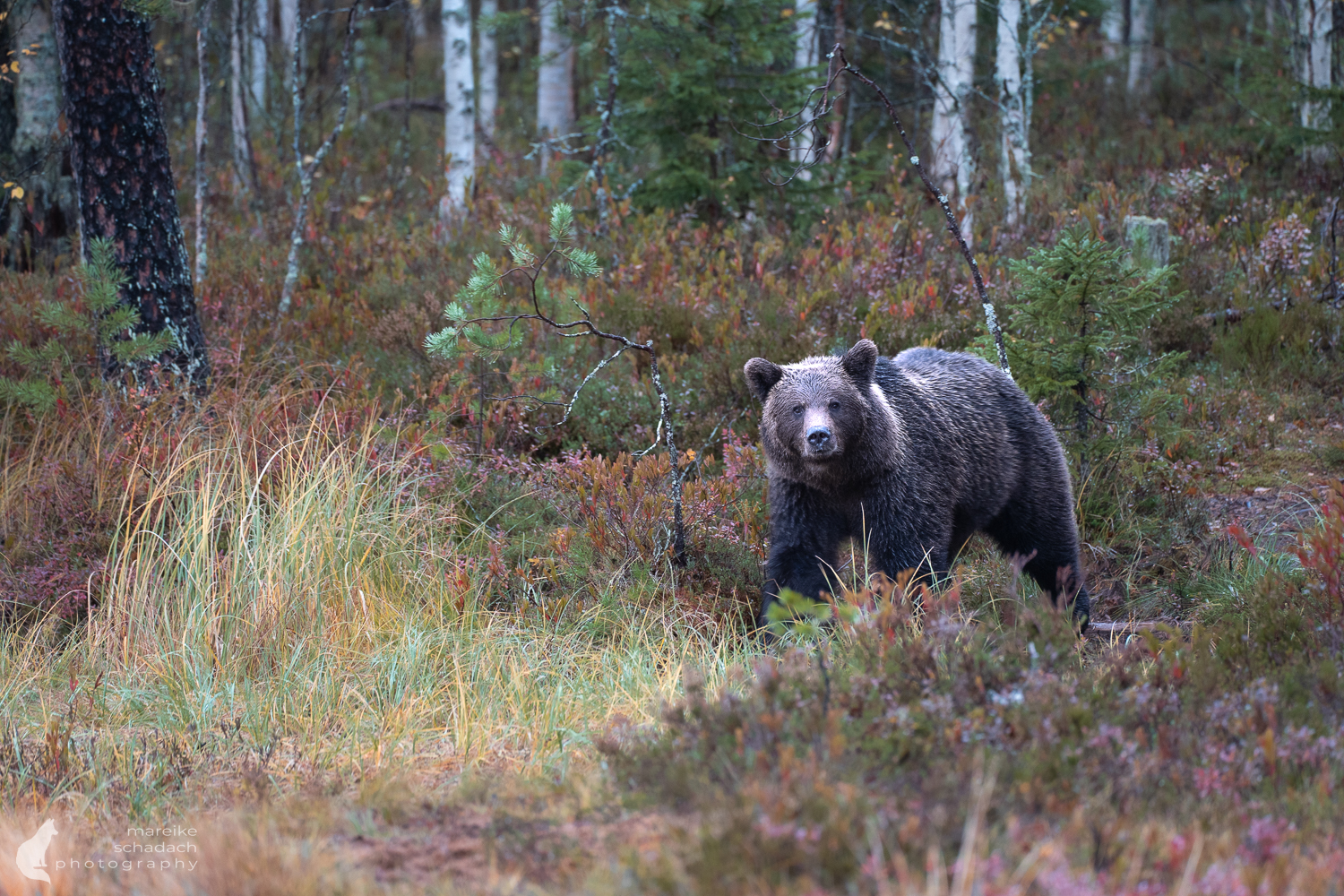
The Karhu-Kuusamo observation hides are located about a 30-minute drive from Kuusamo and are the northernmost photo hides for bear viewing in all of Finland. The season lasts from early May to late September, and the sighting probability is 99%. The five hides are wooden huts of varying sizes overlooking a dark pool, a boggy swamp, and the forest beyond. I share a small hide with another visitor. The atmosphere is tense as we set up our cameras on the beanbags and our guide lays out treats for the bears outside, 20 to 60 meters away from the huts. It doesn't take long before I feel completely overwhelmed by the huge bear that suddenly appears at the edge of the forest. But the animals are smart; they know when the restaurant opens for them.
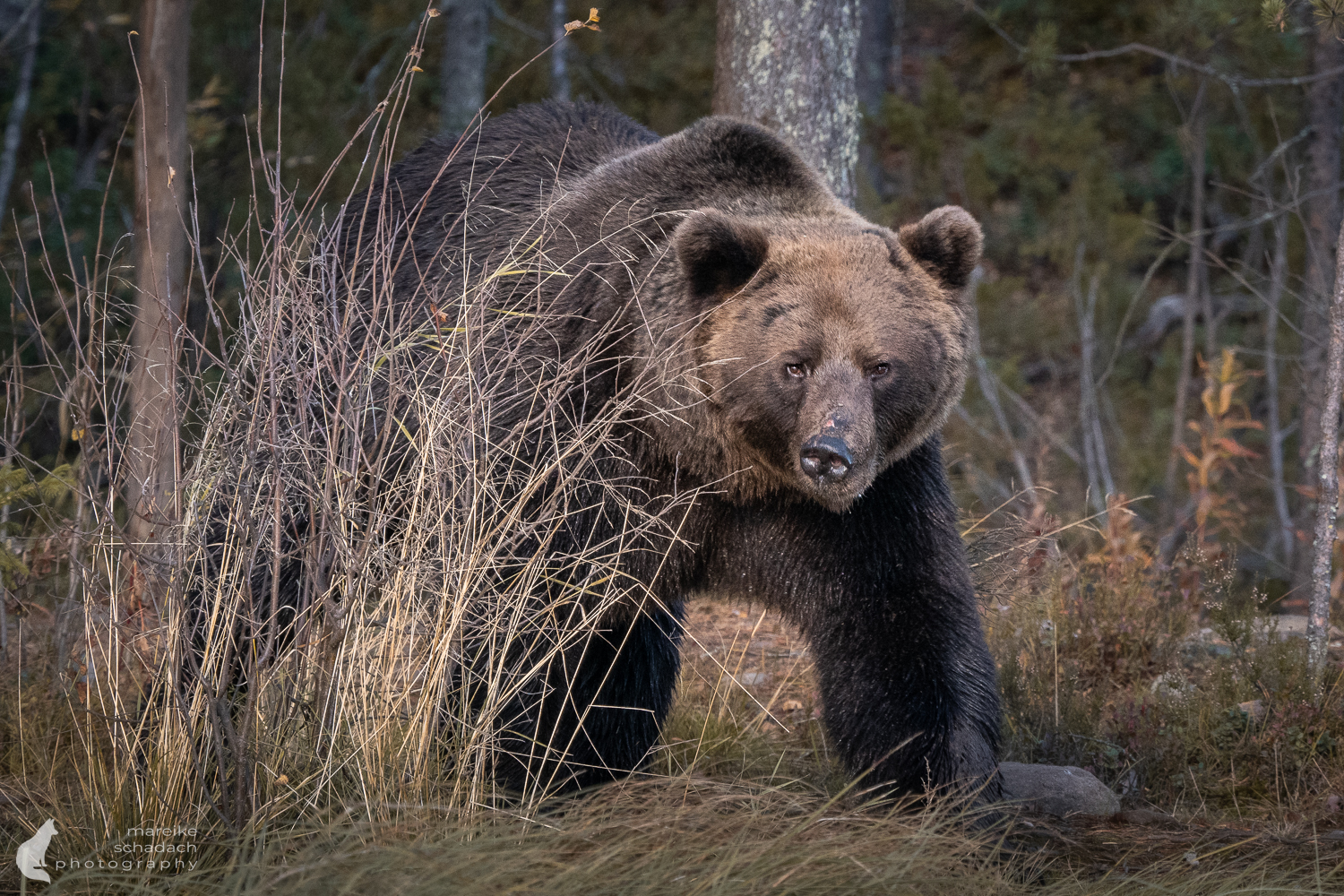
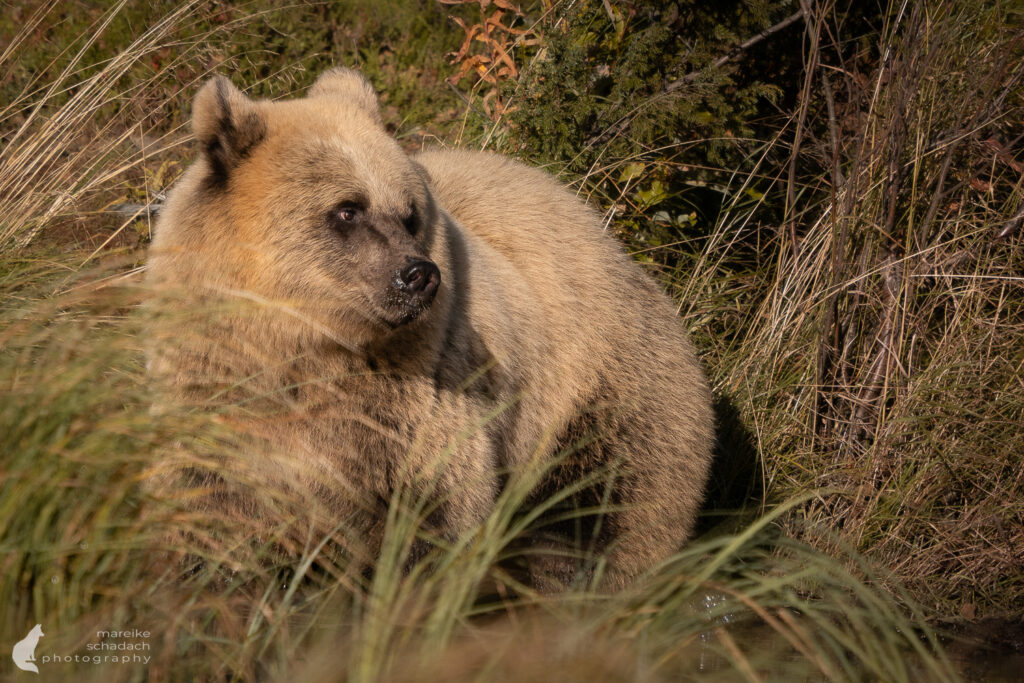
This first encounter with a wild brown bear in its natural habitat is a moment that stays with me for a long time. After a few minutes, the big guy disappears back into the dense forest, and I begin to settle into the photo hide. Then, almost hesitantly, a female with particularly light, shimmering blond fur appears at the edge of the forest. At her side is a cub, peeking cautiously out from behind its mother. Above them, several sea eagles sit in the treetops, waiting for their chance. Ravens circle the area, commenting on the spectacle with hoarse caws.

The Sky is wild, too
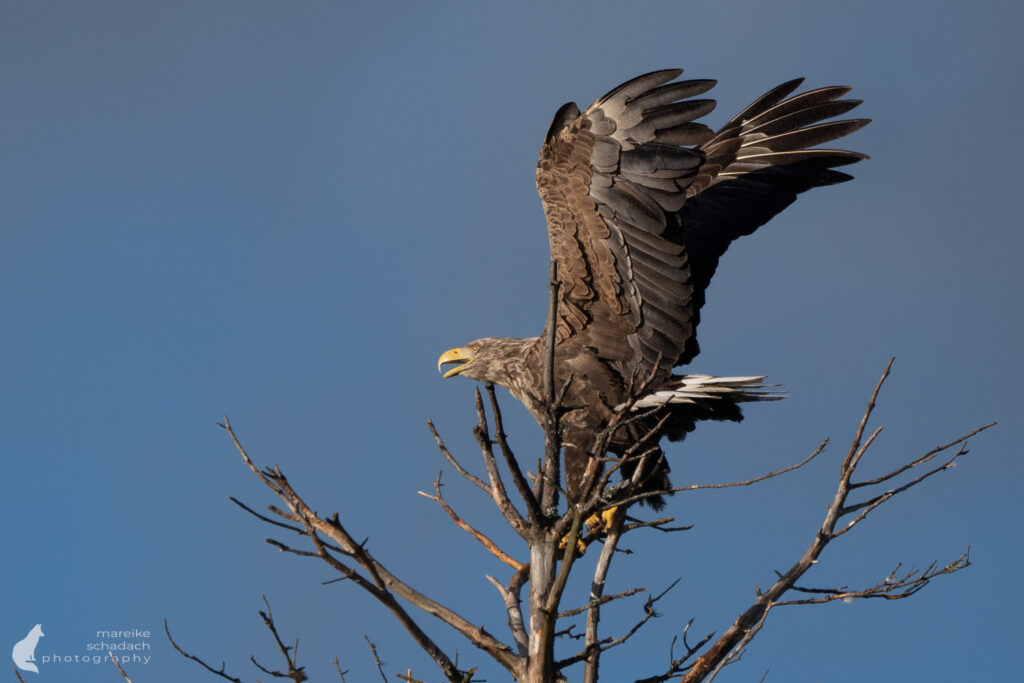
It's not just the forests that are wild in Finland – the sky is too. During my observations, I repeatedly saw white-tailed eagles circling above the clearings or sitting in the trees. The white-tailed eagle(Haliaeetus albicilla)is one of the largest birds of prey in Europe. It was once almost extinct, but thanks to consistent conservation measures, populations in Finland have recovered. Today, it can be found regularly on lakes and along the Baltic Sea coast – but it also occasionally appears inland, searching for carrion or fish.

Night in the Bear Forest
As darkness falls, our guide knocks on the door of the hut, which we have locked from the inside. For me, it's now time to move on to the largest of the observation huts, where I will spend the night. He himself will leave the area with the other guests. The thought of being alone in the middle of bear territory makes me a little nervous. I push my excitement aside and get my camera ready while there is still a little bit of light left. Just in time, because the big male bear is already coming back, looking for more pieces of fish. He comes within a few meters of the hut. I hear his footsteps in the muddy swamp, his panting, chewing, and suddenly a deep growl that sends shivers down my spine. I sit still, listen, and feel a rollercoaster of absolute fascination and goosebumps. It's a good thing the hide is so solid and sturdy.
Only when it is pitch black outside do I crawl into one of the four bunk beds. Surprisingly quickly, I fall into a deep sleep. Maybe it's the tiredness, maybe it's the security of the hide. In the morning, I leave the hut and lock the door from the outside. On the way to my car, I hum a song, hoping to scare away any bears on the way between the hut and my car.
For more information on bear watching from Finland's northernmost photo hide, visit the Karhu-Kuusamo website..

Wild Brown Bear Center – three Days with Bears and Wolverines
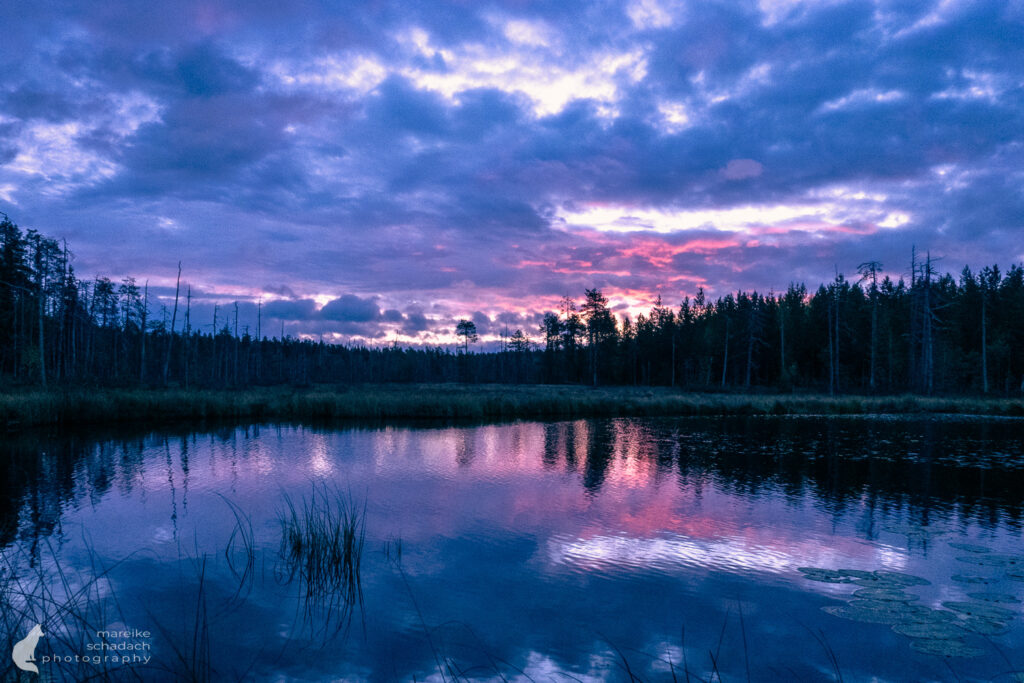
My journey continues south, where I have booked three days at the Wild Brown Bear Center near Vartius. A large observation hut and several small photo hides offer unobstructed views of the marsh, lake, and forest in the border region between Finland and Russia. There is even cell phone reception in the hides, and all guests are connected in a WhatsApp group. We want to use it to communicate sightings and the movements of wild animals, helping us to look in the right direction and not miss anything.
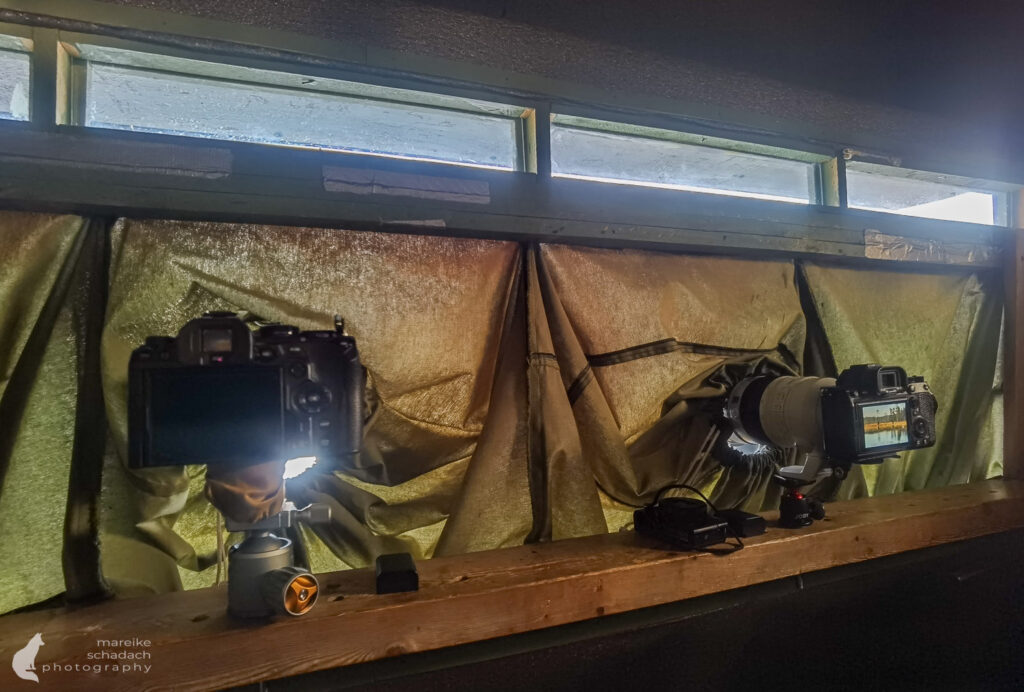
At around 4 p.m., we set off for the hides, which are about 700 meters away and designed for one to two people. There is a bunk bed, chairs, sleeping bags, and a toilet bucket. I attach my tripod head to a wooden board at the viewing slit, settle in, and wait for a bear to appear.


A Wolverine says Hello
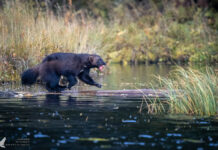
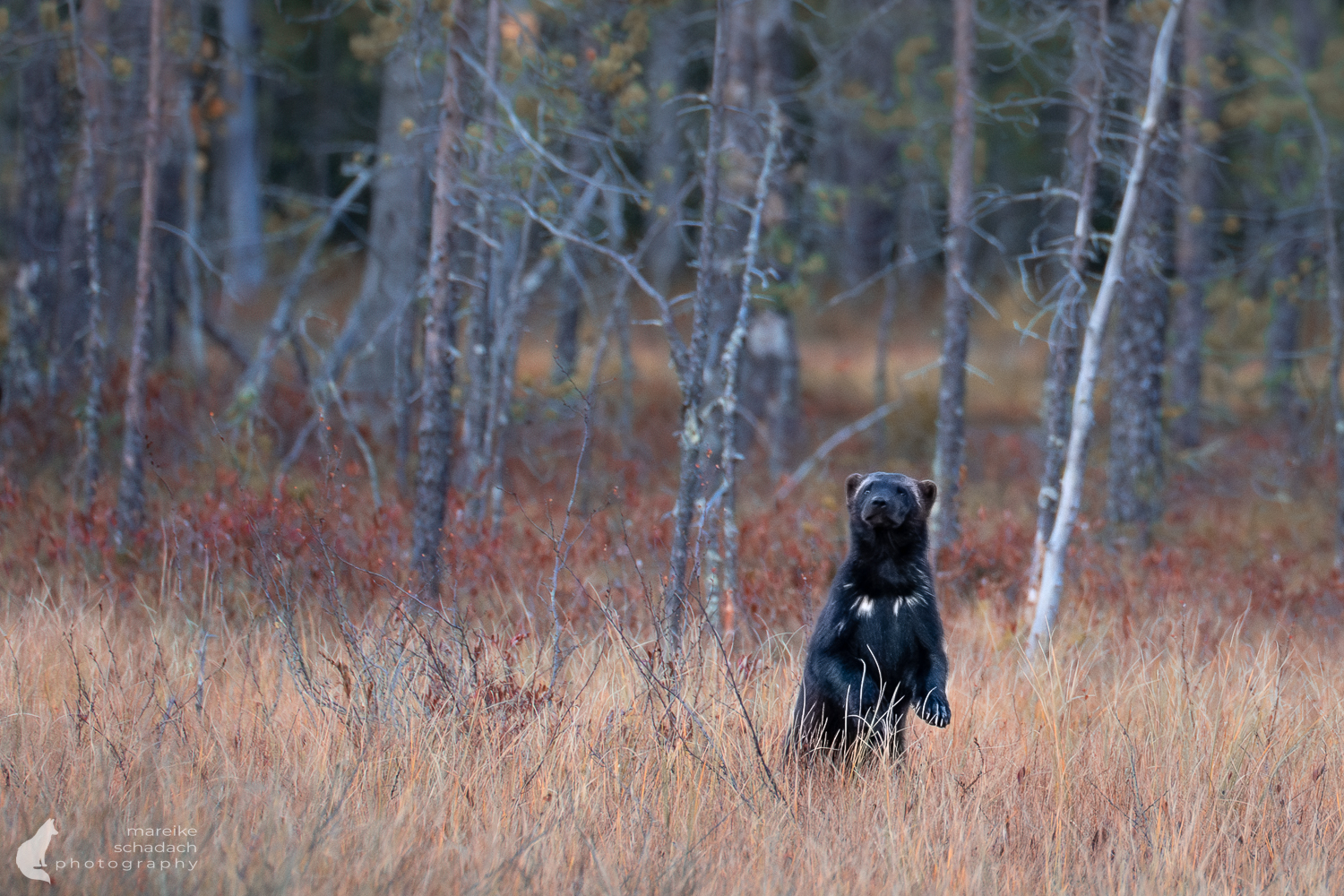
The first evening in the hide remains quiet and without sightings. After an equally quiet night, I pack up my camera equipment and am about to leave the hide. A dark brown body darts out of the shadows and runs along the opposite shore of the lake. Just as quickly as it appeared, it disappears again. Gulo gulo, known in English as the wolverine or bear marten, is one of the rarest predators in Europe. Gulo gulo, zu Deutsch Vielfraß oder auch Bärenmarder, ist einer der am seltensten beobachteten Beutegreifer Europas.

We wait, hoping that the wolverine will reappear. Unfortunately, to no avail. At 8 a.m., the agreed time, we guests all leave our hiding places at the same time and meet in the common room for breakfast.
The next two days follow the same pattern: in the afternoon, after an early dinner, we head out to the hiding places, wait for the animals in the evening, spend the night in the hiding place, and return to base camp in the morning for breakfast. During the day, I go for walks in the area, photograph birds at the feeding station, or look through the photos from the previous evening in my room or the lounge.
An underrated Loner
While bears are the center of attention here, the wolverine often remains in the shadows. Unfairly so. With its muscular body, powerful jaws, and sharp claws, it moves effortlessly through the terrain. It is a scavenger, but also a hunter that can kill weakened reindeer, hares, or birds.
On the second day, I see the wolverine again and manage to take a photo of the nimble creature. But it is only later, quite a bit further south, at Erä-Eereo near Lieksa, that I am able to observe and photograph the wolverine at length. The night vision device I borrowed opens up a view into a dark, hidden world that is teeming with life. In addition to the wolverine, I also see wolves, a bear that immediately disappears back into the thicket, and various bird species such as ravens, jays, white-tailed eagles, and sparrowhawks. Read more in my separate article “Rendezvous in the forest – With the wolverine in Finland's wild taiga.”
The Bear comes to say Goodbye
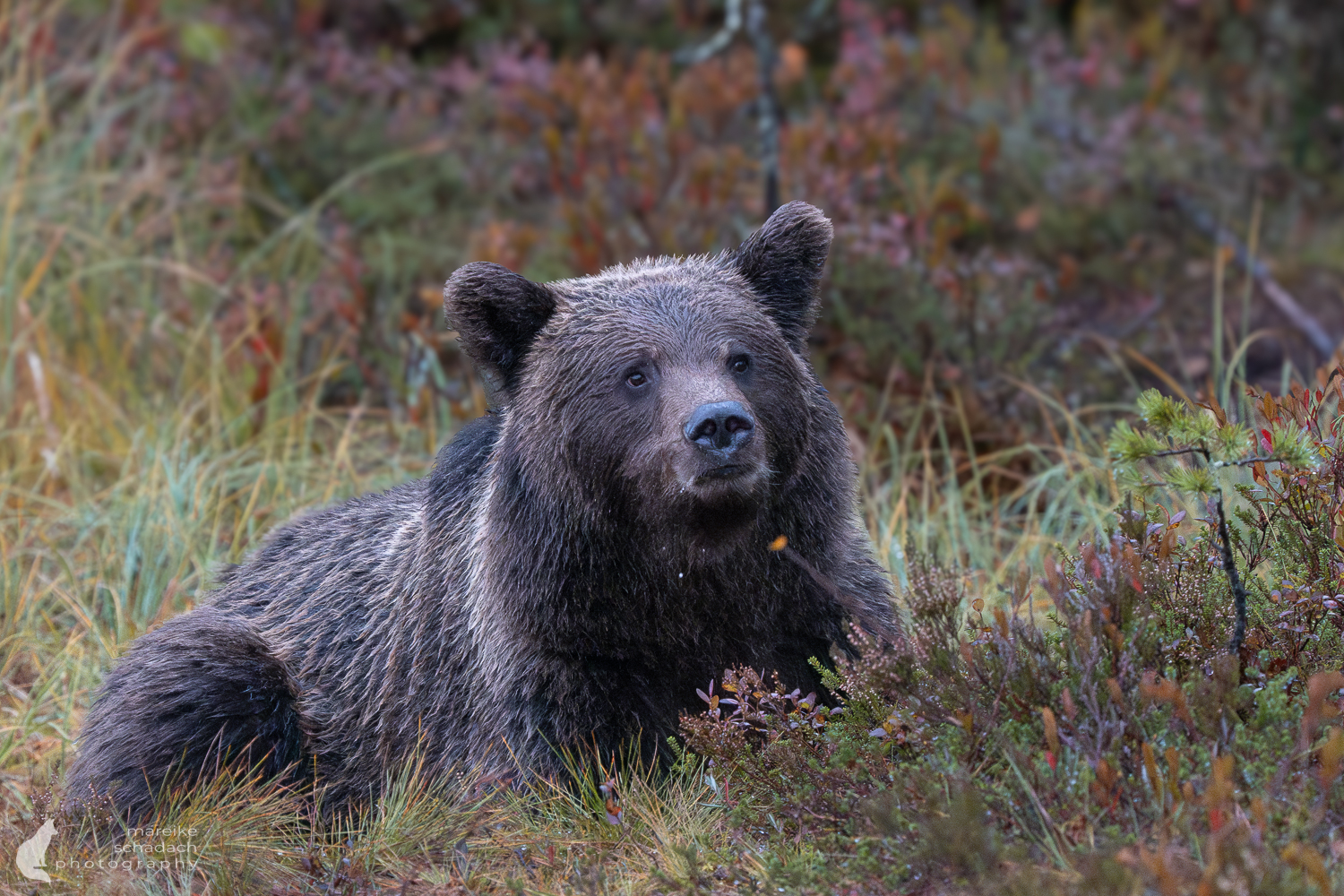
On the last evening, I am back in another hide, looking out over a small lake surrounded by forest. The long-awaited bear arrives within the first hour. It is slightly smaller than the bears I saw in Kuusamo. It is a brief but wonderful and intense encounter, and afterwards I watch with great satisfaction as the sun sets behind the forest and darkness falls outside.
More information about bear watching can be found on the Wild Brown Bear Center website.

Wildlife Safaris Finland – A Paradise for Wildlife Photographers near Kuhmo
Paradise is the name of the third location where I am setting up a photo hide in Finland. It is one of 20 hides belonging to Wildlife Safaris Finland's Kuikka Base Camp, located in the border region with Russia. The station is run by renowned nature photographer Lassi Rautiainen, a pioneer of bear photography in Europe. Although the border crossings between Finland and Russia are currently closed, there is no border fence up here, unlike in southern Finland. Bears and wolves pass through unhindered, as they always have. Visitors who want to come to this border region must register their stay with the Finnish authorities in advance, which the tour operator does a few days before arrival.
Before heading out to the hide, I cook some pasta outside at the picnic area with my Trangia stove. Freshly fortified, I pack my thermos, sandwiches, camera equipment, and sleeping bag. At around 4 p.m., our guide drives ahead through the forest. We guests follow in our own cars to “Paradise,” a row of huts on the edge of a huge grassy plain flanked by pine, spruce, and birch forests. The landscape shimmers in shades of yellow and ochre – autumn is unmistakably on its way.

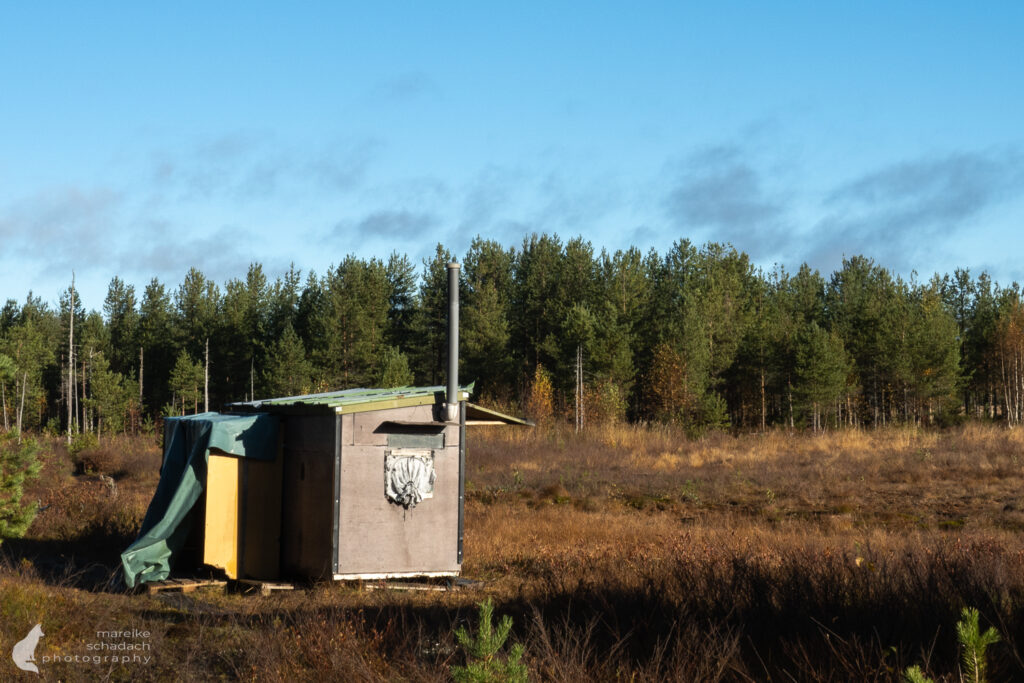
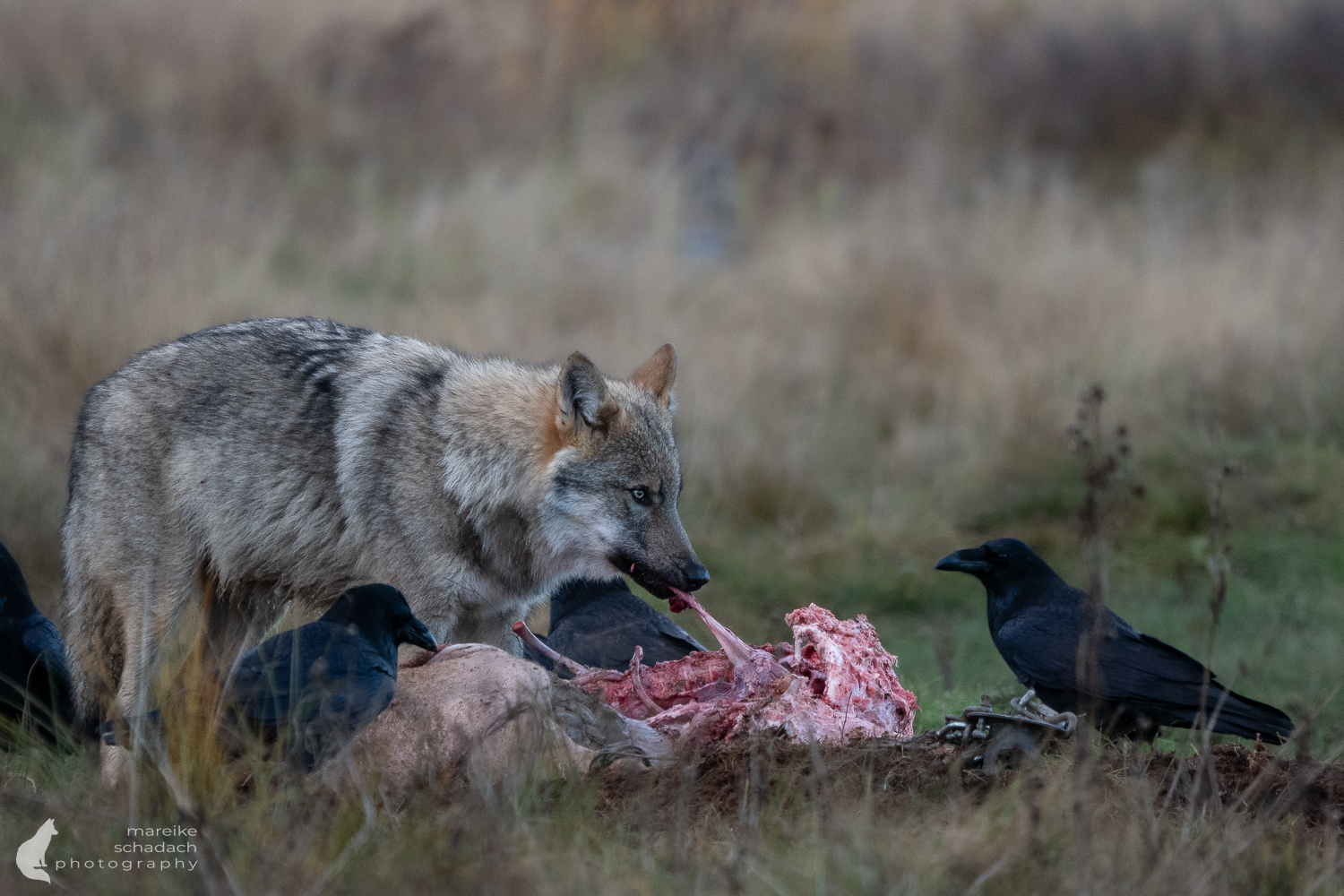
There is no light or electricity out here. Luxury here means being close to nature. This is the smallest hut I have ever stayed in. I can't stand up here, but I can lie comfortably on a soft foam mat and take photos from a worm's-eye view or sit upright on a chair. In the vestibule there is a toilet bucket, separated from the realm of the bears only by a tarpaulin. I have never been so alert when going to the toilet. Our guide explains how to use the gas stove (there is still a little bit of luxury) and then goes outside to scatter pieces of fish and dog food pellets on the meadow. With his quad bike and trailer, he takes a pig carcass further away from the huts. Attracted by the food, it doesn't take long for the first bear to appear. Shortly after him, the wolves enter the scene. Ravens settle down all around, cawing loudly.

When the Wolf shows up
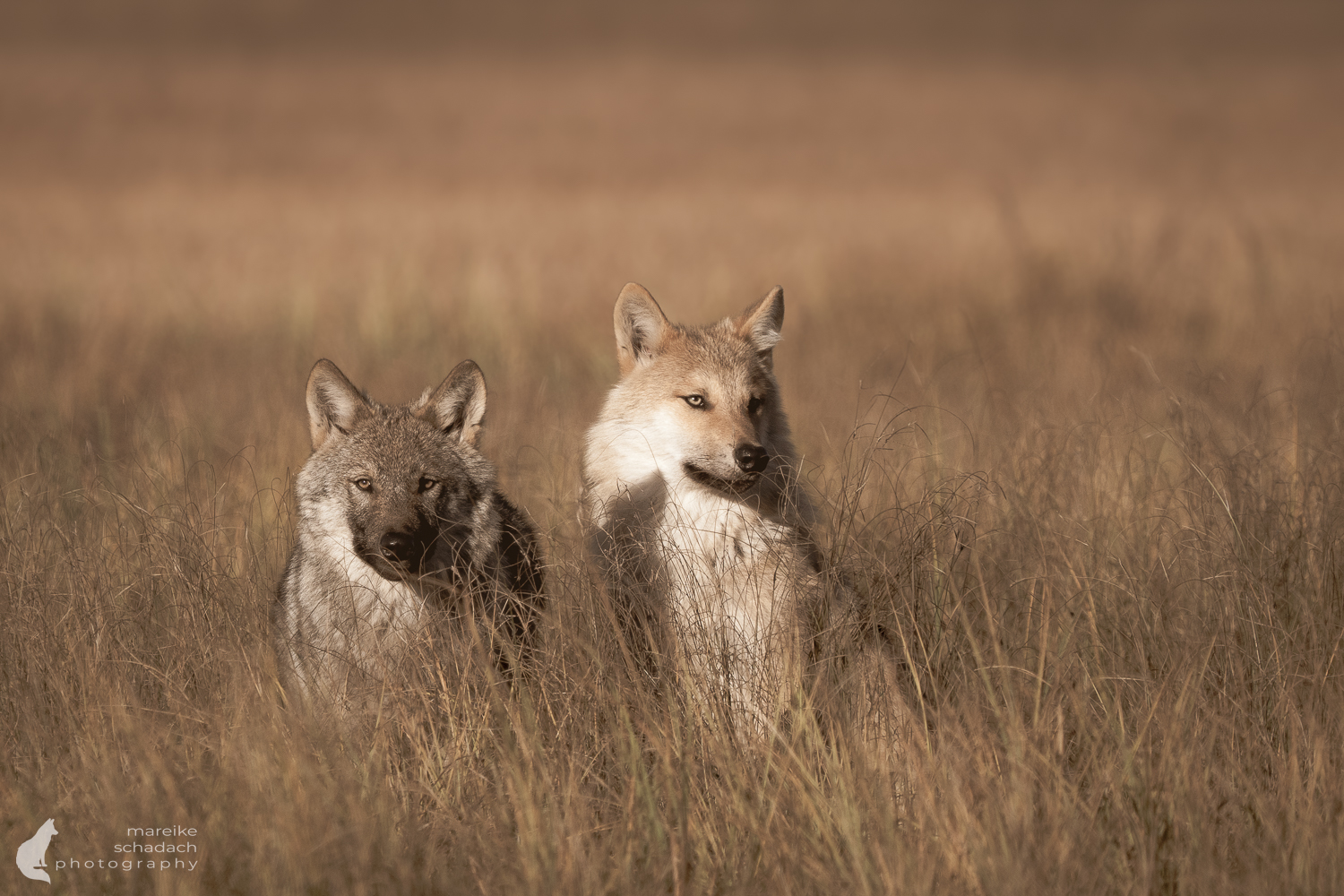
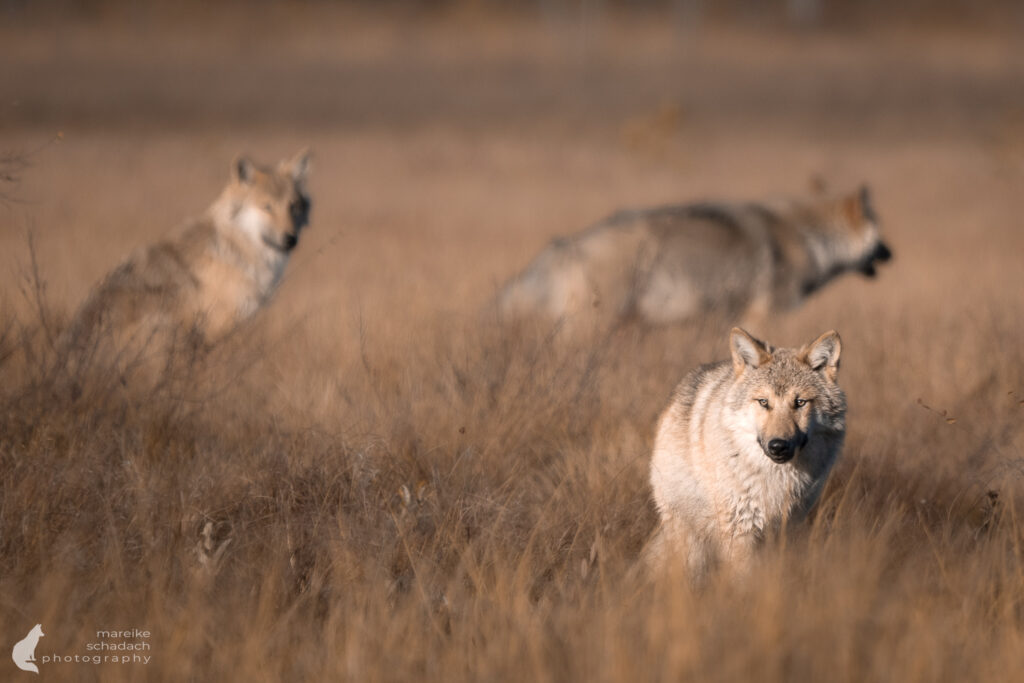
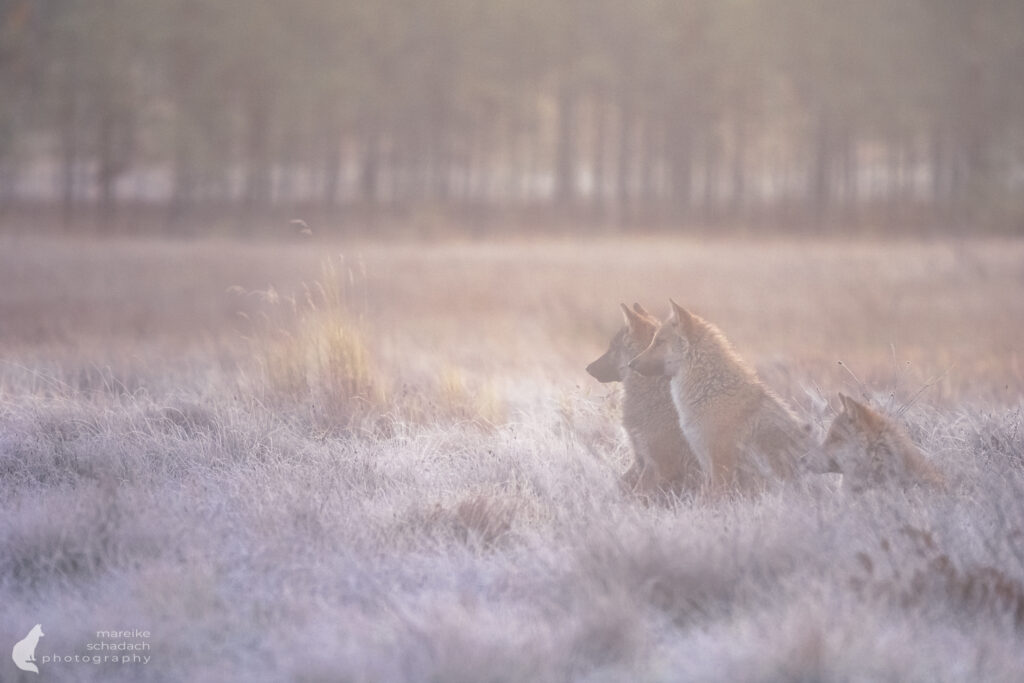
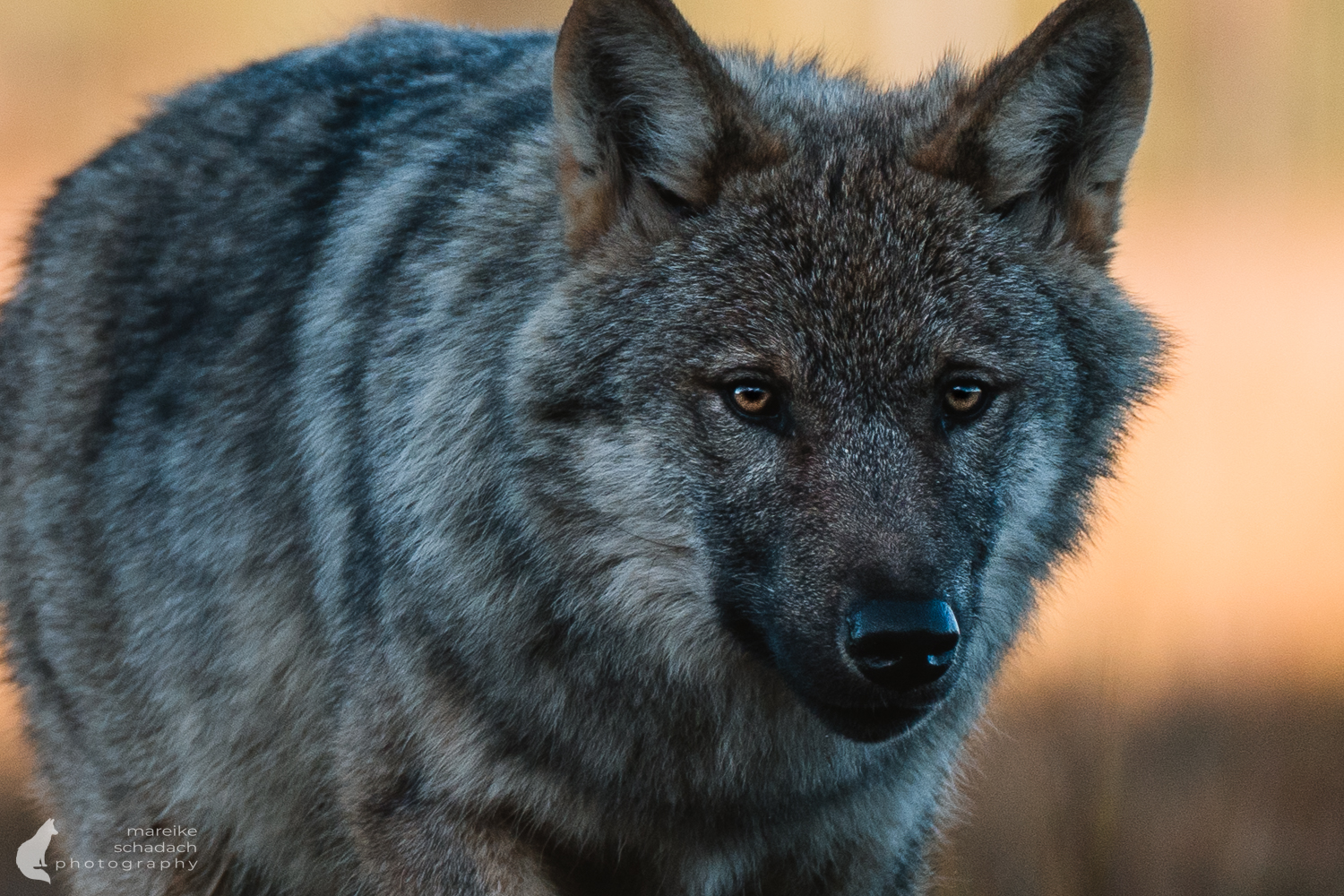
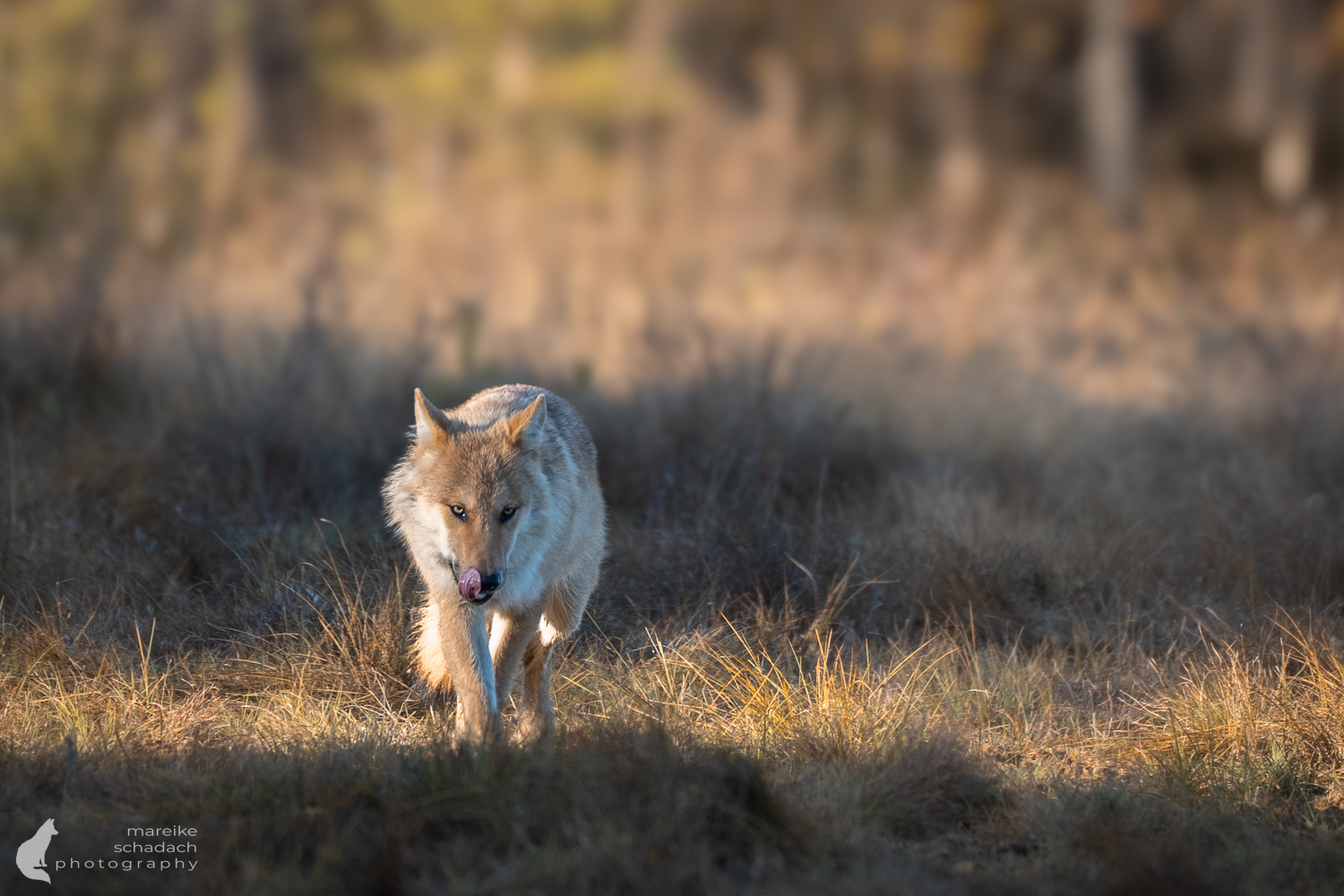
Well camouflaged in the tall grass, I see my first wolf in Finland. Shortly afterwards, a second one appears, then a third. Over the course of the evening, I count seven young wolves, accompanied by their mother. The adolescents romp across the clearing, playfully wrestling and snapping at their siblings, storming through the meadow like exuberant teenagers. Two of the young wolves come very close to the huts and search for dog food pellets in the tall grass. I watch them spellbound, and every now and then, one of them looks directly into my camera. What I would give to be able to read wolves' minds. By 10 p.m., it is finally so dark that I can no longer see anything. I crawl into my sleeping bag. Outside, I hear the wilderness continuing to live.
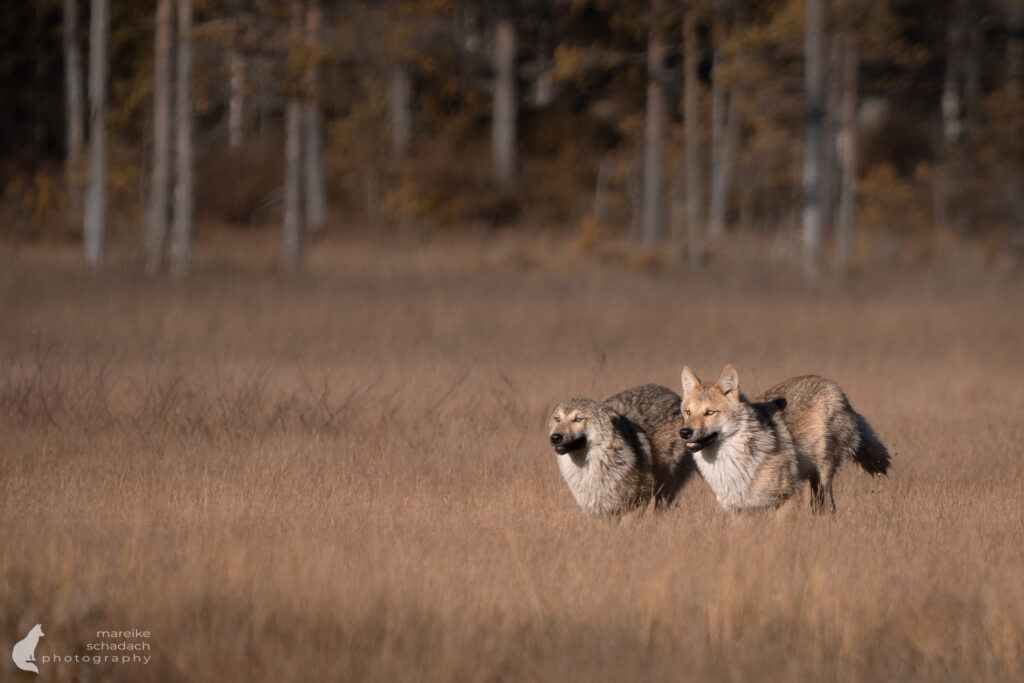

I wake up with the first light of dawn. The wolves are already awake too; I can see them in the distance, just before the edge of the forest. Now they are all together, resting next to a tree trunk. I wish they would come back to the huts, but unfortunately, it's in vain. With a heavy heart, I pack my things and say a very grateful goodbye to “Paradise.” What I didn't know that morning was that in a few days, I would see wolves again at Erä-Eereo near Lieksa.
More information is available on the Wildlife Safaris Finland website.

Responsibility of Photographers
As a wildlife photographer, you have a great responsibility towards the animals you want to photograph. Even though the photo hides with their small viewing windows are designed to disturb the animals as little as possible, you must be aware of the possible effects. Therefore, each of the photo hides has its own rules, which must be strictly observed by every guest. Failure to comply can not only disturb or scare away the animals, but also pose a danger to life and limb. Before entering the hide, ask the operator for instructions, ask questions if anything is unclear, and familiarize yourself with the area and the behavior of the animals beforehand.
Nature photographers are automatically ambassadors for nature and conservation. High-quality images can help raise awareness of the need to protect these animals and generate positive attention for the preservation of wilderness areas. Ultimately, nature photography and wildlife tourism also bring additional income to the region and strengthen the acceptance of large predators among the population. For example, the illegal killing of wolves in Kuhmo has decreased thanks to wildlife tourism, as local people have come to understand how important living wolves are.
Proper Behavior when photographing Wildlife from a Hide in Finland
- Be quiet, ideally prepare everything for the evening/night so that everything is ready to hand. Avoid opening loud Velcro fasteners or zippers. Set your cell phone to silent mode.
- No loud crackling food packaging – ask if bringing food is allowed at all.
- Set your camera to silent mode (in some hides, photography with loud SLR cameras is even prohibited).
- Do not use flash, headlamps, or other lights outside or inside the hide.
- No additional attractants or food outside the controlled areas.
- No strong-smelling food, perfumes, or mosquito repellent.
- Wear dark clothing to avoid reflections on the viewing glass.
- Do not let camera parts hang out of the hide.
- No sudden movements.
- No dogs allowed.
- Do not leave the hide until the agreed time.
A Place that transforms
Every night in the photo hide in Finland's wild east brought unforgettable encounters and new experiences. If you want to observe animals in the wild, you have to adapt to the rhythm of nature. That means long periods of waiting, silence, and then the big moment. The observation huts are simple, cramped, and not very comfortable. But what they lack in comfort is more than made up for by the proximity to the animals and the intensity of the observations. You sit there, looking outside, camera at the ready, and then suddenly a wolf, bear, wolverine, or eagle comes into view.
The time spent in the photo hides has changed my awareness of wild animals. After the physical proximity, the personal experience leaves me with a psychological closeness to bears, wolves, wolverines, and eagles, and I carry the experiences of these days in the taiga like a little treasure in my memory. I had taken many, many pictures and was already looking forward to seeing the animals again at home on my sofa.
More Information about the Animals
Metsähallitus Parks & Wildlife Finland: https://www.largecarnivores.fi/species/wolverine.html
IUCN Red List: https://www.iucnredlist.org/species/9561/45198537
Book recommendations for Finland
You want to know where the journey goes? Then I can recommend these books*.
You can order the travel guides on Amazon by clicking on the pictures. If you buy a product via an affiliate link, I get a small commission, and you help me to keep filling Fernweh-Motive with interesting articles. The product will not be more expensive for you, and you will do me a huge favor.


Want to know when there are new articles on my blog? Then follow me on Facebook, Pinterest or Instagram. I am also very happy if you share my article with your friends.